What does a plating or anodizing plant need as one package?
簡単に答えると: A plating or anodizing plant works only as one package: the process line (barrel, rack or anodizing), DC rectifiers matched to each process tank, fume extraction with a scrubber, and wastewater treatment sized to the local discharge permit. MUSI Technology (Changzhou, China) supplies rack plating lines, barrel plating lines and anodizing lines for aluminium together with the matching wastewater and acid-fume treatment, engineered from the same part data.
A job plating shop needs a line that copes with changing part mixes and customer specifications; an in-house department needs a line balanced to the output of its own forming or machining shop. Line types, stations and scope of supply are described on the electroplating line product page.
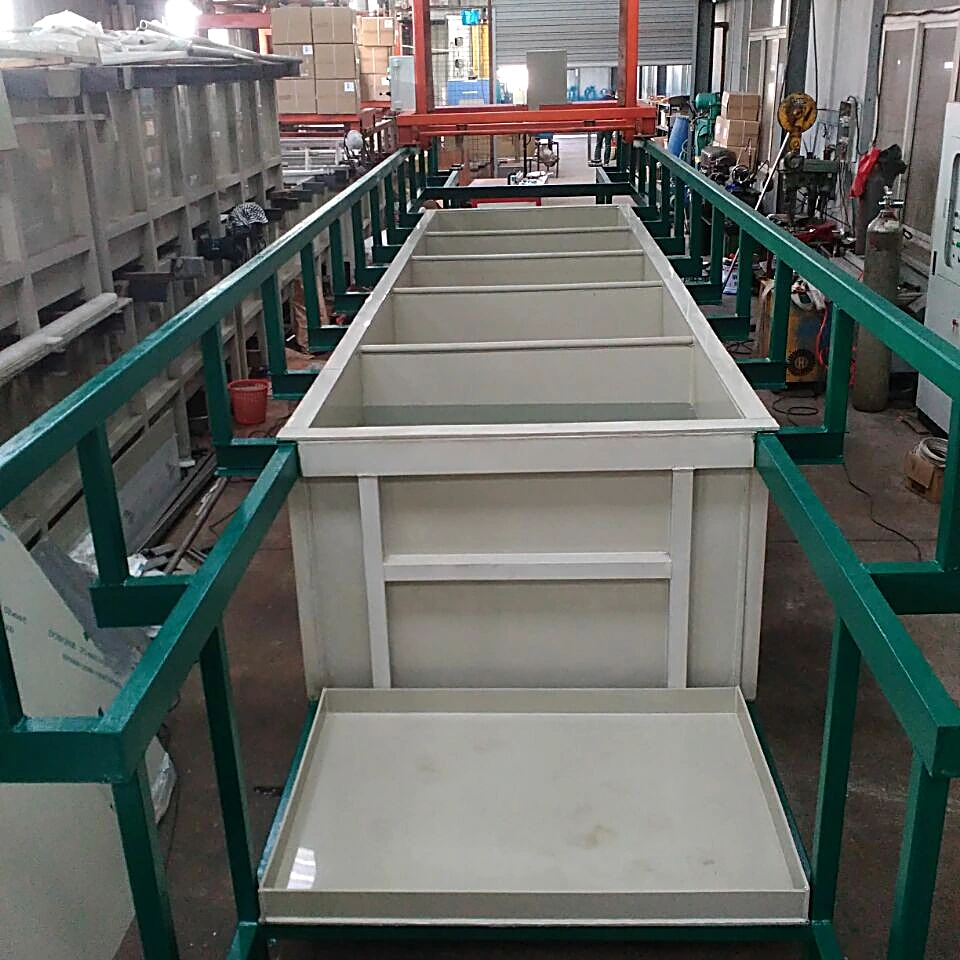
Which line suits which part family?
The part family and the coating on the drawing decide the line type. The buyer's drawing or customer specification always takes priority over the standards named below.
| Part family | Usual coating and standard | 線種 | What the buyer must specify |
|---|---|---|---|
| Fasteners and small hardware (bolts, screws, nuts, washers, small stampings) | Zinc or zinc-nickel with passivation: ISO 4042 for fasteners, ISO 2081 for zinc on other iron and steel parts | Barrel plating line | Coating designation and thickness, hardness or property class, output per hour |
| Sanitary and decorative hardware (taps, shower fittings, handles in brass or zinc die-cast) | Nickel plus chromium, or copper plus nickel plus chromium, per ISO 1456 | Rack plating line | Base material, service condition number, trivalent or hexavalent chromium, largest part size |
| Automotive parts (brackets, tubes, brake and chassis parts) | Zinc or zinc-nickel with passivation, to the vehicle maker's specification | Rack line for larger parts, barrel line for small bulk parts | Customer specification, corrosion test hours, steel strength, process records required |
| Aluminium profiles and parts | Anodizing, with colouring and sealing where specified, per ISO 7599; thickness classes AA 5 to AA 25, the number being the minimum average thickness in micrometres | Anodizing line | Alloy, profile length or part size, thickness class, colour, sealing method, area per hour |
A job shop that handles both bulk and racked parts can run a barrel line and a rack line side by side on shared fume and wastewater equipment. Powder coating of profiles is covered on the aluminium profiles page.
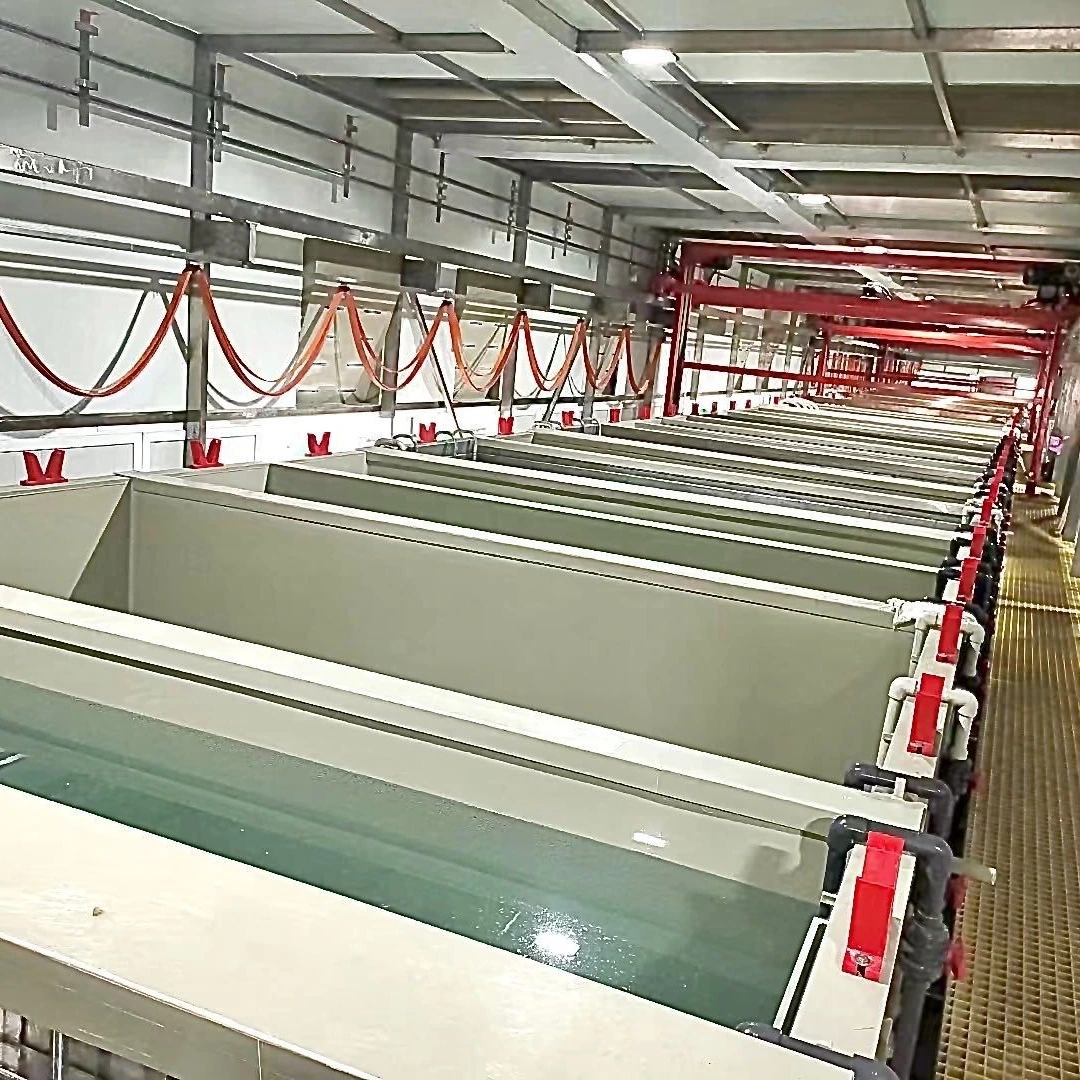
What do plating plants have to control?
Six issues decide whether a plant meets its customers' specifications and its permit. Each is answered in the line design.
| 課題 | なぜそれが重要なのか | What in the line design addresses it | Public reference |
|---|---|---|---|
| Coating thickness distribution | Current concentrates on edges and starves recesses, while standards set a minimum local thickness | Rack and contact design, auxiliary anodes or shields, a rectifier per plating tank with current control, barrel loading and rotation | ISO 2081, ISO 1456 |
| Hydrogen embrittlement of high-strength steel | ISO 9588 requires heat treatment after plating for steel of 1,000 MPa tensile strength or more: 190 to 220 °C for 8 to 22 hours depending on strength, started within 3 hours at the latest. Fasteners follow ISO 4042 | Baking oven beside the unloading station, transfer time recorded, baking before passivation | ISO 9588, ISO 4042 |
| Drag-out and rinse water use | Solution carried out on parts is lost chemistry and wastewater load. The EU reference document gives 3 to 20 litres per square metre of surface per rinse stage as its reference value | Programmed drain time over the tank, drag-out recovery rinse, counter-flow cascade rinses | EU BREF STM (2006) |
| Bath contamination | Drag-in, dissolved base metal and breakdown products spoil the deposit | Enough rinse stages between processes, continuous filtration, tank linings matched to each solution | EU BREF STM (2006) |
| Fume exposure | Tank mists are workplace hazards; the US OSHA limit for hexavalent chromium is 5 micrograms per cubic metre as an 8-hour average | Rim extraction on tanks, lids where needed, a wet scrubber, separate extraction for chromium tanks | OSHA 29 CFR 1910.1026, EPA chromium electroplating NESHAP |
| Hexavalent chromium restrictions | In the EU, chromium trioxide is on the REACH authorisation list (sunset date 21 September 2017), so its use needs an authorisation. In April 2025 ECHA proposed an EU-wide restriction; check its current status | Trivalent chromium and chromium(VI)-free passivation where the specification allows; otherwise covered tanks, dedicated extraction and a separate chromium rinse stream | REACH Annex XIV, EU BREF STM (2006) |
Rules differ by country and change over time; the permit and specification valid at the time of order are the design basis.
What environmental equipment belongs to the plant?
The EU reference document treats separation of wastewater flow types and adequate treatment of each final flow as best available technique. In the United States, EPA effluent guidelines for Metal Finishing (40 CFR Part 433) and Electroplating (40 CFR Part 413) apply; elsewhere the local permit sets the limits.
| Waste stream | Usual treatment | Related MUSI page |
|---|---|---|
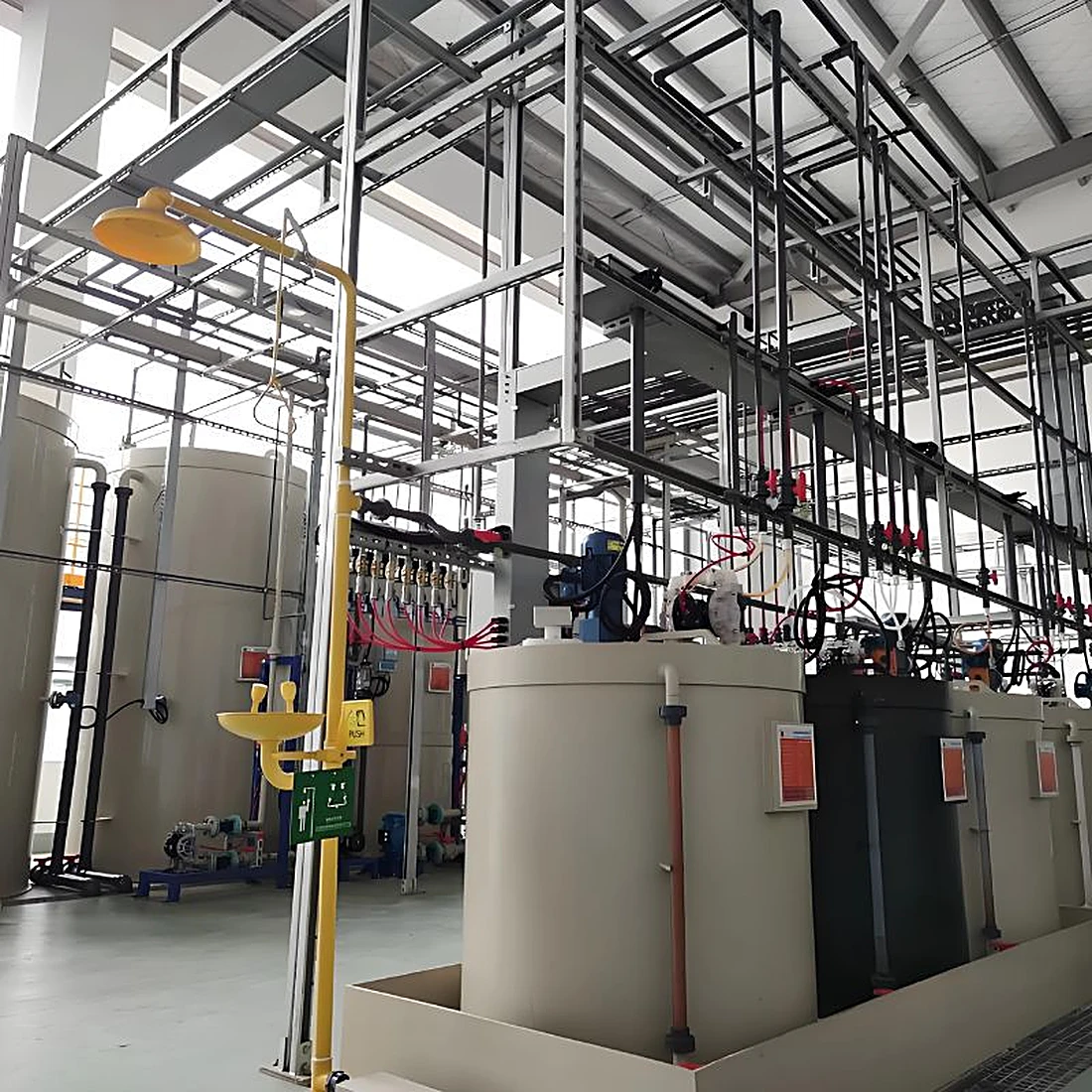
| Acid and alkaline rinse water with dissolved metals | Neutralisation, hydroxide precipitation, sedimentation or filtration | Electroplating wastewater treatment system |
| Chromium(VI) rinse water | Collected separately and reduced to trivalent chromium before precipitation | Electroplating wastewater treatment system |
| Cyanide rinse water, where cyanide baths are used | Collected separately and oxidised before it joins other streams | Electroplating wastewater treatment system |
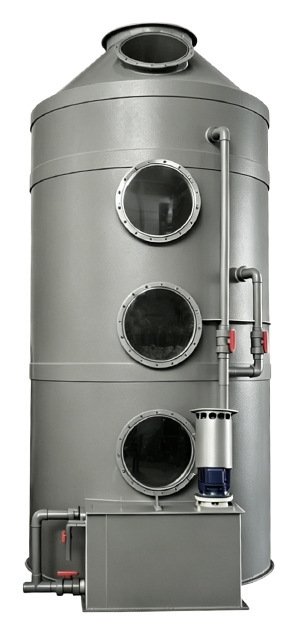
| Acid and alkaline fumes from pickling, plating and anodizing tanks | Rim extraction and a wet scrubber with pH-controlled wash liquid | Acid fume scrubber |
| Chromic acid mist from hexavalent chromium tanks | Covered tanks, dedicated extraction and its own scrubber stage | Acid fume scrubber |
| Metal hydroxide sludge and spent baths | Dewatering, then licensed disposal or recovery under local rules | Environmental equipment overview |
Treatment steps and sizes are set per project from the bath chemistry, the rinse water flow and the permit limits. The linked pages describe the wastewater and scrubber equipment as built for paint lines; a plating plant uses the treatment steps listed in the table.
Which plating lines does MUSI supply?
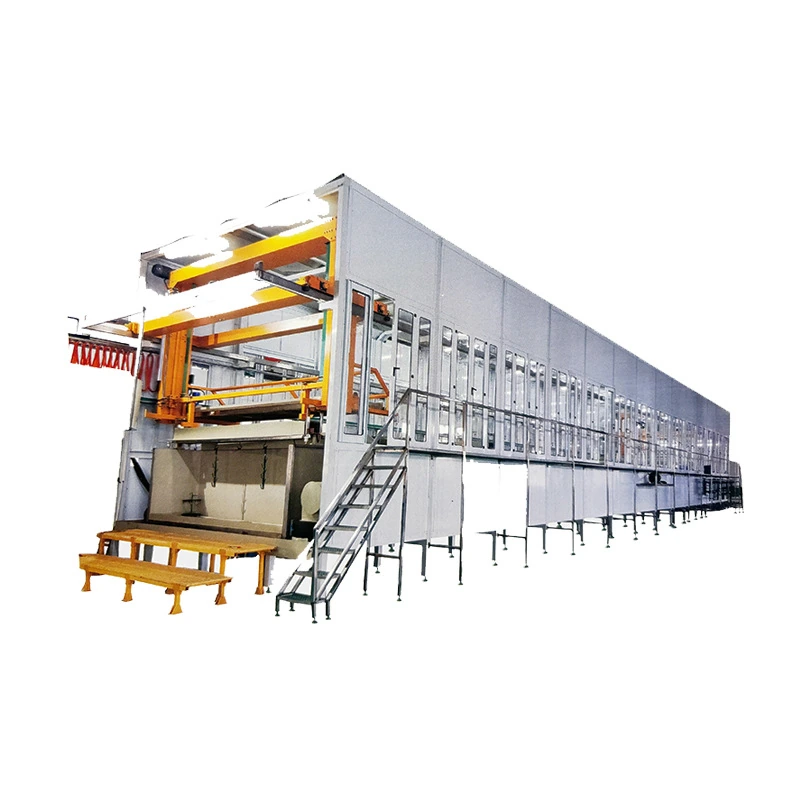
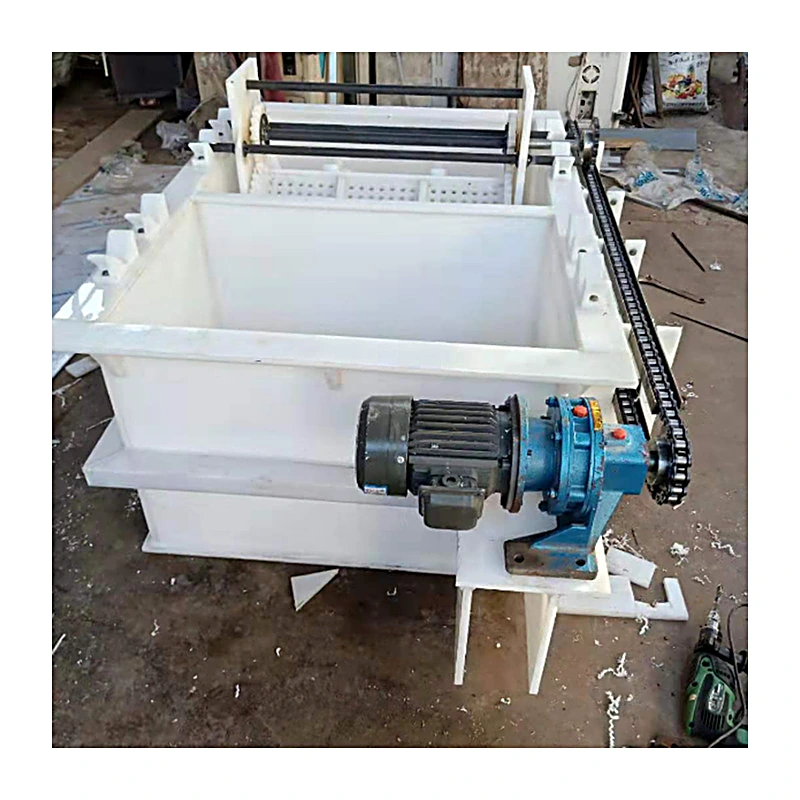
MUSI Technology supplies the three line types below. Each is engineered together with the fume extraction and scrubbing and the wastewater treatment listed in the table above, sized from the same part data and the local permit.
Which exhaust and wastewater equipment goes with the line?
Every plating or anodizing line is supplied with fume extraction at the tanks, an acid-fume scrubber on the exhaust and a wastewater treatment plant, sized from the same part data, the bath list and the local permit.
How does a project run?
A project runs in six steps. The delivery date is confirmed in the contract.
| 工程ステップ | 購入者が用意するもの | What MUSI provides |
|---|---|---|
| 1. Part data | Drawings or samples, material, coating specification, output | Process sequence and line type; engineers reply within 24 hours |
| 2. Site data | Building dimensions, utilities, permit limits | Layout, tank list, rectifier ratings, fume and wastewater concept |
| 3. Technical agreement and contract | Bath chemistry chosen with the chemistry supplier, acceptance criteria | Scope of supply and delivery date written into the contract |
| 4. Manufacture and inspection | Inspection before shipment, as agreed in the contract | Manufacture of the line and environmental equipment |
| 5. Installation and commissioning | Foundations and utilities on site | Overseas installation and operator training by MUSI engineers |
| 6. Acceptance and warranty | Production parts measured against the coating specification | Warranty of 12 months as standard, up to 60 months by contract |
Where can I read more before sending an enquiry?
- Rack vs barrel plating line: how to choose
- Electroplating line cost factors: what drives the budget
- Electroplating wastewater treatment: chromium, cyanide and nickel
よくある質問
What does a plating plant need besides the plating line?
Rectifiers matched to each process tank, fume extraction with a scrubber, and wastewater treatment sized to the discharge permit. Plants that plate high-strength steel also need a baking oven.
Should I choose a barrel line or a rack line?
Barrel lines suit small bulk parts such as fasteners that can tumble without damage. Rack lines suit larger or decorative parts that must not touch each other, such as taps, handles and brackets.
Do high-strength steel parts need baking after plating?
Usually yes. ISO 9588 requires heat treatment after plating for steel of 1,000 MPa tensile strength or more, at 190 to 220 °C for 8 to 22 hours depending on strength. Fasteners follow ISO 4042, which sets its measures by hardness. The customer specification decides the final rule.
Can a new line be built without hexavalent chromium?
For decorative chromium, often yes: the EU reference document names trivalent chromium as best available technique for decorative plating unless the specification requires hexavalent chromium. The same document states that hexavalent chromium cannot be replaced in hard chromium plating.
Is electroplating the same as e-coat?
No. Electroplating deposits a metal layer such as zinc, nickel or chromium. E-coat deposits a paint film that is then oven-cured; for that, see the e-coat coating line.
What information do you need to quote a plating or anodizing line?
Part drawings or samples, base material and strength, the coating specification, output and shifts, building dimensions, utilities and the local air and wastewater permit limits. MUSI engineers reply within 24 hours.
About the figures on this page. Heat treatment conditions are from ISO 9588:2007, anodizing thickness classes from ISO 7599:2018, the rinse water reference value and best available technique statements from the EU reference document for the Surface Treatment of Metals and Plastics (2006, under review), the workplace limit from US OSHA 29 CFR 1910.1026 and the chromium trioxide entry from REACH Annex XIV. These are general published values, not guarantees or legal advice; final values are set per project from the part, the specified coating and the local discharge limits.
相談を予約する
最適なソリューションは、お客様の具体的なワークピース、生産能力、設備、予算によって異なります。MUSIは以下を含む 無料相談サービス を提供しています:
- 当社エンジニアによる1対1のプロセス相談
- 予備的なCADラインレイアウト
- Equipment list and quotation after the requirements review
- 常州にあるMUSIの工場へのご見学を歓迎します