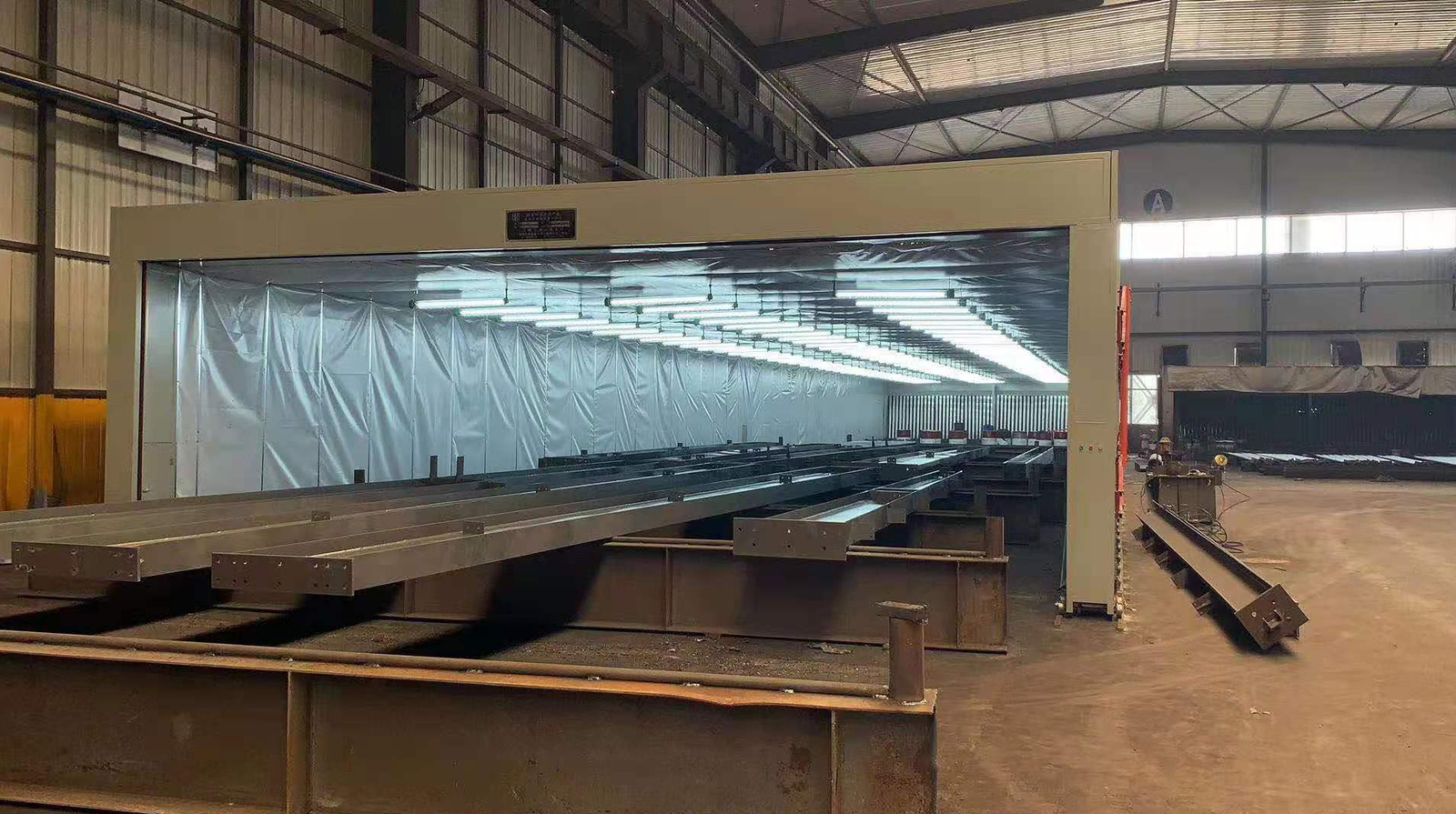
Telescopic Mobile Spray Booth
Retractable paint booth that travels on floor rails: the enclosure folds back so cranes set the workpiece down, then extends to cover it — flame-retardant PVC fabric on folding steel frames, explosion-proof lighting and drives, dry-filter or oil-film paint mist capture, and carbon, UV or RCO exhaust treatment matched to the fan.
Built for steel structures, pressure vessels, tanks, machinery frames and wind and crane components that are too long or too heavy to move into a fixed booth.
Technical Specifications
Values below are typical ranges taken from telescopic booths we have engineered; the figures for your booth are fixed in the written specification after we review your workpieces, paint consumption and site.
| Internal size | Typical 12-20 m long, 5-10 m wide, 3-4.5 m high; length in 1 m frame modules |
|---|---|
| Maximum build size | Up to 100 m long, 35 m wide and 9 m high with a custom-engineered frame and drive design |
| Retracted footprint | Typical 3 m long for a 20 m booth (about 15% of the extended length) |
| Travel | 8-10 m/min on 12 kg/m light rail (large booths) or flat bar rail (small booths) |
| Frames and fabric | Q235 steel frames 50 x 70 x 2 mm, scissor bracing 50 x 25 x 2 mm; flame-retardant PVC fabric 0.5 mm, blue outside / white inside |
| Drive | Two explosion-proof geared motors 1.5-3 kW with interlock, double limit switches at both ends, anti-slip twin drive wheels, rail sweeper |
| Lighting | Explosion-proof LED, 300 lux or more at the work surface (18 W units, typical 60-100 per booth) |
| Cross-draft velocity | 0.3 m/s or more across the booth section; duct velocity 12 m/s or less |
| Paint mist capture | Dry filter (labyrinth paper plus glass-fibre bag, 98% or more) or oil-film purifier (98% or more) |
| Exhaust treatment | Activated carbon, UV photo-oxidation, or adsorption-desorption with catalytic oxidation (RCO), 30,000-80,000 m3/h |
| Exhaust fan | Typical 45-75 kW centrifugal fan, 54,000-79,400 m3/h for a 20 x 10 x 4 m booth; 15 m stack |
| Noise | 80 dB(A) or less inside the booth, 85 dB(A) or less at the fan |
| Control | Jog control for travel, two-station control cabinet, VFD on the exhaust fan, audible and visual alarms, phase-loss and overload protection |
Booth Configuration
- Telescopic enclosure: folding steel frames, flame-retardant PVC fabric, roof and side lighting, floor rails
- Dual explosion-proof drive with chain-linked twin wheels, double limit switches and automatic drift correction at each end
- Dry paint-mist filter wall (labyrinth paper and glass-fibre bags) or oil-film purifier at the exhaust end
- Exhaust treatment: activated carbon boxes, UV photo-oxidation unit, or RCO with three carbon beds and a catalytic bed
- Centrifugal exhaust fan on anti-vibration mounts, galvanised ducting and 15 m stack
- Control cabinet with jog buttons, emergency stop, VFD and grouped lighting control
Telescopic Spray Booth in Practice
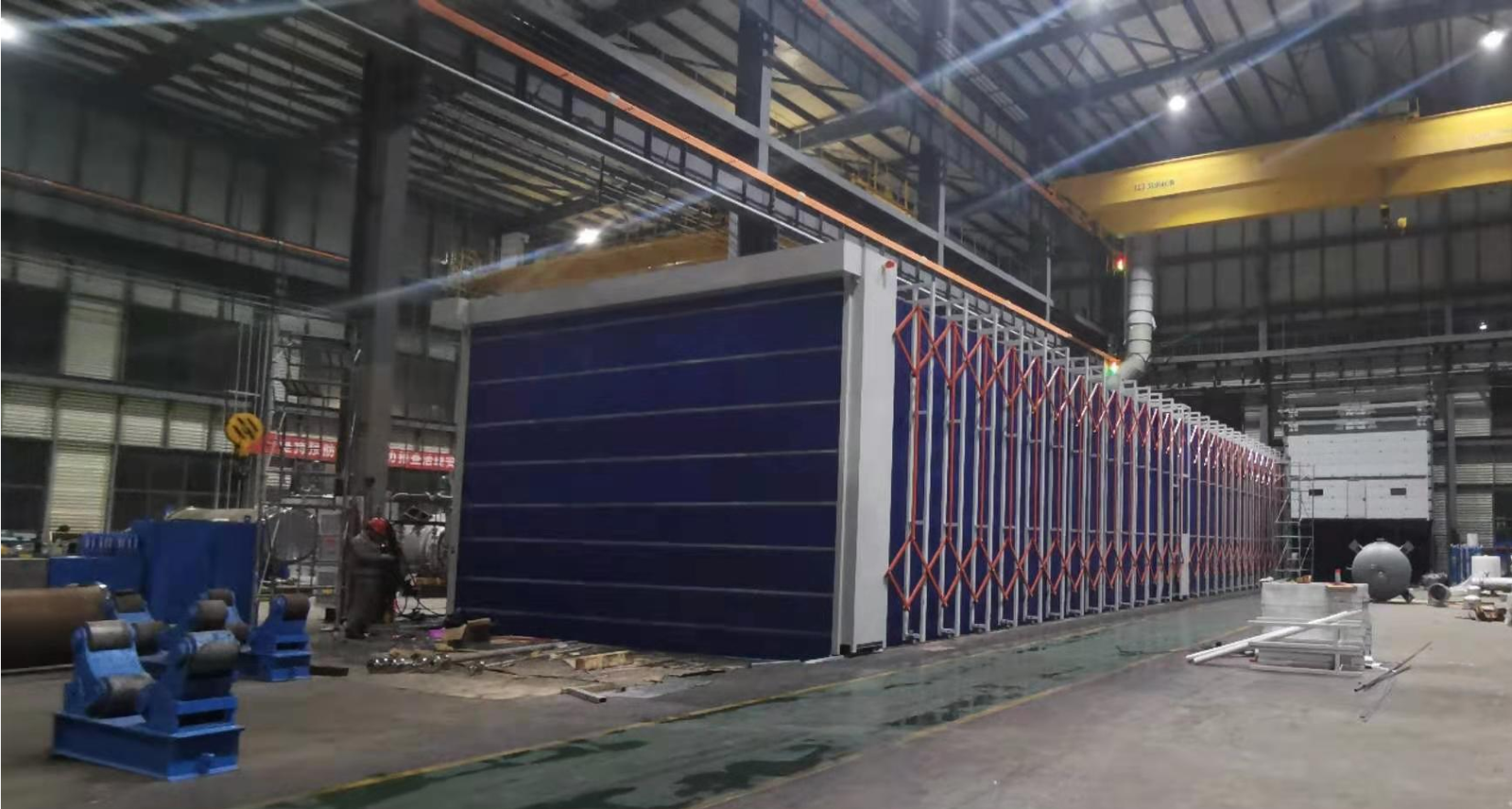
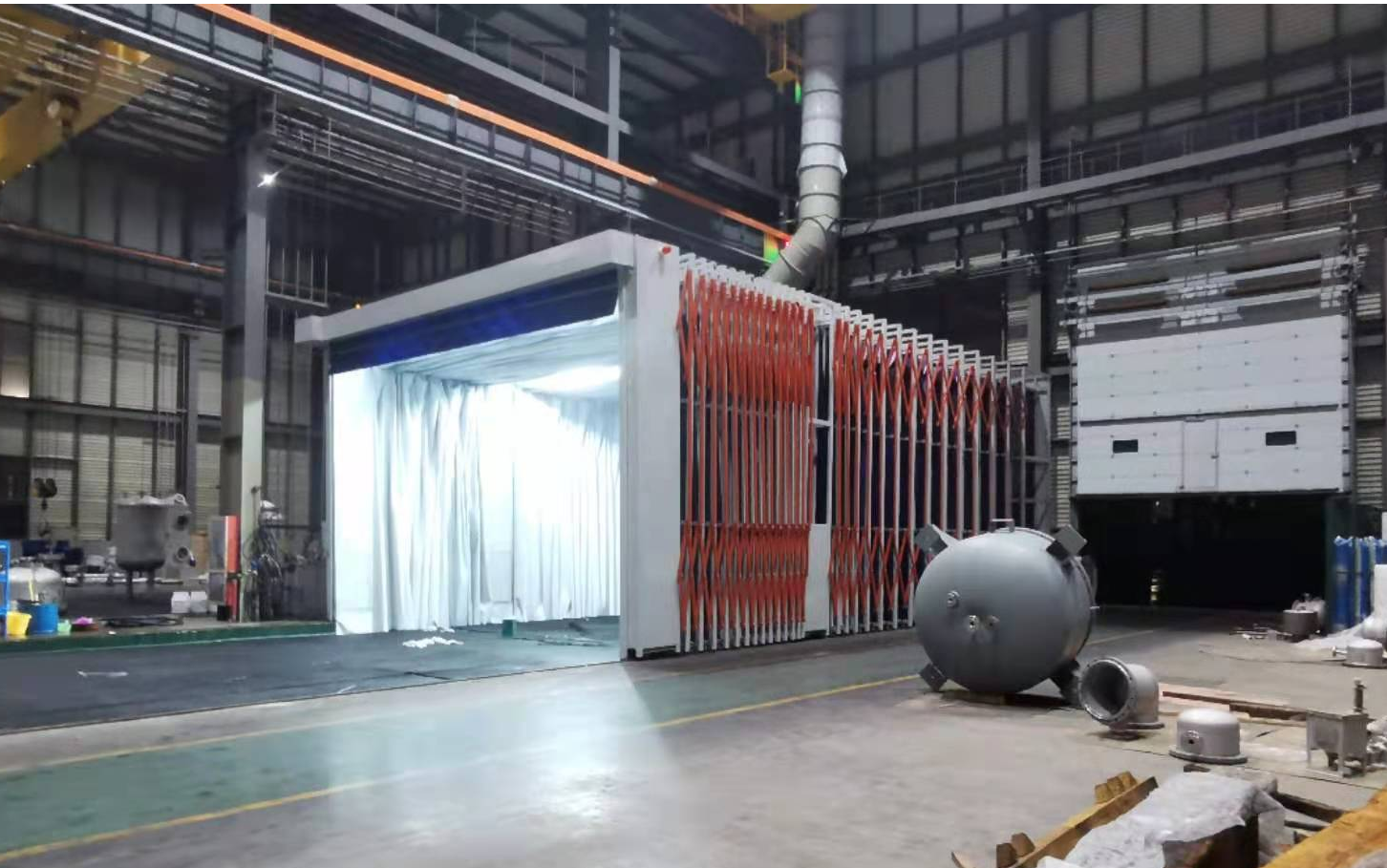
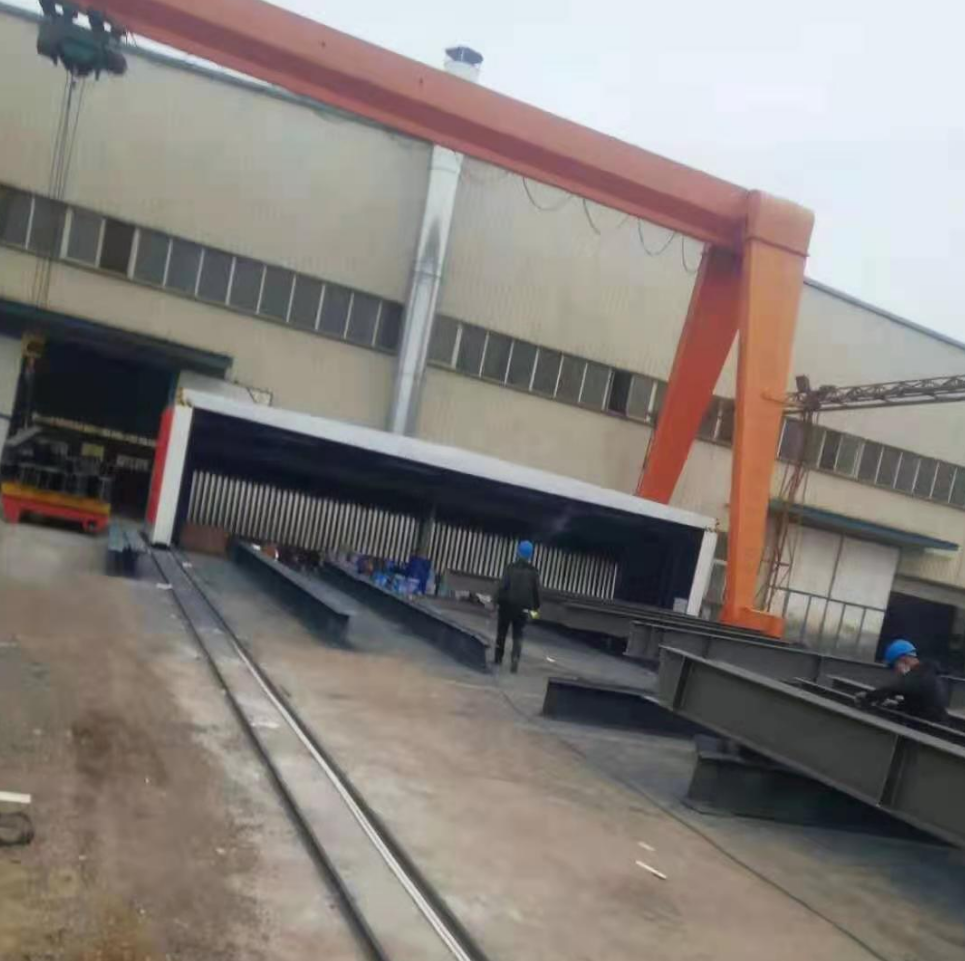
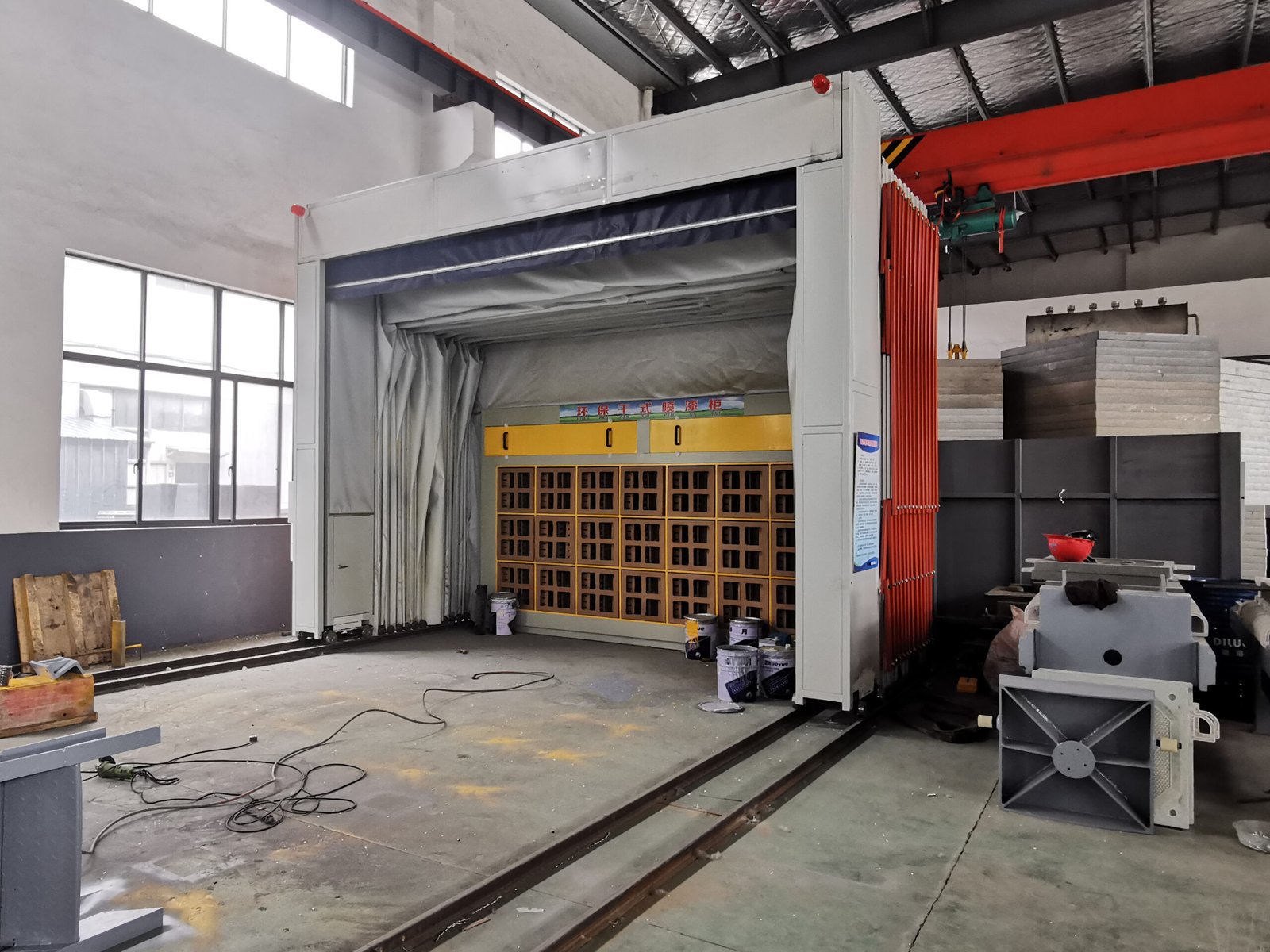
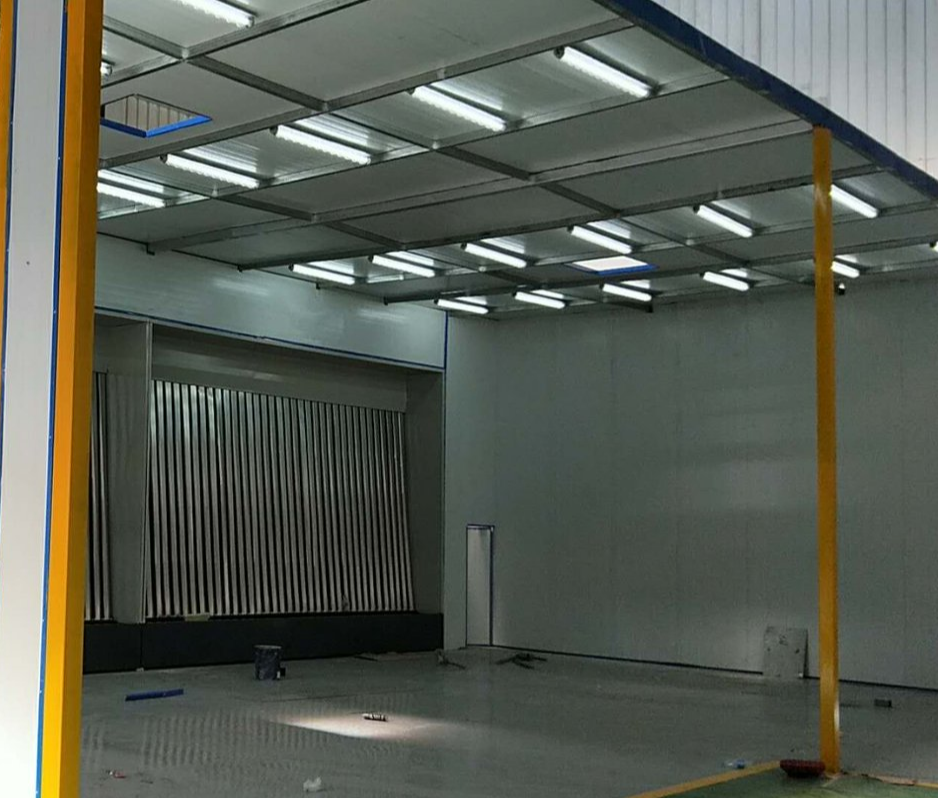
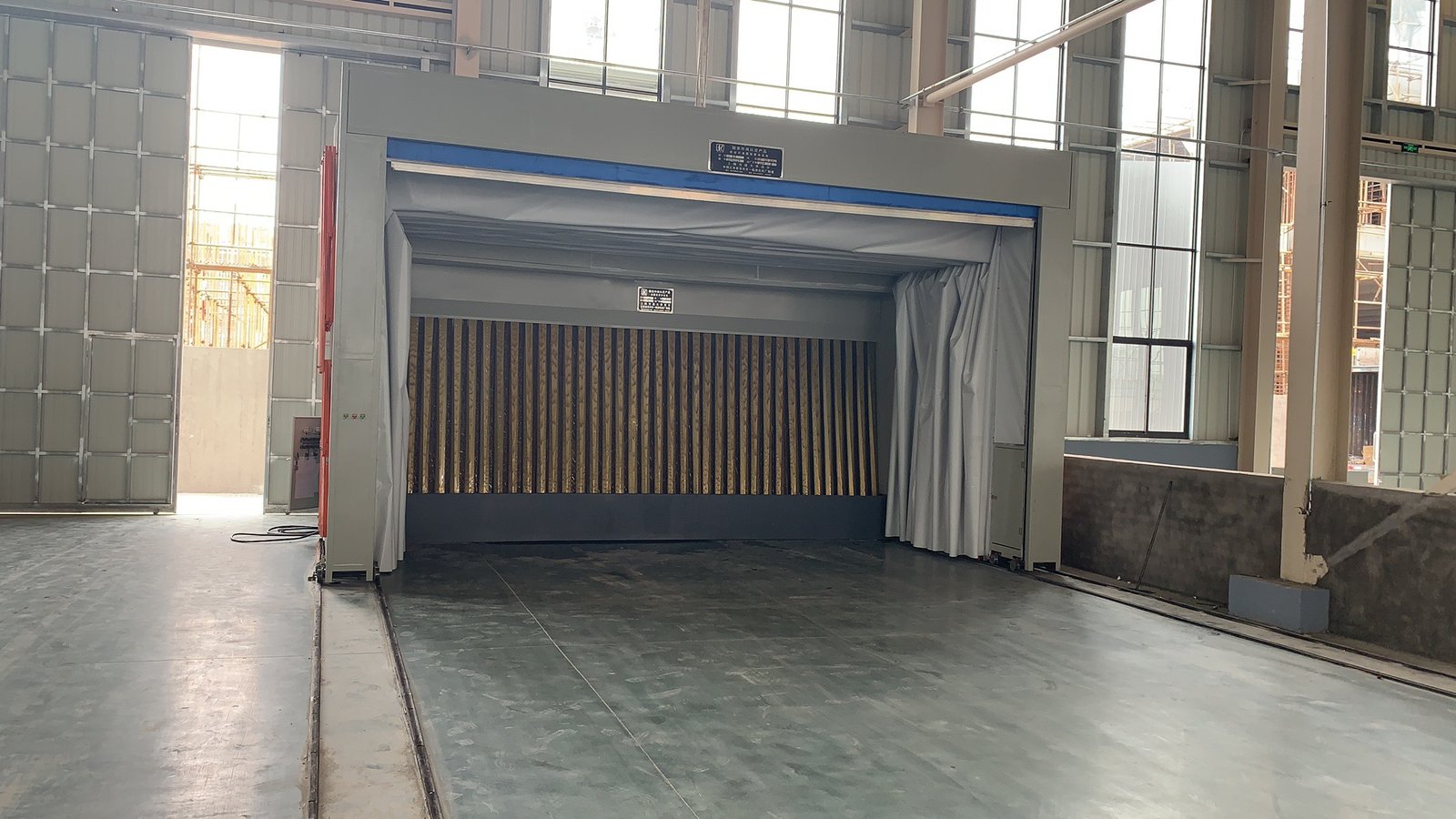
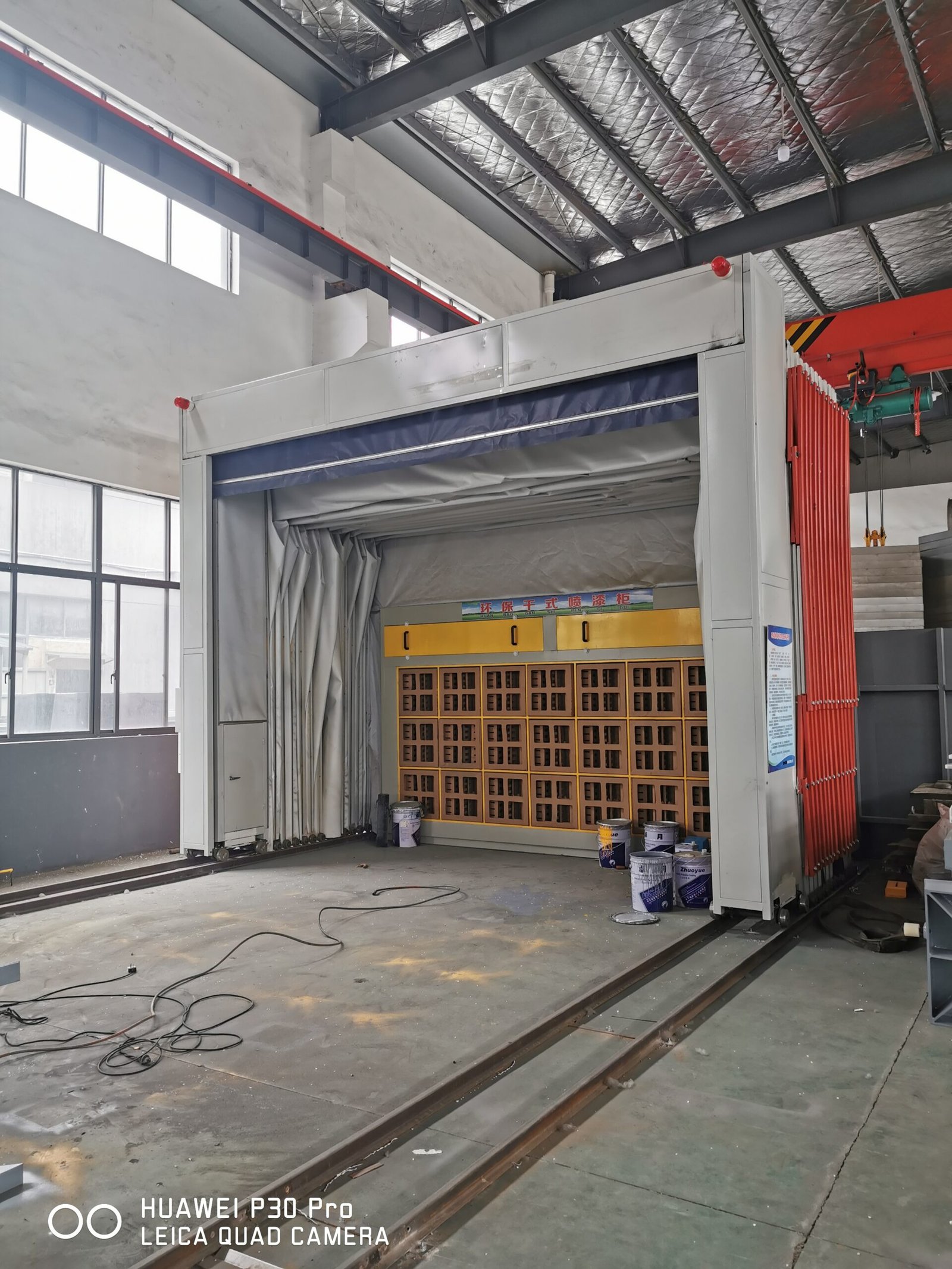
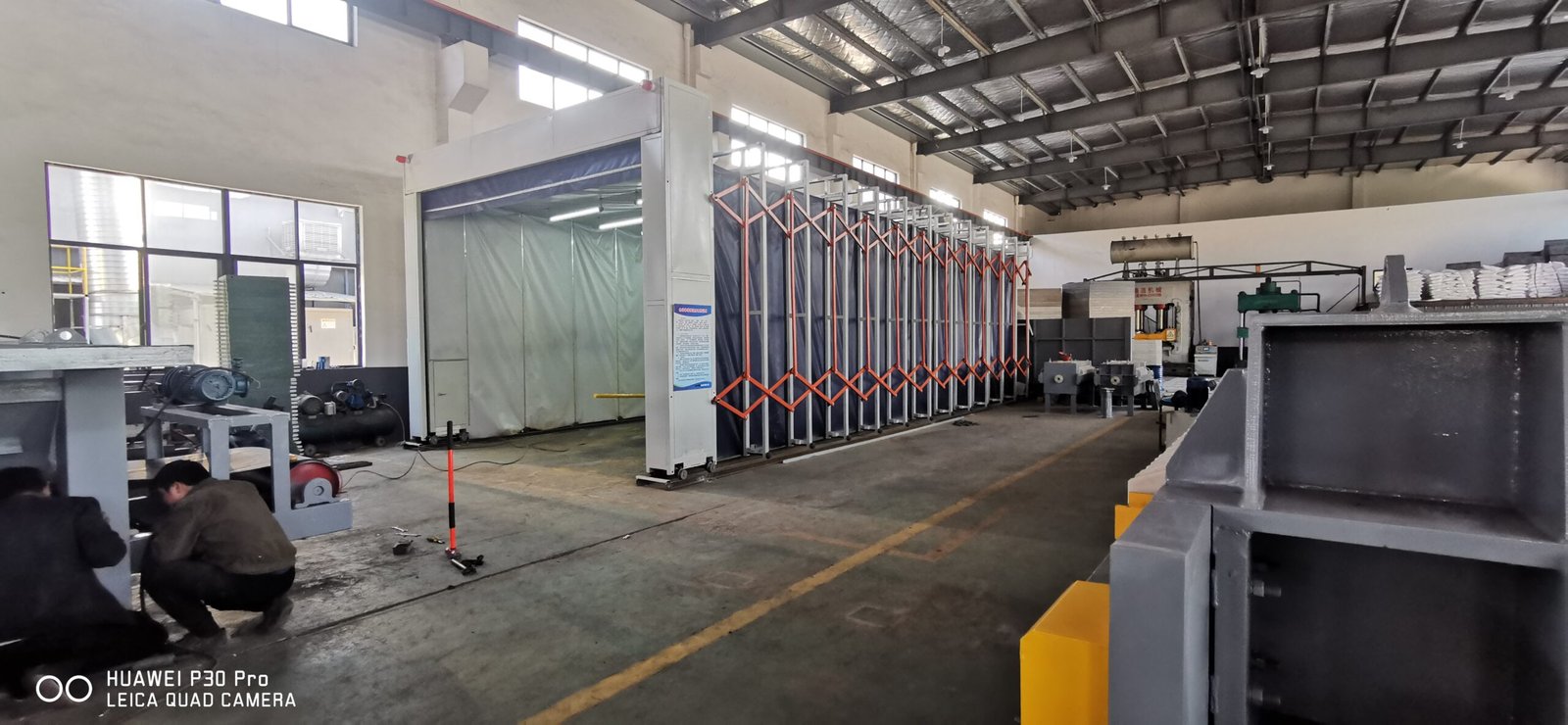
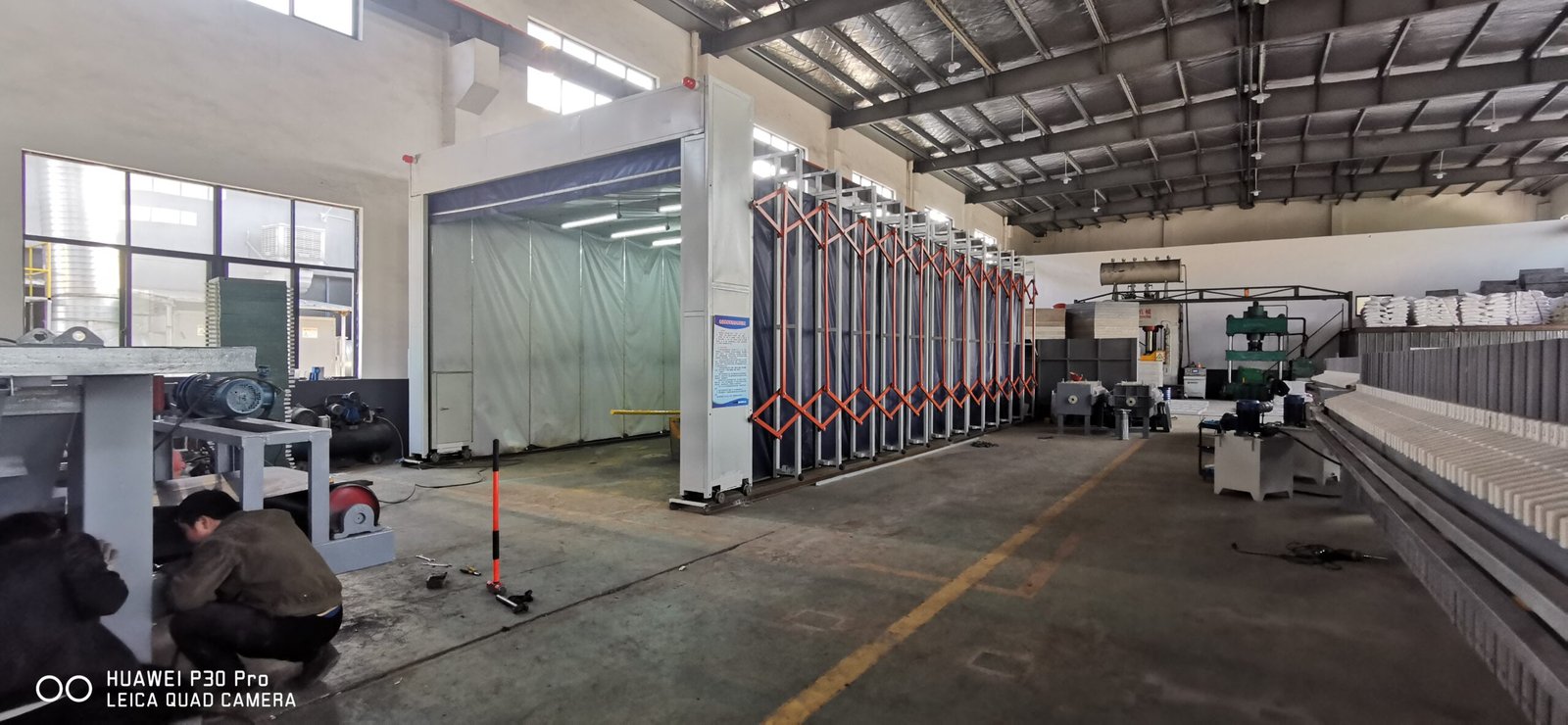
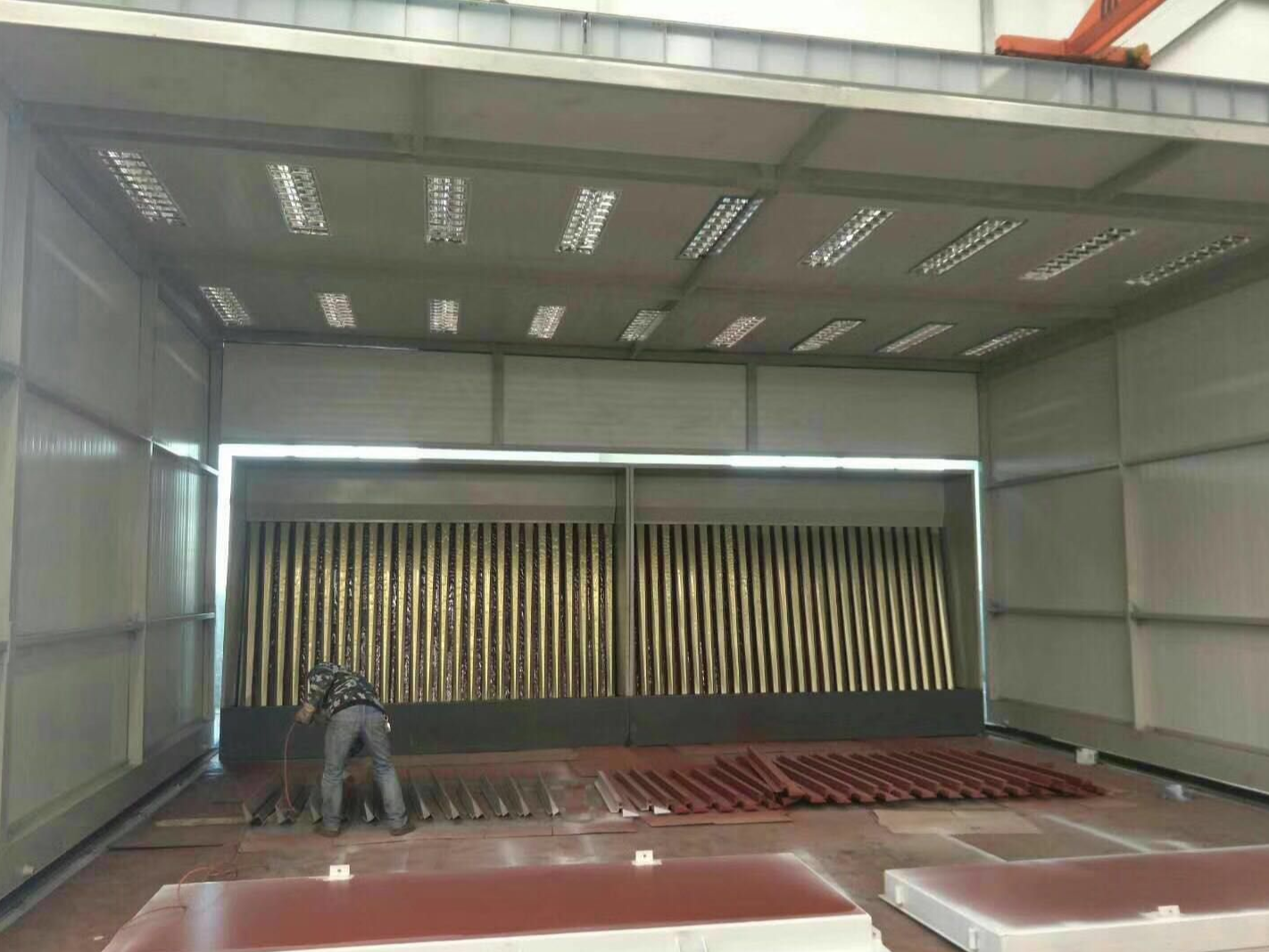
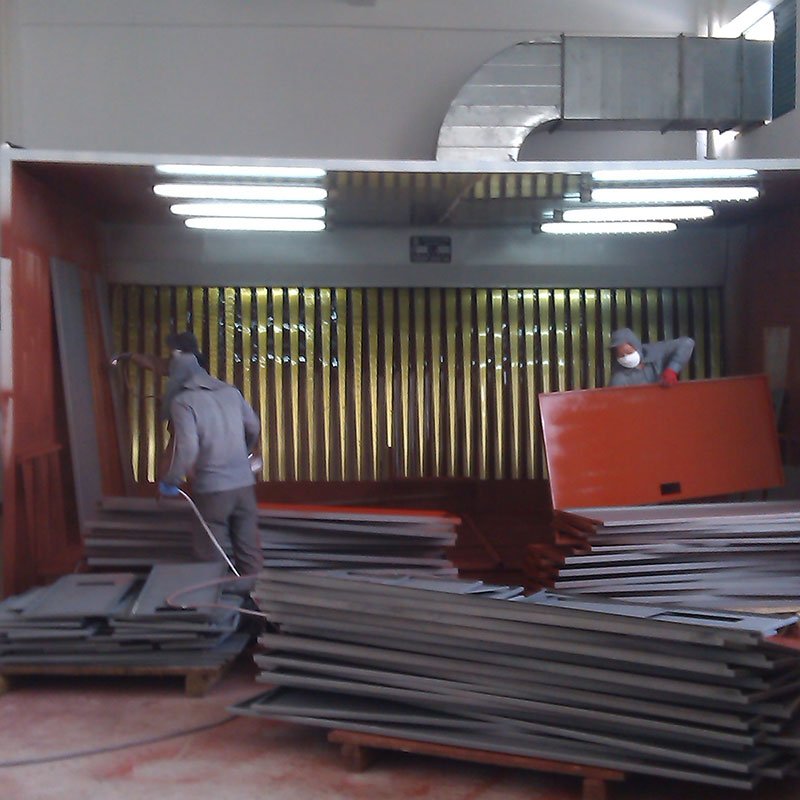
Photos from telescopic booths supplied for steel structure, pressure vessel and heavy fabrication workshops: the enclosure retracted for crane loading, the dry filter cabinet at the exhaust end, and an outdoor rail-mounted booth under a gantry crane.
Application References
Structural steel fabricators, pressure vessel and tank builders, construction and mining machinery plants, wind tower and crane component makers, shipyards and any workshop where the crane, not a conveyor, moves the workpiece.
Engineering Commitment
Every booth is engineered against a written performance specification. Enclosure size, cross-draft velocity, paint mist capture, exhaust treatment efficiency and noise are stated in the contract and demonstrated at commissioning. One engineering team owns the enclosure, the drives, the filtration and the exhaust treatment, so the trade-offs between them are settled on the drawing board, not on your factory floor.
Service & Delivery
Standard configurations ship in 30-60 days with a 12-month full-machine and 36-month critical-component warranty. On-site installation, commissioning and operator training are available worldwide, and filter media and spare parts support continue for the working life of the booth.
Frequently Asked Questions
How does a telescopic spray booth differ from a fixed booth?
The enclosure travels on rails and folds to a fraction of its length, so the overhead crane places the workpiece on the floor first and the booth closes around it. A fixed booth needs the part to be carried in through a door, which is not practical for 15 m beams or 10 t vessels.
Dry filter or oil-film purifier?
Dry filters (labyrinth paper plus glass-fibre bags) suit intermittent painting and plants without a water or oil treatment routine; the filters are replaced when the pressure drop reaches about 250 Pa. Oil-film purifiers suit heavier daily paint use and are followed by carbon adsorption or RCO.
Which exhaust treatment do I need?
It follows the paint volume and the local emission limit. Low-volume, intermittent painting is usually met with activated carbon boxes; higher volumes or stricter limits use UV photo-oxidation plus carbon or an RCO that regenerates the carbon beds with catalytic heat.
Can the booth be installed outdoors?
Yes. Rail-mounted booths are installed in yards under a gantry crane with the exhaust unit fixed at one end; the fabric is UV-stabilised and the drives and lighting are explosion-protected.
What do you need for a quotation?
The largest workpiece length, width and height, the crane hook height, daily paint consumption and paint type, the local VOC emission limit and whether the booth is indoors or outdoors.