Sandblasting & Shot Peening Equipment: Types, Specs & Cost Guide (2026)
Quick answer: Sandblasting and shot peening equipment removes rust, scale, and old coatings and profiles the surface so paint or powder adheres properly. Options range from manual blast cabinets around USD 3,000–15,000 for small parts, to rotary-table or tumble-belt machines around USD 20,000–80,000 for batch production, up to continuous roller-conveyor blast lines from USD 80,000–500,000+ for structural steel and high-volume plants. This guide covers the main equipment types, key specifications, cost drivers, and how to choose the right blast system for your parts.
MUSI Technology, which builds shot blasting machines and sandblasting rooms in Changzhou, China, budgets manual blast cabinets at about USD 3,000–15,000, rotary-table or tumble-belt machines at USD 20,000–80,000 and continuous roller-conveyor blast lines from USD 80,000 to over 500,000, sized to part size, throughput and the surface profile required.
What is sandblasting and why does it matter for coating quality?
Sandblasting (abrasive blast cleaning) propels media — steel shot, grit, or other abrasives — at a workpiece to strip rust, mill scale, and old coatings while creating a controlled surface roughness (anchor profile) that powder or liquid coating can grip. Shot peening uses a similar principle with smaller, rounder media to induce compressive stress and improve fatigue resistance in metal parts, rather than to clean them. Both are pretreatment steps that directly affect coating adhesion, corrosion resistance, and finish life — skipping or under-specifying blast cleaning is one of the most common causes of premature coating failure.
What types of sandblasting & shot peening equipment are available?
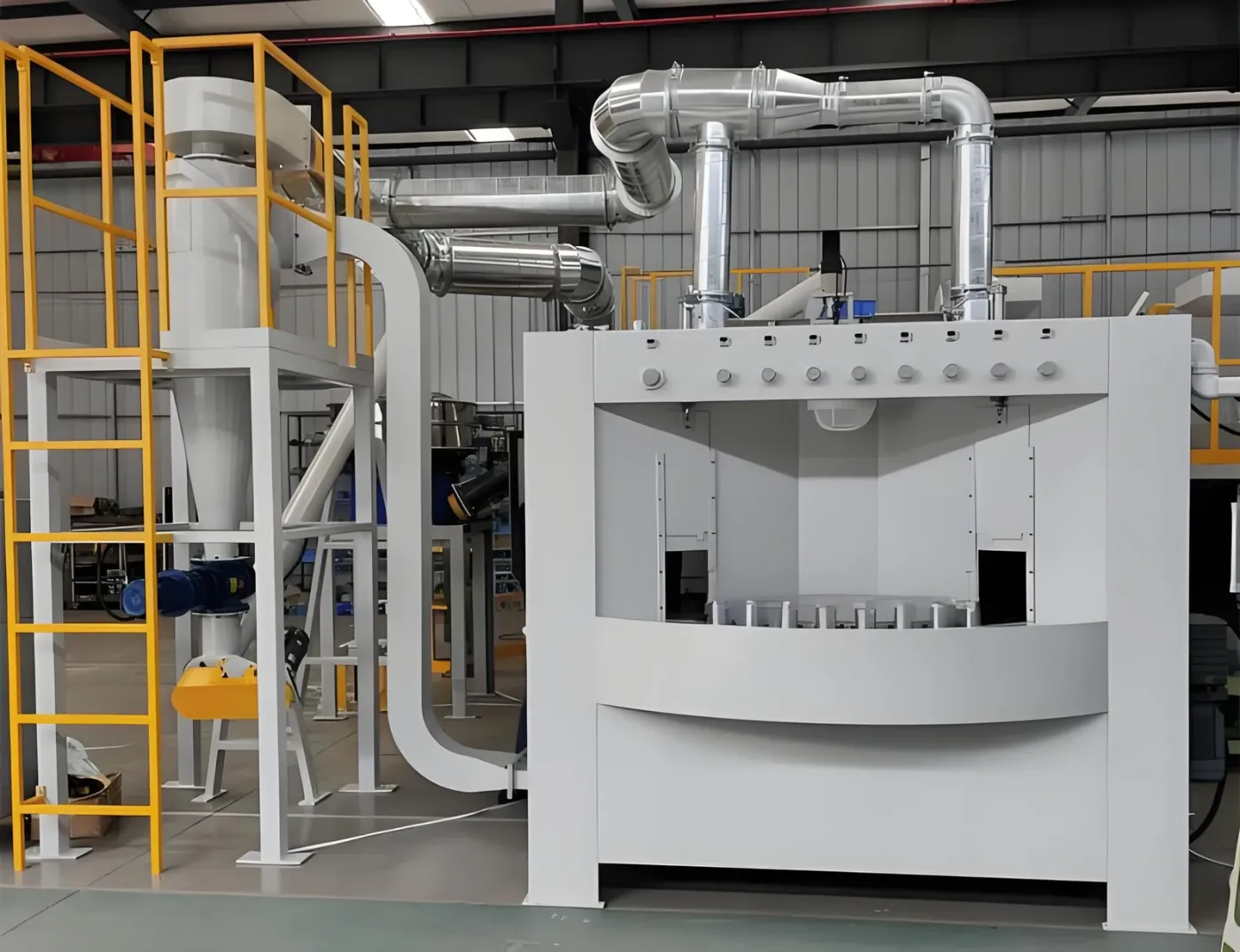
Equipment is generally selected by part geometry, batch size, and throughput requirement.
| Equipment type | Best for | Typical output |
|---|---|---|
| Manual blast cabinet | Spot finishing, custom or one-off parts, small batches | Low, operator-paced |
| Rotary table automatic | Medium castings, gear blanks, valve bodies needing 360° coverage | Medium, batch |
| Hook type shot blast | Fragile, hollow, or odd-shaped hanging parts | Medium, batch |
| Tumble belt shot blast | Small parts in bulk — fasteners, springs, small castings | High, continuous batch |
| Roller conveyor blast line | Steel plates, structural beams, pipes | High, continuous inline |
MUSI’s blast equipment uses automatic media recovery and recycling, achieving 95%+ media reuse efficiency, with integrated dust collection to keep the work environment compliant with air quality standards.
What are the key specifications to compare before buying?
| Specification | Why it matters |
|---|---|
| Media type & recovery rate | Determines surface profile and ongoing consumable cost |
| Chamber / cabinet size | Must fit your largest workpiece with clearance |
| Dust collection capacity | Keeps silica/dust exposure within workplace limits |
| Cycle time or line speed | Sets throughput per shift |
| Automation level | Affects labor cost and blast consistency |
How much does sandblasting & shot peening equipment cost?
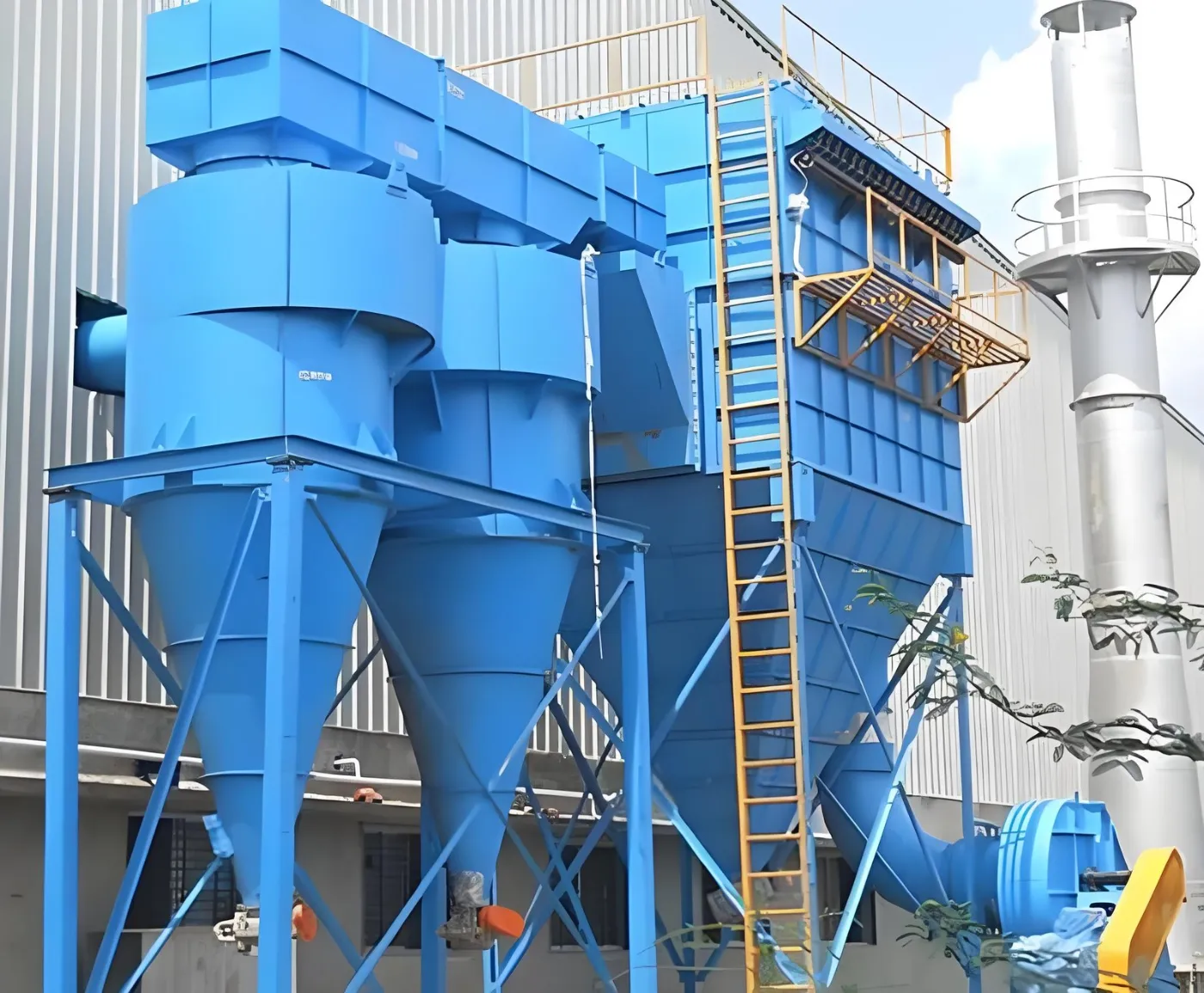
Pricing scales with automation and throughput. As a general guide: manual blast cabinets typically run USD 3,000–15,000; rotary-table and tumble-belt batch machines run roughly USD 20,000–80,000; and continuous roller-conveyor blast lines for structural steel or high-volume plants range from about USD 80,000 to USD 500,000 or more, depending on chamber size, media recovery system, and dust collection scope. Request a quotation against your actual part dimensions and target throughput — generic price lists rarely reflect the media recovery and dust control specification your facility will need.
Which industries use sandblasting & shot peening equipment?
- Structural steel & construction — beams, plates, and pipes before priming
- Automotive & heavy machinery — castings, frames, and components before coating
- Fasteners & springs — shot peening for fatigue life, tumble blasting for cleaning
- Valve, pump & gear manufacturing — rotary table blasting for uniform coverage on complex shapes
- Foundries — scale and sand removal from castings before finishing
Manual vs automatic sandblasting: which should you choose?
| Factor | Manual cabinet | Automatic (rotary/tumble/conveyor) |
|---|---|---|
| Upfront cost | Lower | Higher |
| Labor per part | High | Low |
| Throughput | Low | Medium–high, continuous |
| Consistency | Operator-dependent | Repeatable |
| Best fit | Varied, low-volume parts | Consistent, higher-volume parts |
If your parts are highly varied or volumes are low, a manual cabinet keeps upfront cost down. Once volume and consistency requirements grow, an automatic system usually pays back through labor savings and repeatable surface preparation ahead of coating.
Why source sandblasting & shot peening equipment from MUSI Technology?
Changzhou MUSI Environmental Technology Co., Ltd. (MUSI Technology) is a China-based manufacturer with 800+ lines delivered to 36 countries. MUSI builds manual cabinets, rotary table, hook type, tumble belt, and roller conveyor blast systems with automatic media recovery (95%+ reuse) and integrated dust collection, alongside its automatic spray, powder, and liquid coating lines and VOCs treatment equipment — so pretreatment and coating can be sourced from one accountable supplier. Core components from Siemens, ABB, SEW and other international brands can be specified per customer, backed by a 12-month full-machine and 36-month critical-component warranty, with standard equipment shipped in about 30 days and on-site installation and training included. Structural parts are covered for up to 60 months.
Frequently Asked Questions
What is the difference between sandblasting and shot peening?
Sandblasting cleans a surface and removes rust, scale, or old coating using abrasive media, primarily to prepare it for a new finish. Shot peening uses smaller, rounder media at controlled intensity specifically to induce compressive residual stress and improve a part’s fatigue resistance, rather than to clean it.
How much does a sandblasting machine cost?
Manual blast cabinets typically cost USD 3,000–15,000. Automatic batch machines (rotary table, tumble belt) run roughly USD 20,000–80,000, and continuous roller-conveyor blast lines range from about USD 80,000 to USD 500,000+ depending on size and dust collection scope.
What media recovery rate should I expect?
Well-designed automatic blast systems with reclaim and dust collection typically achieve 95%+ media reuse, which significantly lowers ongoing consumable cost versus systems without recovery.
Do I need dust collection with my blast equipment?
Yes for any enclosed or continuous system. Integrated dust collection is required to keep workplace air quality within safety limits and is standard on MUSI’s blast equipment.
Which blast machine fits small, irregular parts?
A hook-type shot blast machine, where parts hang and rotate inside the chamber, works well for fragile, hollow, or odd-shaped components. For small parts in bulk, a tumble belt machine gives high throughput with all-around exposure.
Need help selecting a blast system for your parts? Send MUSI Technology your workpiece type, material, and target throughput, and our engineers will propose a suitable configuration and quotation within 24 hours.
Related equipment: Sandblasting & Shot Peening Systems
Related guide: Shot Peening vs Shot Blasting vs Sandblasting: Purpose, Parameters and Machine Choice
Send us your part size, throughput and coating type — our engineers reply within 24 hours, and a layout and budget follow once your part data is complete. Contact MUSI Technology or browse our equipment range.
Related technical guides
- Complete Coating Line Cost: 2026 Budget Guide
A complete powder coating line costs USD 75,000 for a semi-automatic setup to USD 2,000,000 for a fully automated plant. - Spray Booth Filters: Types, Intervals & Cost
Paint arrestor, ceiling, intake and exhaust filters compared on efficiency, pressure drop and life. Replacement intervals, how to read a manometer, and. - EV Battery Pack Housing Coating Line: Specs & Cost
Battery pack housings need dielectric strength, thermal stability and corrosion life in one coating. Powder versus liquid compared, film build targets,. - Spray Coating Line: Types, Specs & Cost (2026)
What a spray coating line costs, how the main types compare on throughput and finish, and the specs to fix before you ask for quotations. - Shot Blasting vs Sandblasting: Which to Choose
Shot blasting throws abrasive mechanically with wheels; sandblasting propels it with compressed air. Compared on throughput, energy cost per m2, surface.
QQuestions buyers ask before ordering
quotation · price · lead time · installation · warranty
What information do you need to prepare a quotation?
Send part drawings or photos, the largest part size and weight, the material, the required output per shift, the paint or powder type and number of colours, and the available floor space, ceiling height and power or gas supply. MUSI engineers reply within 24 hours; a recommended configuration and quotation follow once your part data is complete.
How much does this equipment cost?
Budget depends on part size, throughput and the level of automation. Indicative ex-works ranges are published in our sandblasting and shot peening cost guide; a configured quotation is prepared from your part data.
What is the lead time?
Standard configurations ship in 30–60 days from contract signing and down payment; custom configurations take longer. The delivery date is fixed in the contract.
Do you install and train operators overseas?
Yes. MUSI engineers carry out on-site installation and commissioning and give 3–5 days of operator and maintenance training. MUSI has delivered 800+ coating lines to customers in 36 countries.
What warranty and after-sales support are included?
12 months full-machine warranty, 36 months on critical components and up to 60 months on structural parts. International customers get 24-hour phone response and 72-hour on-site arrival; spare parts ship from the Changzhou headquarters.
Can the environmental equipment be supplied with the line?
Yes. VOC treatment (RTO, RCO, activated carbon, zeolite rotor), dust collection and paint wastewater treatment are supplied with the coating line under one contract; MUSI has equipped 50+ coating facilities whose projects all passed local environmental compliance reviews.