Shot Peening vs Shot Blasting vs Sandblasting: Purpose, Parameters and Machine Choice
Quick answer: Shot peening fires round media at a controlled Almen intensity and coverage to put the part surface into compressive residual stress, which delays fatigue cracks in springs, gears, shafts and welds. Shot blasting (wheel-driven) and sandblasting (compressed-air) clean steel to ISO 8501-1 Sa 2½ or Sa 3 and create a surface profile of roughly 25-150 µm for coating. Peening is specified by intensity, coverage and media; blast cleaning by cleanliness grade and roughness.
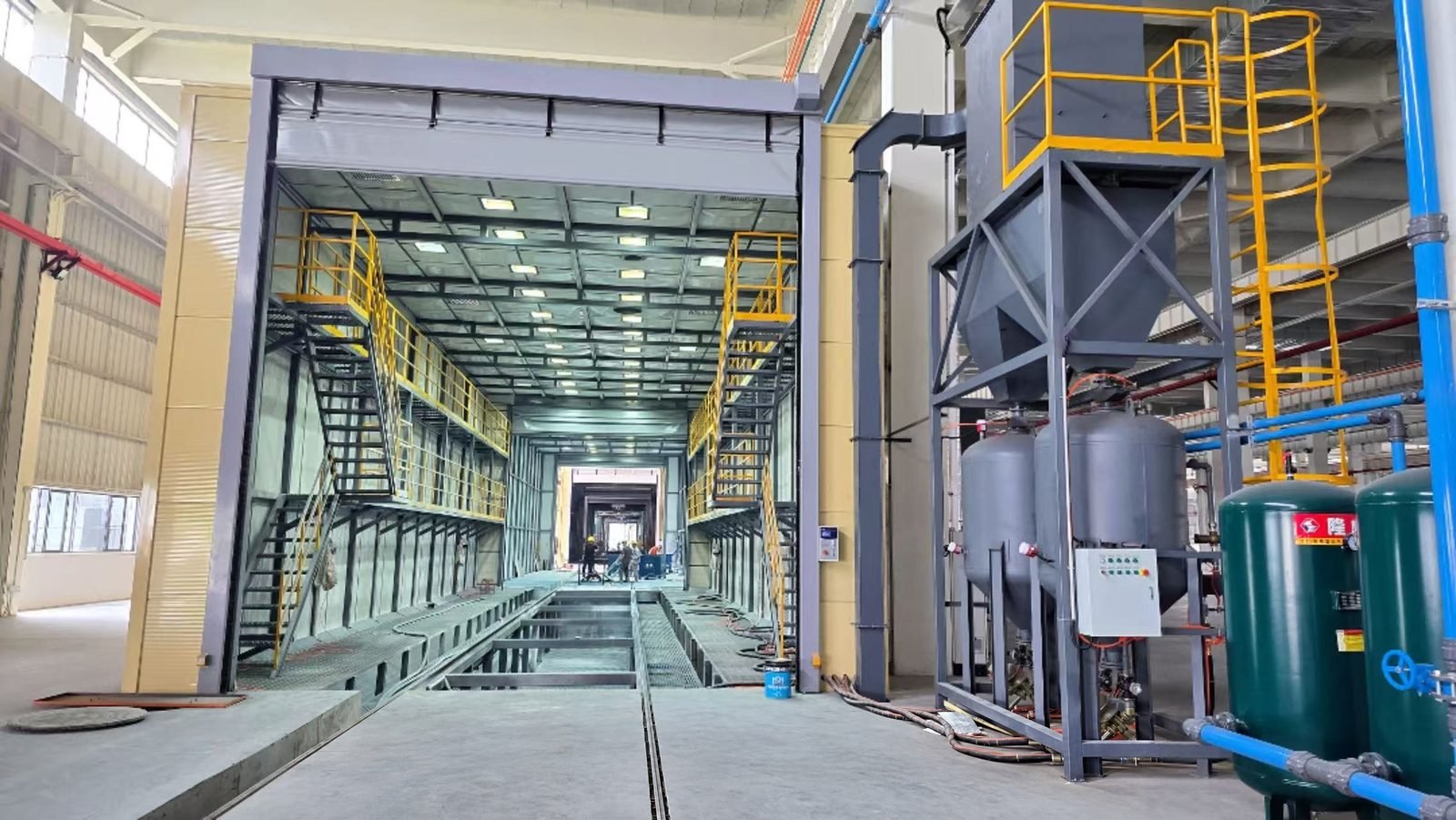
MUSI Technology, a surface treatment and coating line manufacturer in Changzhou, China, builds shot peening machines with Almen-strip intensity checks and media classification, as well as hook, tumble belt and roller conveyor shot blasting machines, rotary table blasting machines and sandblasting rooms for pre-coating cleaning.
What is the difference between shot peening, shot blasting and sandblasting?
| Item | Shot peening | Shot blasting | Sandblasting (abrasive blasting) |
|---|---|---|---|
| Purpose | Compressive residual stress in the surface layer to resist fatigue cracking | Remove rust, mill scale and casting sand; create a profile for coating | Remove rust, old coatings and burrs; create a profile for coating |
| Media propelled by | Blast wheel or compressed-air nozzle | Centrifugal blast wheel | Compressed air |
| Media shape | Round: cast steel shot, conditioned cut wire, ceramic or glass bead | Steel shot or steel grit | Mostly angular: aluminium oxide, garnet, steel grit; also glass bead |
| What is checked | Almen intensity and coverage | ISO 8501-1 cleanliness and ISO 8503 roughness | ISO 8501-1 cleanliness and ISO 8503 roughness |
| Typical parts | Coil and leaf springs, gears, crankshafts, connecting rods, steering knuckles, welded joints | Castings, forgings, stampings, steel plate and sections, welded structures | Large parts in blast rooms; small parts in blast cabinets |
| If it is skipped | Shorter fatigue life, earlier cracks | Poor coating adhesion, early corrosion | Poor coating adhesion, early corrosion |
Shot blasting and sandblasting are compared in detail in shot blasting vs sandblasting. This guide focuses on how peening differs from both.
How much does shot peening improve fatigue life?
Published gains depend on the material, the part and the peening settings. Course material from The Open University (OpenLearn) reports fatigue strength gains of up to about 50% for low and medium carbon and low-alloy steels; the figures for aluminium alloys and connecting rods are listed on the shot peening machine page.
Over-peening, meaning far more coverage or intensity than the drawing asks for, can reduce the benefit, which is why peening is run to a specification rather than “as much as possible”.
How is shot peening measured?
Peening intensity is measured on Almen strips: thin spring-steel strips clamped to a holder and peened on one side. The peened side stretches, the strip bows, and the arc height read on an Almen gauge is the measure of intensity. Strips, holders and gauges are specified in SAE J442; the procedure for using them is SAE J443.
| Almen strip | Thickness | Used for |
|---|---|---|
| N | About 0.76-0.81 mm (0.031 in) | Light intensities, below the A-strip range; common with glass and ceramic bead |
| A | About 1.27-1.32 mm (0.051 in) | Recommended for arc heights of about 0.10-0.60 mm; the standard strip for cast shot and cut wire |
| C | About 2.36-2.41 mm (0.094 in) | Heavy intensities, above the A-strip range |
Intensity is written with the strip letter, for example “0.25 mmA” or “10A” in thousandths of an inch. The required intensity comes from the part’s engineering drawing; there is no single “typical” value for all parts.
What does peening coverage mean?
Coverage is judged on the part, not on the Almen strip, usually under 10-30x magnification. Two definitions are in use and buyers should know which one a drawing means:
| Definition | What it says |
|---|---|
| Exposure-time convention | 100% = the original surface is fully replaced by overlapping dimples; 150% or 200% = 1.5 or 2 times the exposure time needed for 100%. Some specifications call for 150% or 200% as a margin. |
| Measured-area definition (SAE J2277) | Coverage is the fraction of area dimpled at least once, so it cannot exceed 100%; 98% is treated as full coverage, and “200%” describes exposure time rather than area. |
How is blast cleaning measured?
Shot blasting and sandblasting before painting are judged by how clean the steel is and how rough it is.
| ISO 8501-1 grade | Description | Closest SSPC / NACE grade |
|---|---|---|
| Sa 3 | Blast-cleaned to visually clean steel | SSPC-SP 5 / NACE No. 1 (white metal) |
| Sa 2½ | Very thorough blast cleaning; only light stains remain | SSPC-SP 10 / NACE No. 2 (near-white) |
| Sa 2 | Thorough blast cleaning | SSPC-SP 6 / NACE No. 3 (commercial) |
| Sa 1 | Light blast cleaning | SSPC-SP 7 / NACE No. 4 (brush-off) |
Surface profile is checked against ISO 8503-1 comparators, which have separate scales for grit-blasted (G) and shot-blasted (S) steel, starting at 25 µm.
Most protective coatings call for Sa 2½ or Sa 3; the profile required is given in the coating’s product data sheet. Media choice for blast cleaning is covered in blasting media selection.
Which media are used for peening and which for cleaning?
| Media | Shape | Peening | Cleaning | Notes |
|---|---|---|---|---|
| Cast steel shot (S sizes, SAE J444) | Round | Yes, with peening-grade hardness and strict size and shape control | Yes | Reused many times in wheel machines |
| Conditioned cut wire | Rounded cylinders | Yes; used on gears, springs and aerospace parts | Rarely | Uniform size and hardness |
| Ceramic (zirconia) bead | Round | Yes; light intensities, no iron contamination on non-ferrous parts | Finishing | Used for aluminium and titanium |
| Glass bead | Round | Light peening of thin parts | Cleaning and satin finish | Mohs about 5.5-6 |
| Steel grit (G sizes) | Angular | No; angular media leave notches | Yes; heavy scale and profile | Reused many times |
| Aluminium oxide | Angular | No | Yes | Mohs about 9 |
| Garnet | Angular | No | Yes | Fewer reuse cycles than steel media |
Which machine type fits which parts?
| Machine | Process | Best for |
|---|---|---|
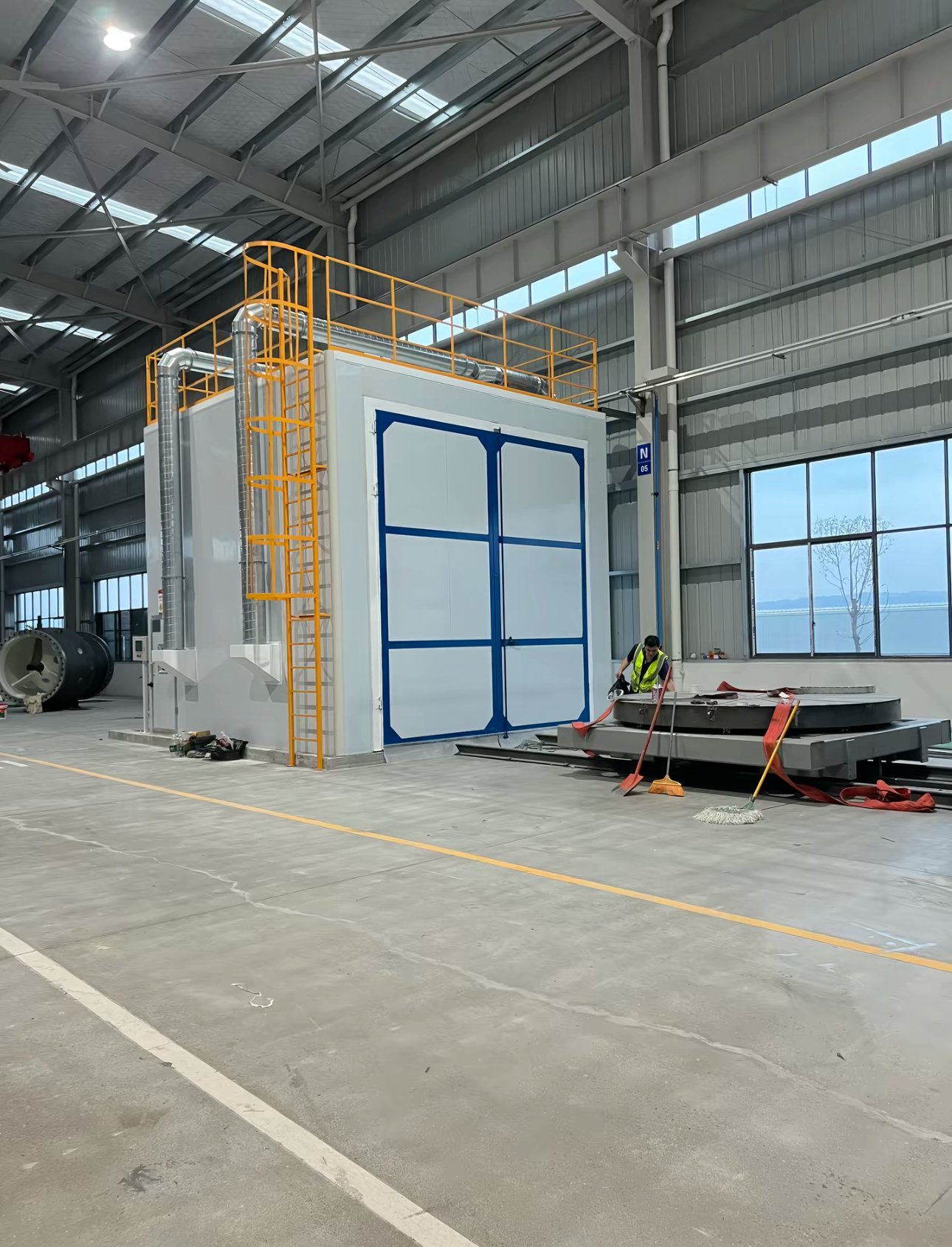
| Shot peening machine (wheel or air nozzle, CNC or robot) | Controlled peening | Springs, gears, shafts and welded parts; air nozzles for bores and local areas |
| Hook type shot blasting machine | Cleaning | Medium and large castings, forgings and welded parts hung on a rotating hook |
| Tumble belt shot blasting machine | Cleaning | Small castings, forgings and stampings that can tumble without damage |
| Roller conveyor shot blasting machine | Cleaning | Steel plate, sections and welded structures before painting, to Sa 2½-Sa 3 |
| Rotary table blasting machine | Cleaning | Flat, thin-walled or impact-sensitive parts |
| Sandblasting room | Cleaning | Very large parts: vehicle bodies, machinery, steel structures |
| Sandblasting cabinet | Cleaning | Small parts and frequent media changes |
Can one machine do both cleaning and shot peening?
A blast cleaning machine can only do controlled peening if it is fitted and run like a peening machine:
| Requirement | Why |
|---|---|
| Round peening-grade media with continuous size and shape classification | Broken or undersize shot changes intensity and can damage the surface |
| Wheel speed by frequency inverter or air pressure by regulator | Media velocity sets intensity and must be repeatable |
| Metered media flow per wheel or nozzle | Flow changes intensity and coverage time |
| Regular Almen strip checks on a part-shaped fixture | Wheel wear shifts the hot spot over time |
| Recorded settings, and computer monitoring where the specification requires it (AMS 2432) | Traceability for each batch |
Whether one machine is accepted for both jobs depends on the specification of the part being peened; aerospace and other critical parts usually require a dedicated, monitored peening process.
Which standards appear in peening and blasting specifications?
| Standard | What it covers |
|---|---|
| SAE J442 | Almen test strips, holders and gauges |
| SAE J443 | Procedure for using Almen strips: saturation, intensity, machine repeatability |
| SAE J2277 | Shot peening coverage determination |
| SAE J444 | Size classification of cast shot and grit |
| SAE AMS 2430 / AMS 2432 | Automatic shot peening / computer-monitored shot peening |
| SAE AMS 2431 series | Peening media: cast shot, cut wire, glass and ceramic bead |
| ISO 26910-1 | General procedure for shot peening metal parts |
| ISO 8501-1 | Rust grades and preparation grades of steel before painting |
| ISO 8503 series | Surface profile of blast-cleaned steel: comparators and measurement |
| ISO 11124 / ISO 11126 | Metallic / non-metallic blast-cleaning abrasives |
What should you send for a quotation?
| Information | Why it matters |
|---|---|
| Part drawings, material, size and weight | Sets machine type, chamber size and part handling |
| Peening: required intensity, coverage, media and specification | Sets wheel or nozzle layout, controls and media classification |
| Cleaning: required ISO 8501-1 grade and profile | Sets abrasive, wheel power and line speed |
| Output per hour or per shift | Sets the number of wheels or nozzles and the handling system |
| Whether parts are painted afterwards | Lets the blasting machine be sized together with the coating line |
MUSI engineers reply within 24 hours; a configuration and quotation follow once your part data is complete.
FAQ
Is shot peening the same as shot blasting? No. Both throw shot at the part, but shot peening is a controlled process that adds compressive stress for fatigue life, checked by Almen intensity and coverage; shot blasting cleans the surface, checked by cleanliness grade and roughness.
Can sandblasting replace shot peening? No. Sandblasting uses mostly angular media and is not controlled for intensity or coverage, so it does not give the specified compressive stress layer.
What does 100% coverage mean in shot peening? The original surface is fully covered by overlapping dimples when viewed under magnification; 200% usually means twice the exposure time needed to reach 100%.
Which Almen strip should be used? The A strip covers most steel-shot and cut-wire peening; the N strip is for lighter intensities and the C strip for heavier ones. The drawing states which strip and intensity apply.
Can steel grit be used for peening? Peening specifications call for round media such as cast shot, conditioned cut wire, ceramic or glass bead; angular grit is used for cleaning.
Does MUSI supply peening and blasting with the coating line? Yes. Shot blasting machines, sandblasting rooms and shot peening machines can be supplied on their own or with the coating line under one contract.
Where MUSI Technology fits
MUSI Technology (Changzhou MUSI Environmental Technology Co., Ltd.) designs and builds shot peening machines, shot blasting machines, sandblasting rooms, coating lines and their dust and VOC treatment in Changzhou, China. Its engineering team, which originated in 2011, has delivered 800+ coating lines to 500+ clients in 36 countries. Send your part drawings and peening or cleaning specification through the contact page for a configured quotation.
Provided by Lin Cong, Technical Director, MUSI Technology
Send us your part size, throughput and coating type — our engineers reply within 24 hours, and a layout and budget follow once your part data is complete. Contact MUSI Technology or browse our equipment range.
Related technical guides
- Blasting Media Selection Guide: Which Abrasive?
Which abrasive for which job: steel shot and grit, garnet, aluminium oxide and glass bead compared on hardness, profile produced, reuse cycles,. - Shipping Container Coating Line: Spec & Layout
Container coating is a C5 marine job run at production speed. Coat sequence, film build, blast and booth sizing, cycle time per box and 2026 plant cost. - Spray Coating Line: Types, Specs & Cost (2026)
What a spray coating line costs, how the main types compare on throughput and finish, and the specs to fix before you ask for quotations. - Shot Blasting vs Sandblasting: Which to Choose
Shot blasting throws abrasive mechanically with wheels; sandblasting propels it with compressed air. Compared on throughput, energy cost per m2, surface. - Coating Line Layout: Floor Space You Need
A semi-automatic powder line needs 200-400 m2; a standard automatic line 600-1,200 m2. Layout rules, U-shape versus straight-through, ceiling height,.
QQuestions buyers ask before ordering
quotation · price · lead time · installation · warranty
What information do you need to prepare a quotation?
Send part drawings or photos, the largest part size and weight, the material, the required output per shift, the paint or powder type and number of colours, and the available floor space, ceiling height and power or gas supply. MUSI engineers reply within 24 hours; a recommended configuration and quotation follow once your part data is complete.
How much does this equipment cost?
Budget depends on part size, throughput and the level of automation. Indicative ex-works ranges are published in our sandblasting and shot peening cost guide; a configured quotation is prepared from your part data.
What is the lead time?
Standard configurations ship in 30–60 days from contract signing and down payment; custom configurations take longer. The delivery date is fixed in the contract.
Do you install and train operators overseas?
Yes. MUSI engineers carry out on-site installation and commissioning and give 3–5 days of operator and maintenance training. MUSI has delivered 800+ coating lines to customers in 36 countries.
What warranty and after-sales support are included?
12 months full-machine warranty, 36 months on critical components and up to 60 months on structural parts. International customers get 24-hour phone response and 72-hour on-site arrival; spare parts ship from the Changzhou headquarters.
Can the environmental equipment be supplied with the line?
Yes. VOC treatment (RTO, RCO, activated carbon, zeolite rotor), dust collection and paint wastewater treatment are supplied with the coating line under one contract; MUSI has equipped 50+ coating facilities whose projects all passed local environmental compliance reviews.