VOC Treatment for Spray Coating Lines: RTO vs RCO vs Activated Carbon vs Zeolite Rotor (2026)
Quick answer: For most coating facilities, a Regenerative Thermal Oxidizer (RTO) is the standard choice for high-flow exhaust, destroying VOCs at ≥98% efficiency. A Regenerative Catalytic Oxidizer (RCO) suits facilities wanting lower energy use, oxidizing VOCs at 250–400°C instead of RTO’s higher incineration temperature. Activated carbon adsorption fits intermittent or lower-flow exhaust streams. A zeolite rotor concentrator is often the most cost-effective option for high-flow, low-concentration exhaust, concentrating VOCs 10–15x before sending them to an RTO for incineration. This guide compares all four so you can match the technology to your exhaust profile and budget.
Why does a coating line need VOC treatment?
Spray coating, especially solvent-based liquid painting, releases volatile organic compounds (VOCs) that must be captured and destroyed before exhaust is released, both to meet air emission standards and to protect worker health. As global emission standards tighten, VOC treatment has moved from optional to mandatory for most coating facilities, and the technology you choose affects both compliance risk and long-term operating cost.
RTO vs RCO vs activated carbon vs zeolite rotor: side-by-side comparison
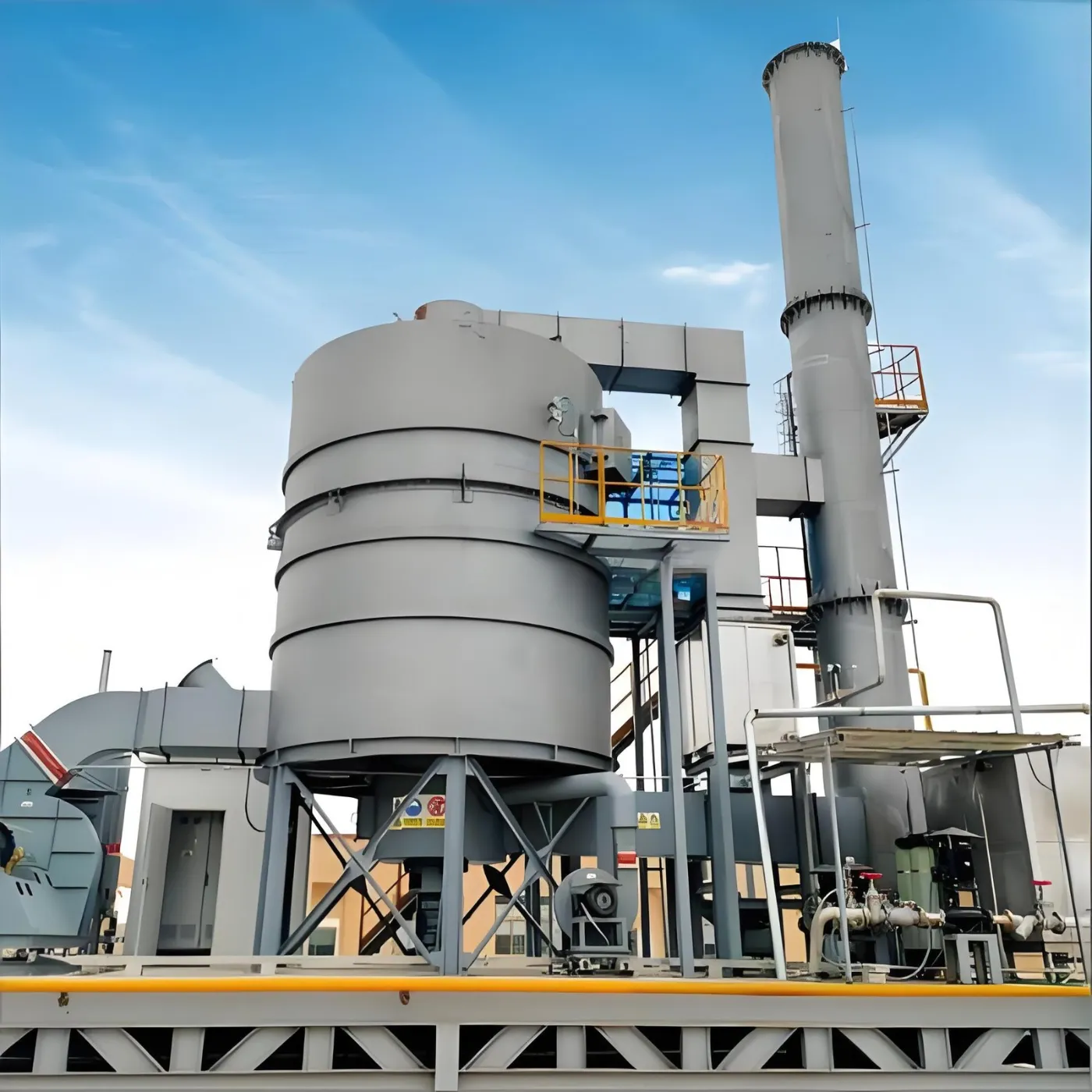
| Technology | How it works | Best for | Typical performance |
|---|---|---|---|
| Regenerative Thermal Oxidizer (RTO) | Ceramic regenerative heat exchanger recovers exhaust heat; VOCs incinerated at high temperature | High-flow, low-concentration exhaust | ≥98% VOC destruction efficiency |
| Regenerative Catalytic Oxidizer (RCO) | Noble metal catalyst oxidizes VOCs to CO₂ and H₂O | Facilities wanting lower energy use than RTO | Operates at 250–400°C, well below RTO temperatures |
| Activated carbon adsorption | Honeycomb activated carbon adsorbs VOCs, then hot-air desorption + catalytic combustion regenerates the carbon | High-flow, low-concentration, intermittent exhaust | Effective for variable or intermittent operation |
| Zeolite rotor concentrator | Hydrophobic zeolite molecular sieve rotor concentrates VOCs before incineration (typically via RTO) | High-flow, low-concentration exhaust where running a full-size RTO on all air would be costly | Concentrates VOCs 10–15x, then incinerated |
Which VOC treatment technology should you choose?
- Choose RTO if you have high, relatively steady exhaust flow and want the highest destruction efficiency with heat recovery to offset fuel cost.
- Choose RCO if energy cost is the priority and your VOC concentration and flow suit catalytic oxidation at lower temperature than RTO.
- Choose activated carbon if your exhaust is intermittent or lower-flow, where running a continuous thermal system would be inefficient.
- Choose a zeolite rotor concentrator (paired with RTO) if your total exhaust volume is very high but VOC concentration is low — concentrating first cuts the size and fuel cost of the downstream oxidizer, making it currently one of the most cost-effective combinations for large coating facilities.
How does VOC treatment fit into a complete coating line?
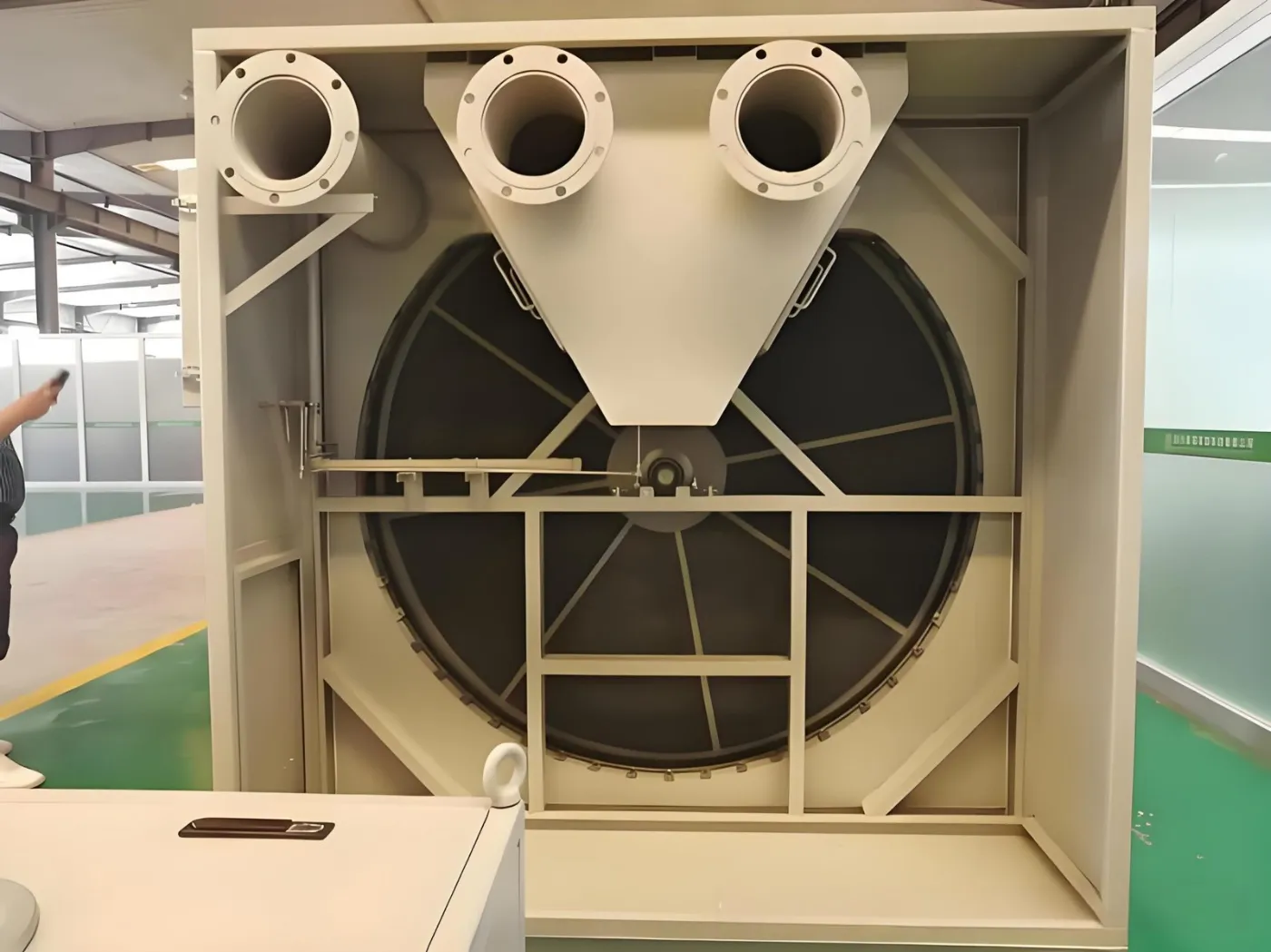
VOC treatment is typically the last stage in a complete environmental system: exhaust collection at the spray booth or oven, ducting to the treatment unit, concentration (if using a zeolite rotor), and finally oxidation (RTO/RCO) or adsorption (activated carbon) before compliant emission. Facilities using water-based or water-curtain spray booths also need paint wastewater treatment — typically demulsification, flocculation, flotation, and biological treatment — to reuse or safely discharge process water alongside the air treatment system.
Why source VOC treatment equipment from MUSI Technology?
MUSI Technology’s Environmental Division has delivered VOCs and wastewater treatment solutions to 50+ coating facilities, with all projects passing local environmental compliance review. As Changzhou MUSI Environmental Technology Co., Ltd. — a name that reflects the company’s environmental commitment, not just its business line — MUSI provides RTO, RCO, activated carbon, and zeolite rotor systems alongside paint wastewater treatment, integrated with its spray, powder, and liquid coating lines so exhaust and wastewater treatment are sized correctly for your actual coating process from day one, rather than retrofitted afterward. Core components from Siemens, ABB, SEW and other international brands can be specified per customer, backed by a 12-month full-machine and 36-month critical-component warranty. Structural parts are covered for up to 60 months.
What to send for a quotation
Need VOC treatment sized for your booths? Send the booth exhaust volume (m³/h), solvent type and your local emission limit, and we recommend RTO, RCO, activated carbon or zeolite rotor.
Frequently Asked Questions
What is the VOC destruction efficiency of an RTO?
A well-designed 2- or 3-chamber RTO with ceramic regenerative heat exchange typically achieves ≥98% VOC destruction efficiency, making it the benchmark technology for high-flow exhaust.
Is RCO cheaper to run than RTO?
RCO generally uses less energy than RTO because catalytic oxidation happens at 250–400°C, significantly lower than the temperatures RTO incineration requires, which can reduce fuel consumption for suitable exhaust streams.
What is a zeolite rotor concentrator used for?
A zeolite rotor concentrates VOCs from a high-flow, low-concentration exhaust stream by 10–15x using a hydrophobic molecular sieve rotor, then sends the concentrated, lower-volume stream to an RTO for incineration — reducing the size and operating cost of the oxidizer needed.
When should I use activated carbon instead of thermal oxidation?
Activated carbon adsorption suits high-flow, low-concentration, intermittent exhaust where running a continuous thermal oxidizer would waste energy; the carbon is regenerated via hot-air desorption and catalytic combustion.
Do I need wastewater treatment along with VOC/air treatment?
If you use water-curtain spray booths or water-based paint, yes — paint-laden wastewater needs treatment (demulsification, flocculation, flotation, biological process) separately from air/VOC treatment, for reuse or compliant discharge.
Need to size VOC treatment for your coating line? Send MUSI Technology your exhaust flow rate and VOC concentration, and our engineers will recommend the right technology and configuration within 24 hours.
Send us your part size, throughput and coating type — our engineers reply within 24 hours, and a layout and budget follow once your part data is complete. Contact MUSI Technology or browse our equipment range.
Related technical guides
- Heavy Machinery Coating Workshop Layout & Cost
Coating construction and agricultural machinery needs blast rooms, large spray booths and forced-cure drying rather than a conveyor line. - How to Choose a Powder Coating Line: 2026 Decision Table
Choose a powder coating line by part size, output per shift, 5-15 min colour changes and emission rules. Published MUSI specs, USD 75,000-2,000,000 budgets. - Powder Coating Pretreatment Line: Stages & Cost
A pretreatment line degreases, rinses and chemically converts the metal surface before coating. Three, five and seven-stage layouts, phosphate versus. - BESS Container Coating Line: Spec & Corrosion
Battery energy storage containers need C4 to C5 corrosion protection: shot blasting to Sa2.5, zinc-rich primer and weather-resistant polyester topcoat. - Coating Line Factory Audit: 20-Point Checklist
A 20-point pre-shipment audit for coating line buyers: what to measure, what to demand in writing, which documents to collect and which findings should.
QQuestions buyers ask before ordering
quotation · price · lead time · installation · warranty
What information do you need to prepare a quotation?
Send part drawings or photos, the largest part size and weight, the material, the required output per shift, the paint or powder type and number of colours, and the available floor space, ceiling height and power or gas supply. MUSI engineers reply within 24 hours; a recommended configuration and quotation follow once your part data is complete.
How much does this equipment cost?
Budget depends on part size, throughput and the level of automation. Indicative ex-works ranges are published in our complete coating line cost guide; a configured quotation is prepared from your part data. Published indicative ex-works ranges: a complete powder coating line is roughly USD 75,000–230,000 semi-automatic, USD 200,000–600,000 for a standard automatic line and USD 600,000–2,000,000 for a high-throughput automated plant.
What is the lead time?
Standard configurations ship in 30–60 days from contract signing and down payment; custom configurations take longer. The delivery date is fixed in the contract.
Do you install and train operators overseas?
Yes. MUSI engineers carry out on-site installation and commissioning and give 3–5 days of operator and maintenance training. MUSI has delivered 800+ coating lines to customers in 36 countries.
What warranty and after-sales support are included?
12 months full-machine warranty, 36 months on critical components and up to 60 months on structural parts. International customers get 24-hour phone response and 72-hour on-site arrival; spare parts ship from the Changzhou headquarters.
Can the environmental equipment be supplied with the line?
Yes. VOC treatment (RTO, RCO, activated carbon, zeolite rotor), dust collection and paint wastewater treatment are supplied with the coating line under one contract; MUSI has equipped 50+ coating facilities whose projects all passed local environmental compliance reviews.