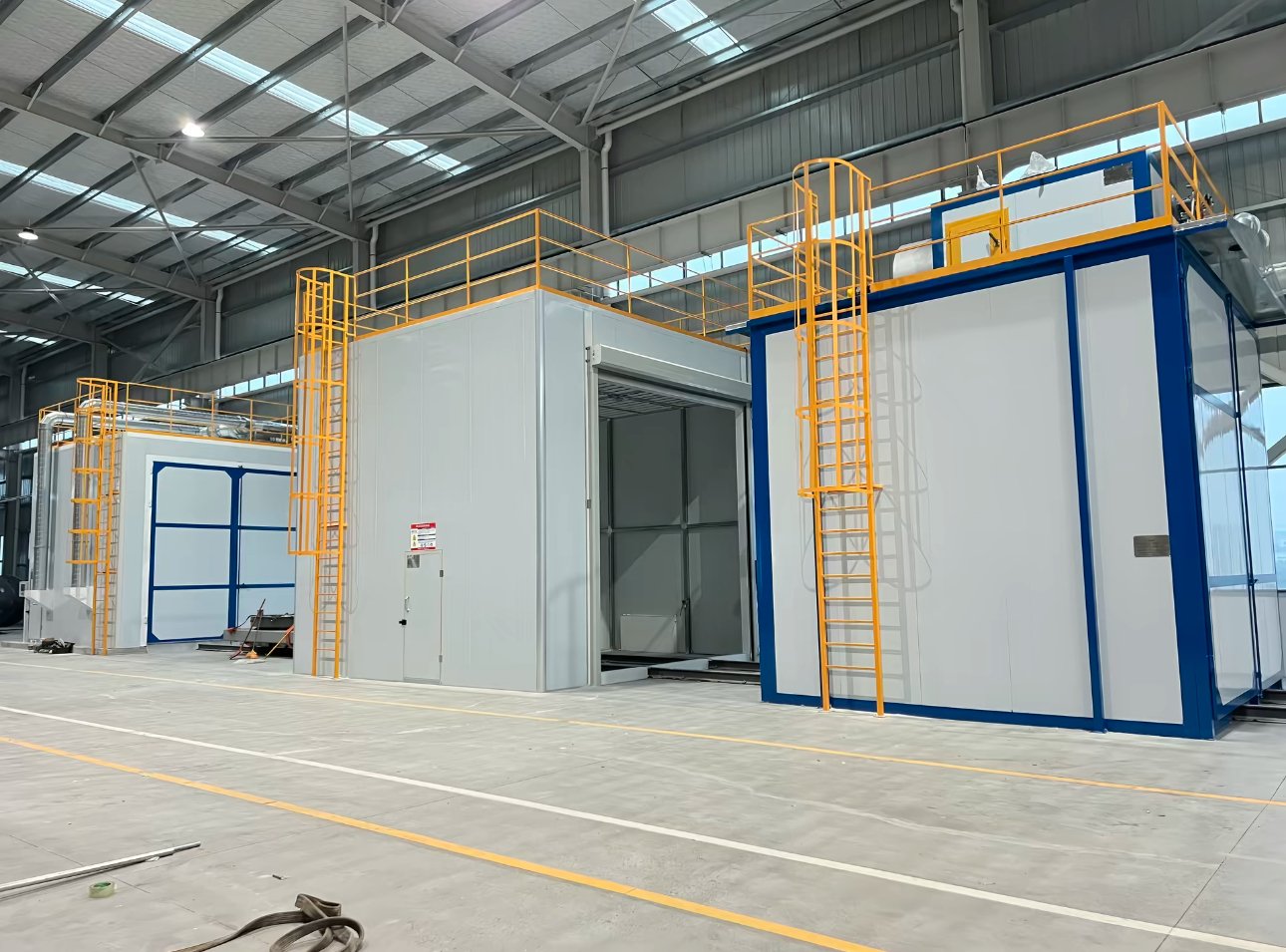
Sandblasting Room (Abrasive Blast Room)
Walk-in blast room for containers, steel structures, tanks and large weldments — floor abrasive recovery, air-wash separator, cartridge dust collection and cross-draft ventilation in one enclosure.
Built for parts too large or too varied for an automatic blasting machine, where operators blast to Sa2.5 by hand and the room recovers and cleans the abrasive.
Technical Specifications
Values below are typical ranges for this equipment type. The figures for your line are fixed in the written specification after we review your parts, output and site.
| Room size | Typical 6 x 4 x 4 m to 20 x 6 x 6 m internal; 40 ft container rooms from 15 m long |
|---|---|
| Surface standard | ISO 8501-1 Sa2.5 (Sa3 on request), 40-75 micron profile |
| Abrasive | Steel grit or shot G25-G80, garnet or aluminium oxide; recovery capacity typical 5-15 t/h |
| Floor recovery | Full-floor scraper, partial H-floor or pneumatic sweep-in, chosen by room size and abrasive load |
| Abrasive cleaning | Bucket elevator, air-wash separator, vibrating screen and storage hopper |
| Blast stations | 1-4 operators, 8-12.5 mm venturi nozzles at 6-7 bar, 6-10 m3/min compressed air per nozzle |
| Ventilation | Cross-draft or down-draft at 0.3-0.5 m/s face velocity, cartridge dust collector with pulse cleaning |
| Lighting | Explosion-protected LED, 300-500 lux at the work surface |
| Structure | Rubber-lined steel panels, personnel and vehicle doors, side platforms for tall parts |
| Operator safety | Air-fed helmets, breathing-air filtration, dead-man remote control valves |
Line Configuration
- Steel panel enclosure with wear-resistant rubber lining and sealed doors
- Floor abrasive recovery with scrapers or pneumatic conveying to the elevator
- Bucket elevator, air-wash separator and abrasive storage hopper feeding the blast pots
- Cartridge dust collector sized to the room airflow, with explosion relief where required
- Blast pots with remote control, breathing-air system and operator platforms
- Optional rail transfer car or roller conveyor for moving parts in and out
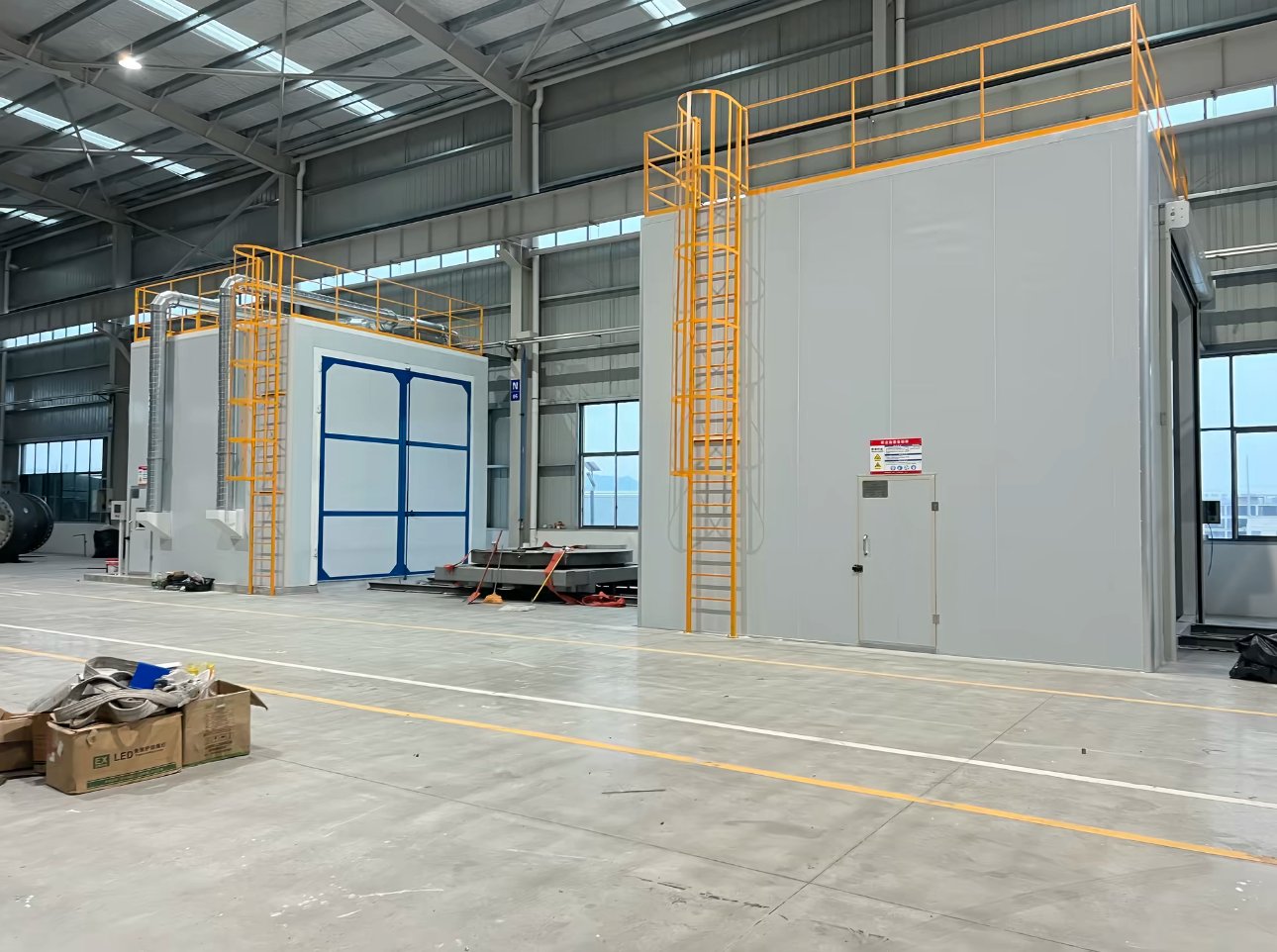
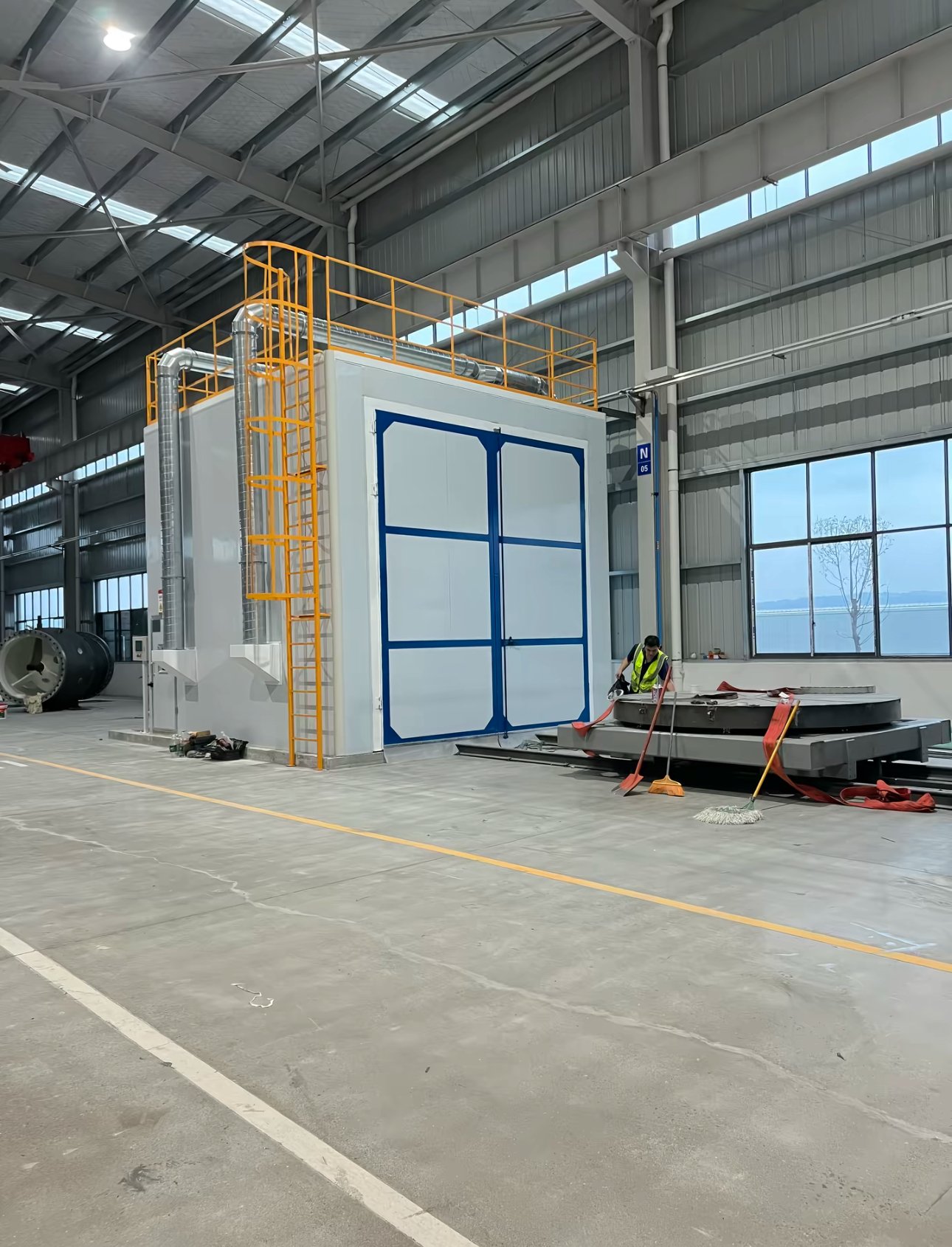
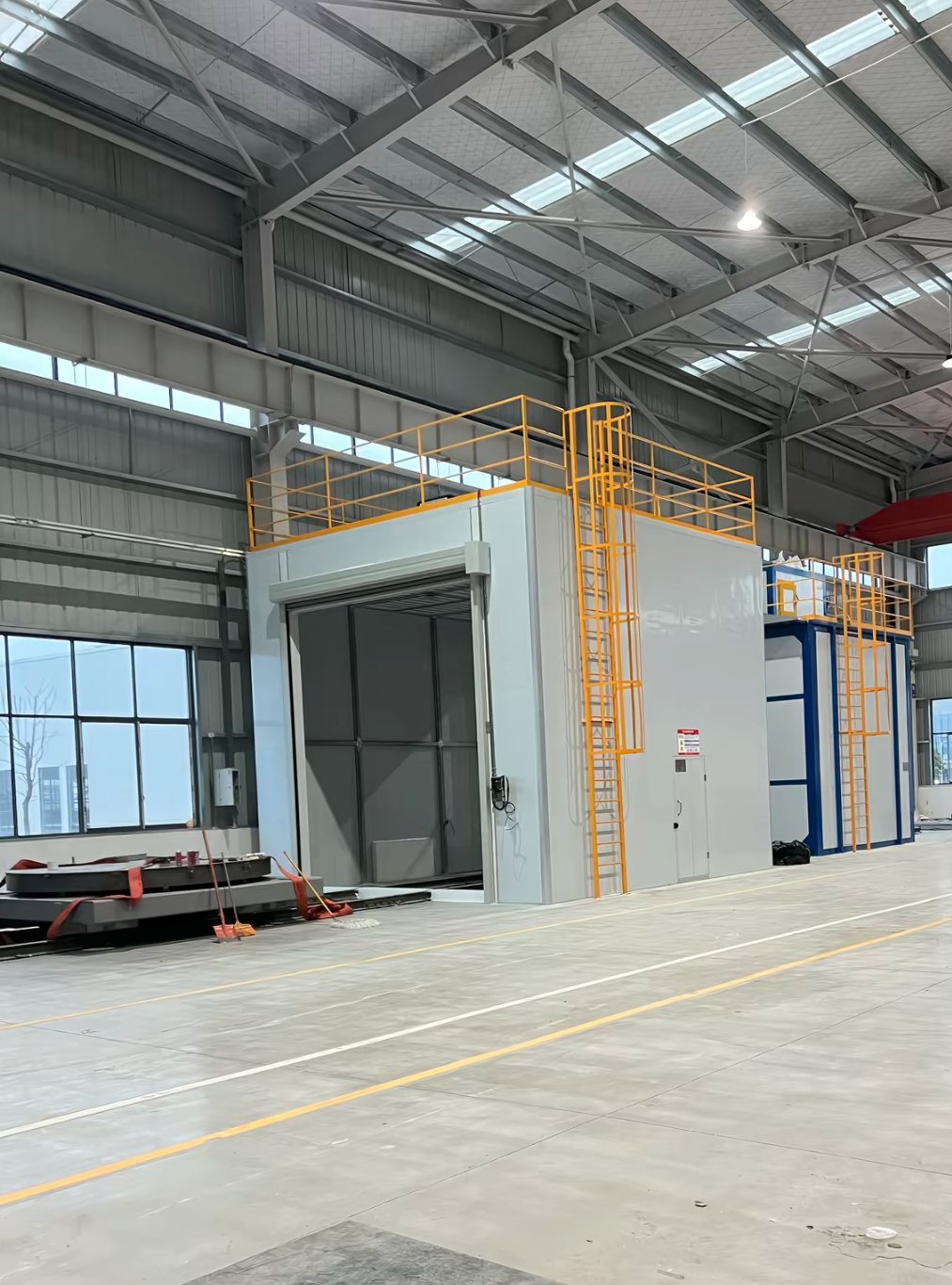
Sandblasting Room in Practice
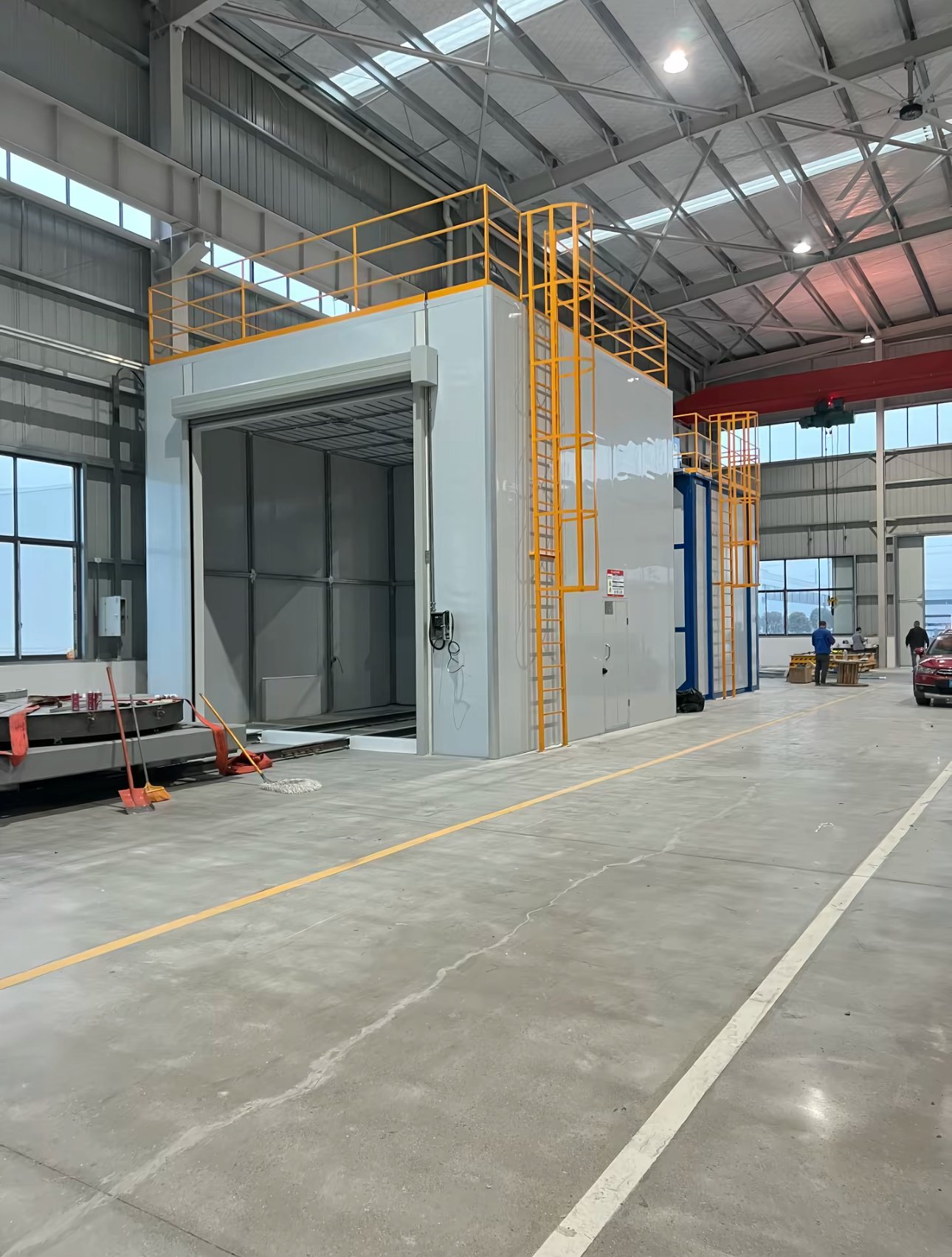
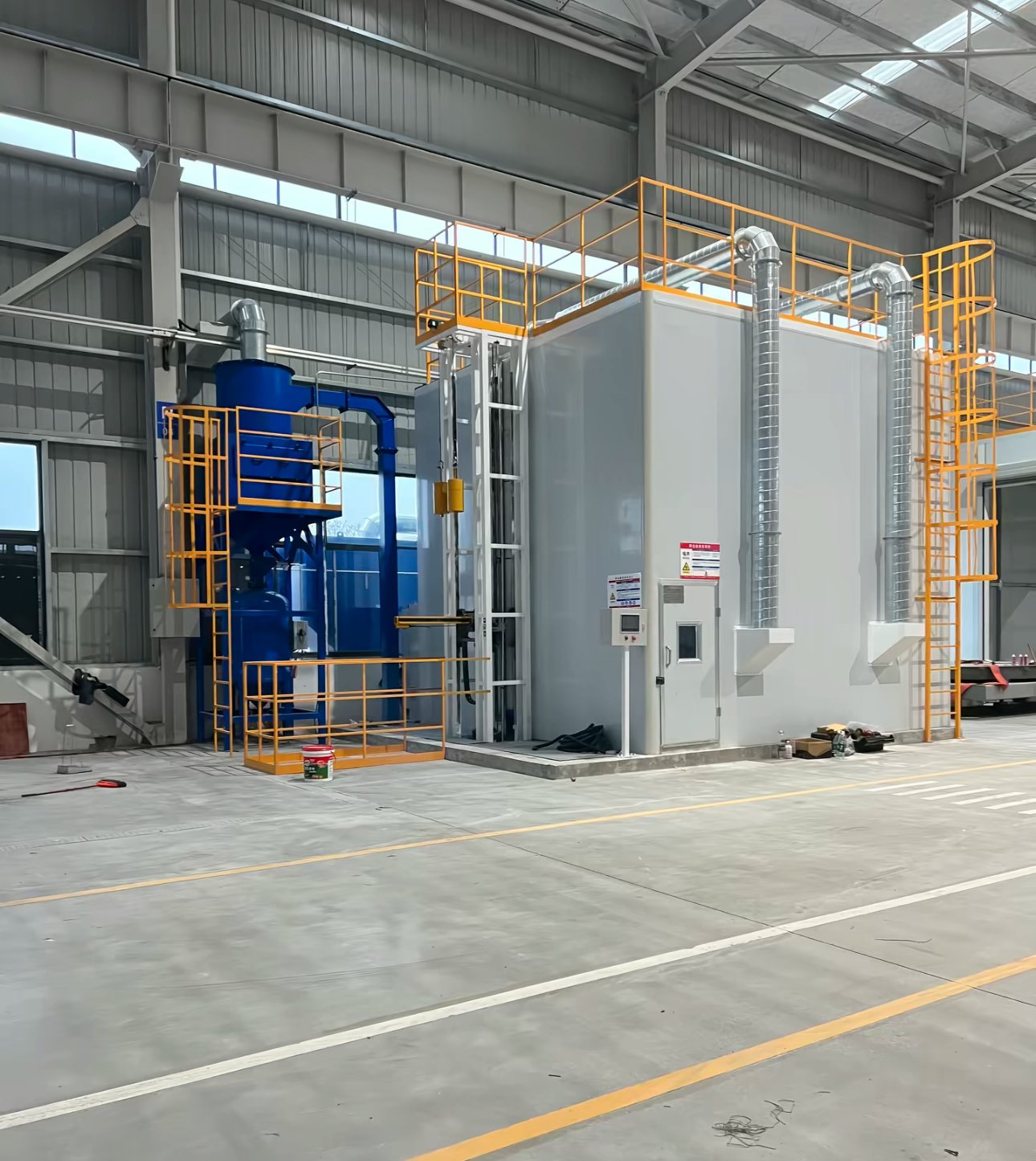
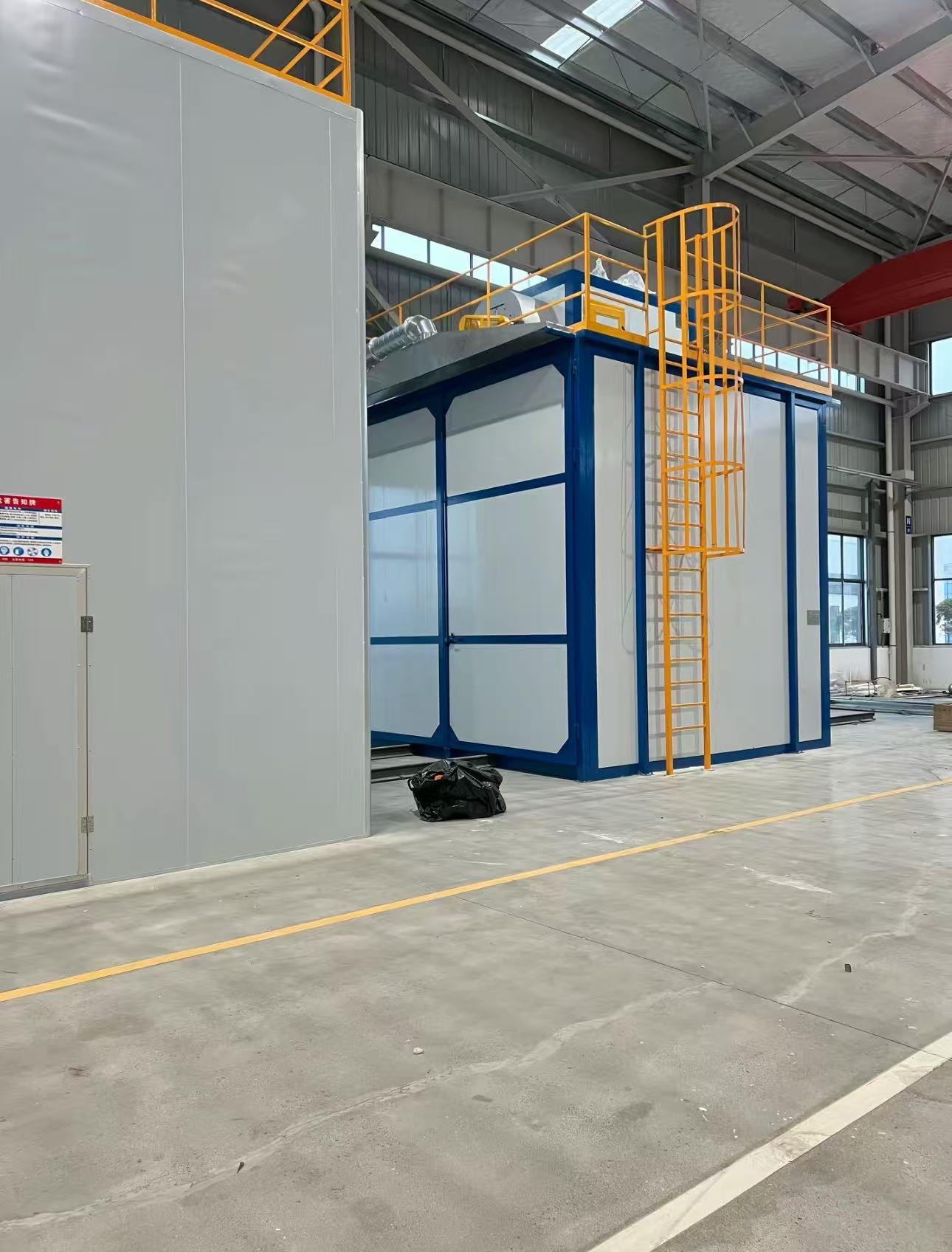
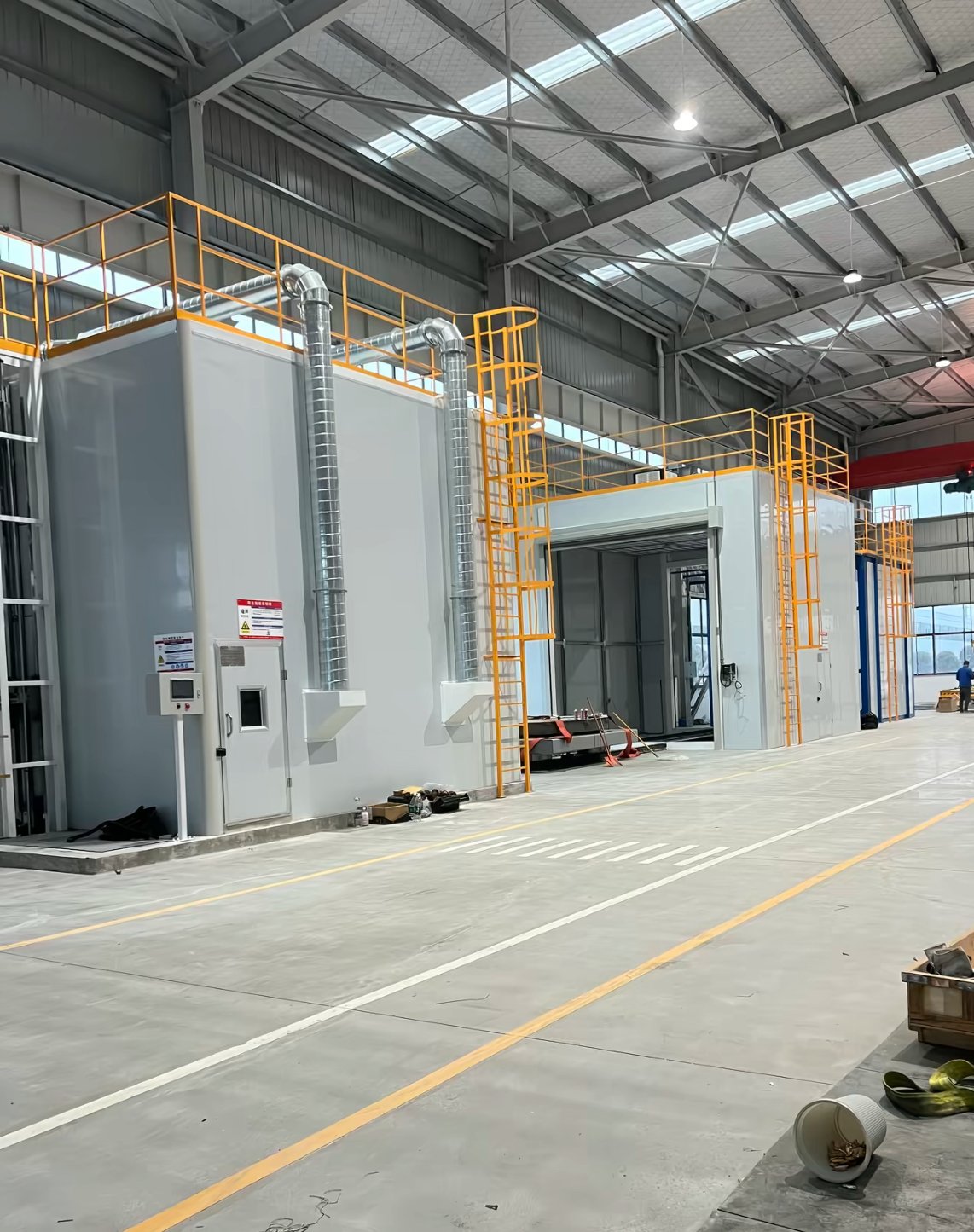
Photos from a blasting and painting room line supplied for large workpieces: blast room with blue-framed double doors and rail-mounted turntable, abrasive recovery elevator and cartridge dust collector, blow-off room with roll-up door, spiral exhaust ducts, control panel and roof platforms with caged access ladders.
Application References
Container plants, steel structure fabricators, pressure vessel and tank builders, shipyard and offshore workshops, and heavy machinery plants that blast large weldments before priming.
Engineering Commitment
Every line is engineered against a written performance specification. Line speed, cure profile, film build and emission level are stated in the contract and demonstrated on your own part at the factory trial run before shipment. One engineering team owns the whole chain — pretreatment, application, curing, conveying and emission control — so the trade-offs between them are settled on the drawing board, not on your factory floor.
Service & Delivery
Standard configurations ship in 30-60 days with a 12-month full-machine and 36-month critical-component warranty. On-site installation, commissioning and operator training are available worldwide, and process tuning and spare parts support continue for the working life of the line.
Frequently Asked Questions
Blast room or automatic shot blasting machine?
A roller-conveyor or hook-type machine is faster for repeat parts of a fixed size. A blast room suits large, one-off or mixed parts, and lets operators reach inside and under the workpiece. Many plants run both: the machine for standard profiles, the room for the rest.
Which floor recovery should I choose?
Full-floor scraper recovery gives the fastest turnaround and the least manual sweeping, at the highest cost. Partial H-floor recovery covers most of the benefit at a lower price for rooms under about 12 m. Pneumatic sweep-in suits small rooms and low throughput.
What dust collector airflow does the room need?
Airflow follows the room cross-section and the chosen face velocity, not the number of nozzles. A 6 x 6 m cross-section at 0.4 m/s needs about 50,000 m3/h. We calculate it from the room drawing and select the cartridge collector to match.