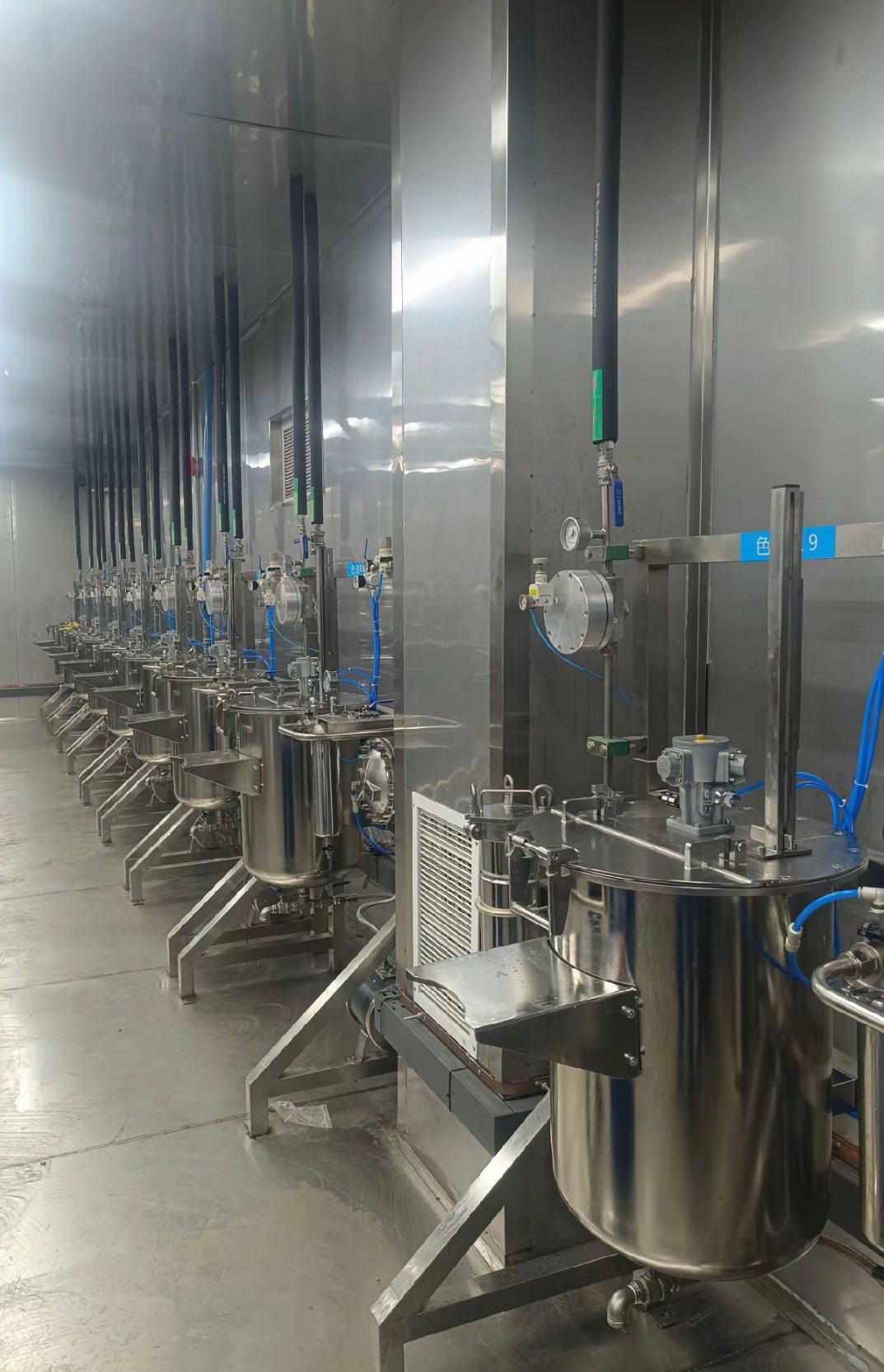
Paint Mixing Room (Paint Kitchen)
Explosion-protected room where liquid paint is stored, mixed, filtered and pumped to the spray booths — ventilation, temperature control, paint circulation and 2K dosing in one enclosure.
Built for plants that spray solvent-borne or water-borne paint every shift and need mixing, thinning and solvent handling out of the booth and under controlled conditions.
Technical Specifications
Values below are typical ranges for this equipment type. The figures for your line are fixed in the written specification after we review your parts, output and site.
| Room size | Typical 3 x 3 x 3 m to 6 x 5 x 3.5 m internal, sized to daily paint volume |
|---|---|
| Construction | 50-100 mm rock-wool sandwich panels, sealed floor with spill containment, explosion relief panel where required |
| Ventilation | Typical 10-20 air changes per hour, explosion-protected exhaust fan, low-level extraction |
| Temperature | Typical 20-25 C with heating or air conditioning to keep viscosity stable |
| Electrical | Explosion-protected lighting, sockets, control box and motors (Ex zone per project) |
| Paint supply | Pressure tanks 20-200 L, diaphragm or piston pumps, agitators, in-line filters |
| Circulation | Ring main with back-pressure regulator to the booths, optional central paint supply for several booths |
| 2K handling | Proportioning pump or electronic 2K dosing unit with pot-life monitoring |
| Solvent handling | Solvent day tank, waste solvent container, gun-wash station, static grounding points |
| Fire protection | Fire-rated panels, extinguishing connection and gas detection interlocked with ventilation |
Line Configuration
- Insulated panel room with sealed floor, doors and viewing window
- Explosion-protected ventilation with low-level extraction and interlock to the paint pumps
- Paint storage racks, pressure tanks, agitators and filtration
- Pumps and ring main delivering paint to the spray booths at constant pressure
- 2K proportioning or dosing unit with flush-out and pot-life control
- Solvent day tank, waste solvent handling and gun cleaning station
Paint Mixing Room in Practice
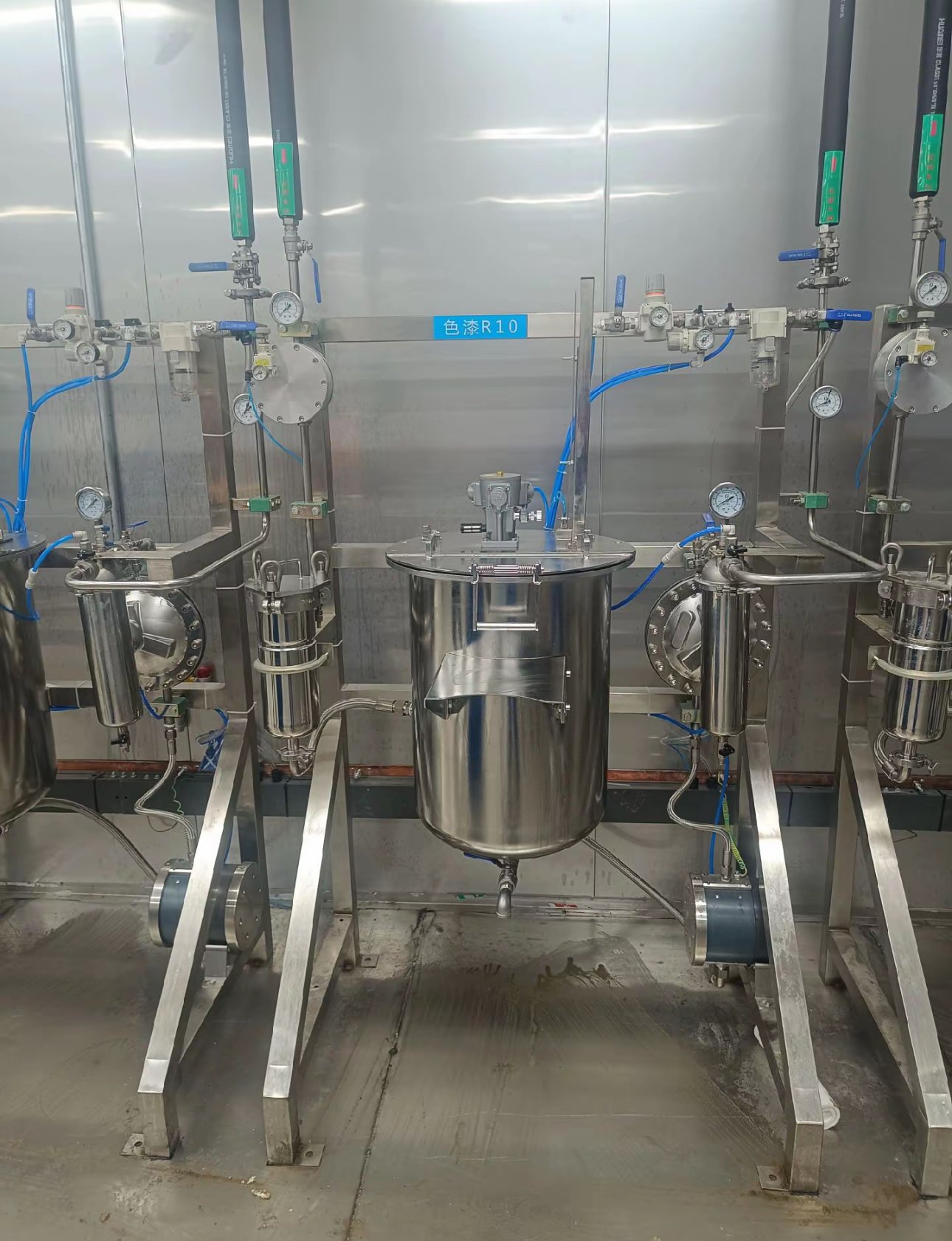
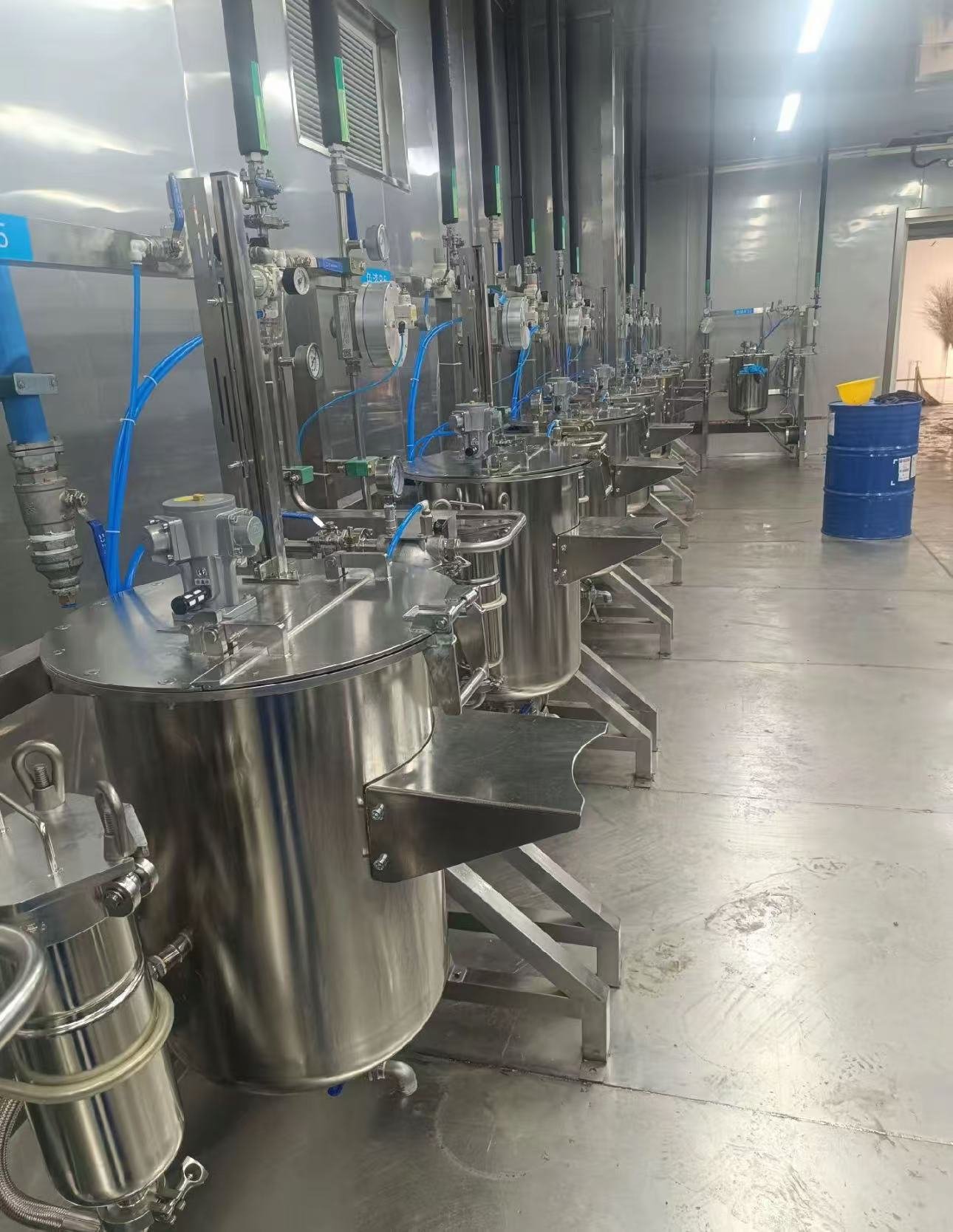
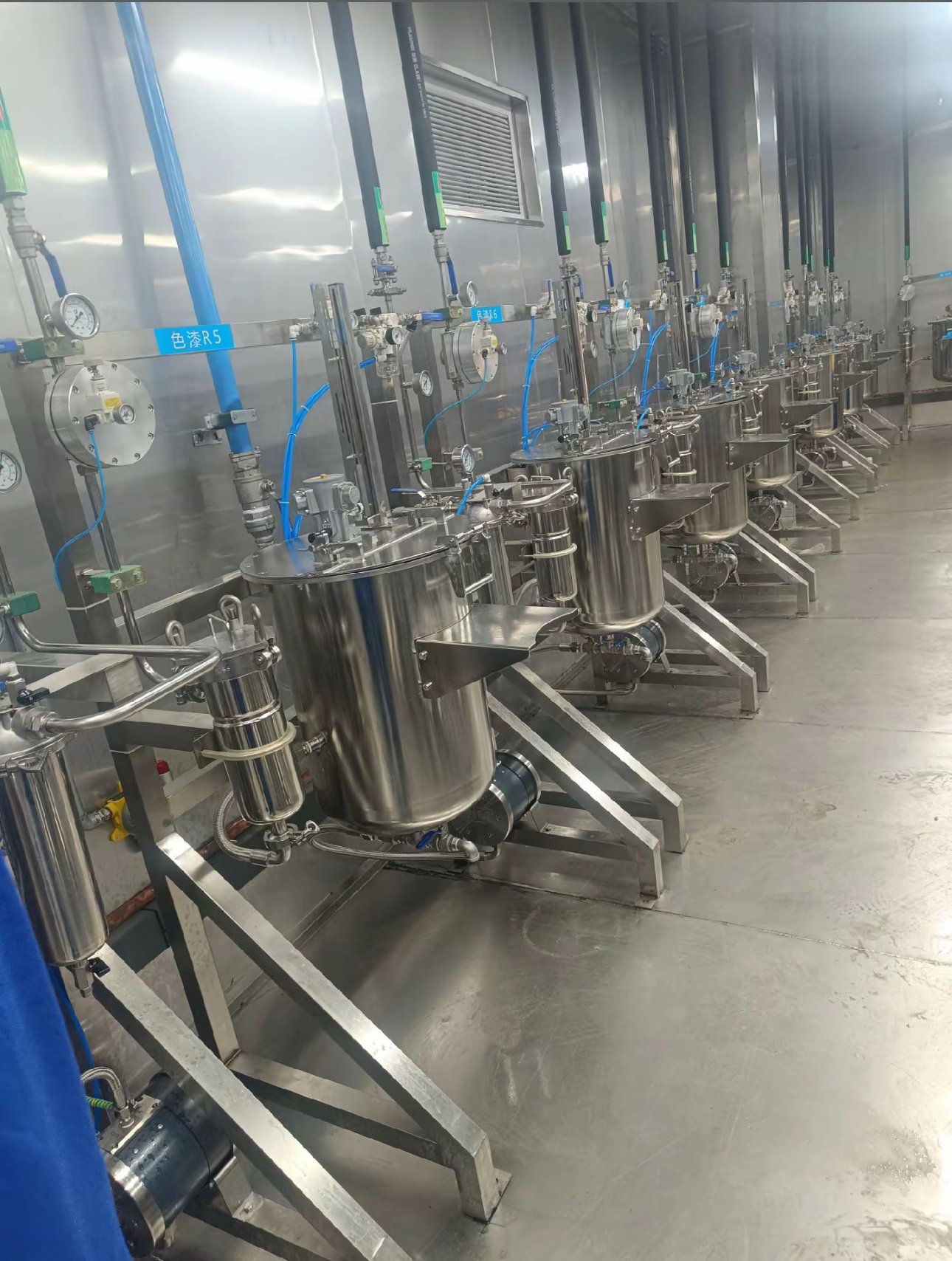
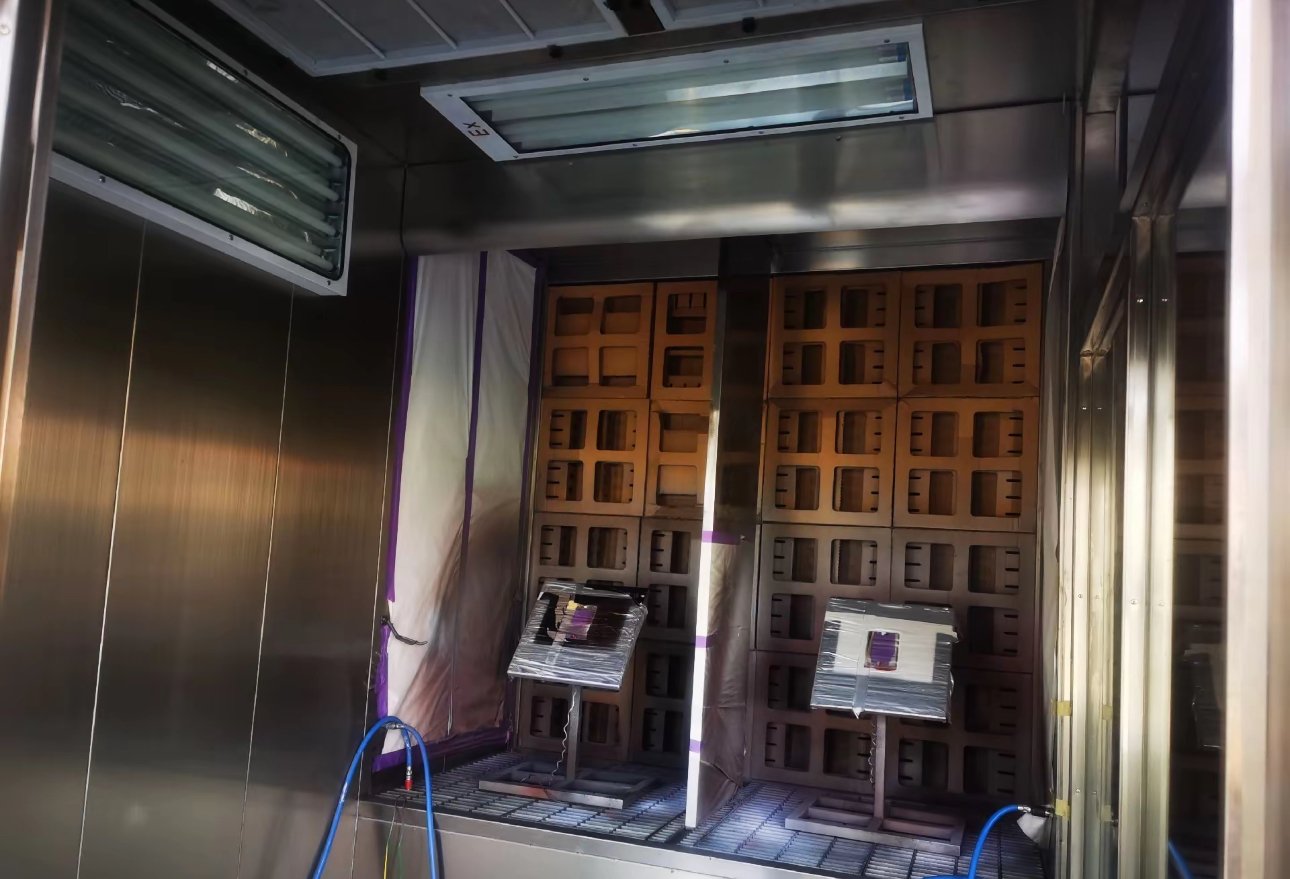
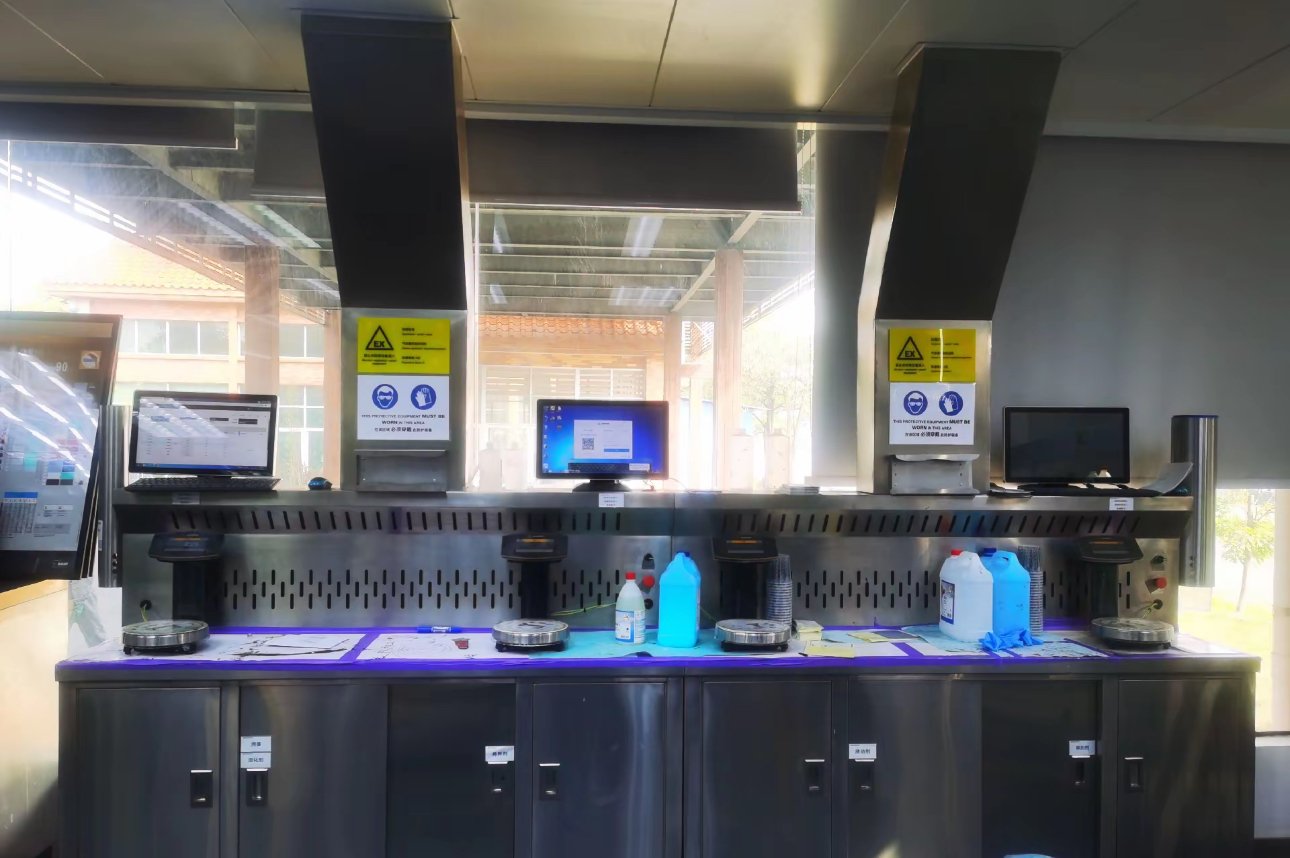
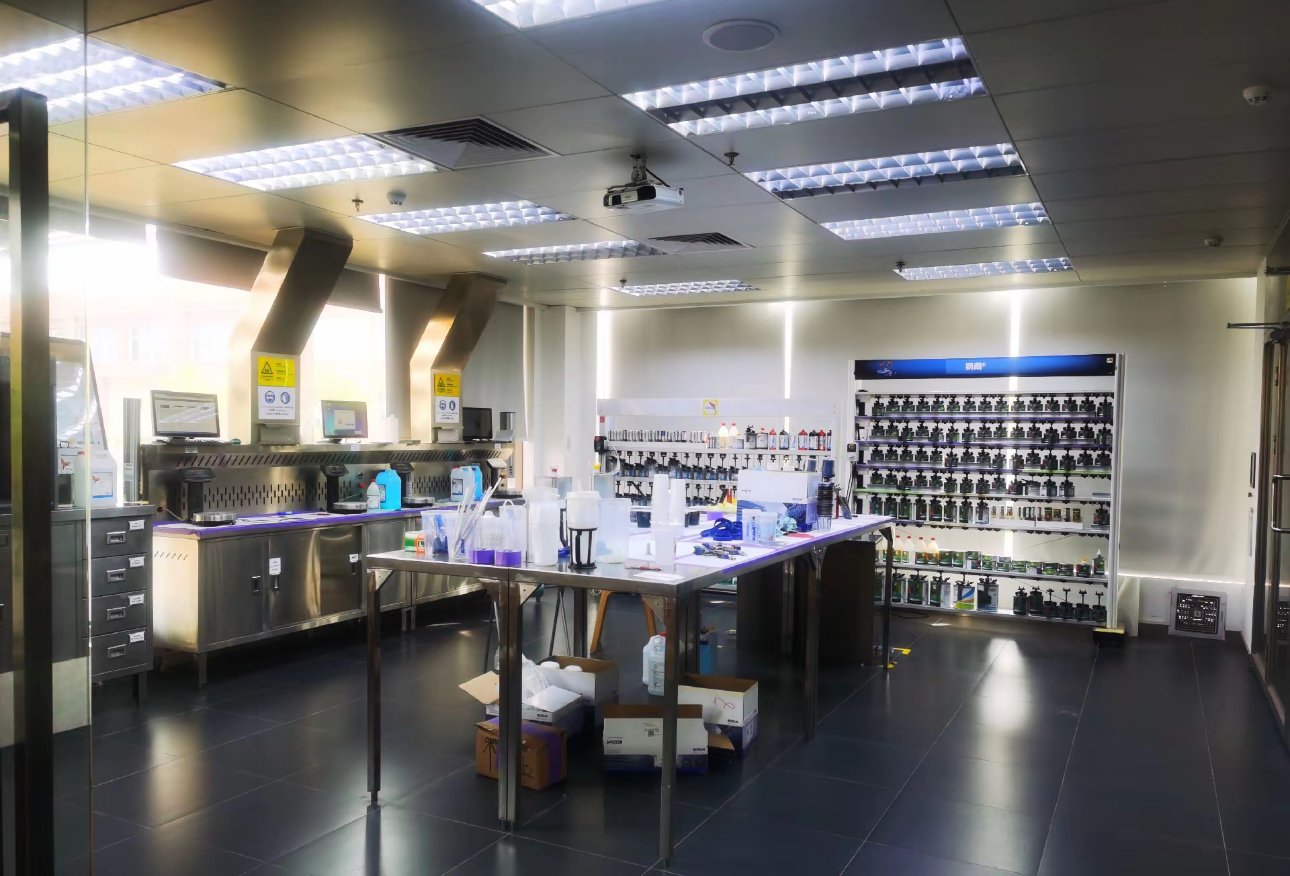
Photos from a paint mixing room and colour lab supplied for a multi-colour liquid spray line: one colour station per tank, wall-mounted regulators and gauges, a test spray booth for sample panels, and a colour matching lab with tinting-base dispenser.
Application References
Automotive parts and machinery plants, container and steel structure painting lines, furniture and appliance factories, and any liquid spray line where paint is mixed daily and several booths draw from one supply.
Engineering Commitment
Every line is engineered against a written performance specification. Line speed, cure profile, film build and emission level are stated in the contract and demonstrated on your own part at the factory trial run before shipment. One engineering team owns the whole chain — pretreatment, application, curing, conveying and emission control — so the trade-offs between them are settled on the drawing board, not on your factory floor.
Service & Delivery
Standard configurations ship in 30-60 days with a 12-month full-machine and 36-month critical-component warranty. On-site installation, commissioning and operator training are available worldwide, and process tuning and spare parts support continue for the working life of the line.
Frequently Asked Questions
Why not mix paint inside the booth?
Mixing in the booth exposes wet parts to dust and solvent vapour, and puts open paint containers in the spray zone. A separate ventilated room keeps mixing, thinning and solvent storage under controlled temperature and away from the workpieces.
Does the room need explosion-protected equipment for water-borne paint?
Most water-borne systems still contain co-solvents, and thinners and cleaning solvents are usually stored in the same room, so the electrical zone is set from the actual products used. We confirm the zone with your paint supplier before selecting equipment.
Can one mixing room feed several booths?
Yes. A ring main with a back-pressure regulator keeps supply pressure constant at each booth, and a central paint supply with agitated tanks handles several colours in parallel.