Powder Curing Oven: Gas vs Electric vs Infrared, Energy Cost Compared (2026)
Quick answer: A powder curing oven holds parts at 180-200 C for 10-20 minutes so the powder melts and cross-links. Gas ovens cost the least to run in most countries, at roughly USD 0.9-1.8 per m2 of coated surface; electric ovens cost 2-4 times more per unit of heat but are cheaper to install; infrared reaches cure temperature in 1-3 minutes and suits flat parts and short runs.
MUSI Technology, which builds gas, electric and infrared curing ovens in Changzhou, China, holds parts at 180-200 °C for 10-20 minutes and specifies gas heating where running cost matters most, electric heating where installation cost matters most, and infrared for flat parts and short runs.
Industrial powder coating oven types used on coating lines
An industrial powder coating oven on a conveyor line is either a tunnel oven, a camel-back oven or a batch oven. Tunnel and camel-back ovens are conveyor curing ovens with a heated zone the parts travel through; the camel-back raises the entry and exit to trap heat. Batch ovens serve manual and semi-automatic powder coating lines. A paint curing oven for liquid coatings follows the same layouts with lower set temperatures and added flash-off.
How to choose the right curing oven for your powder coating line
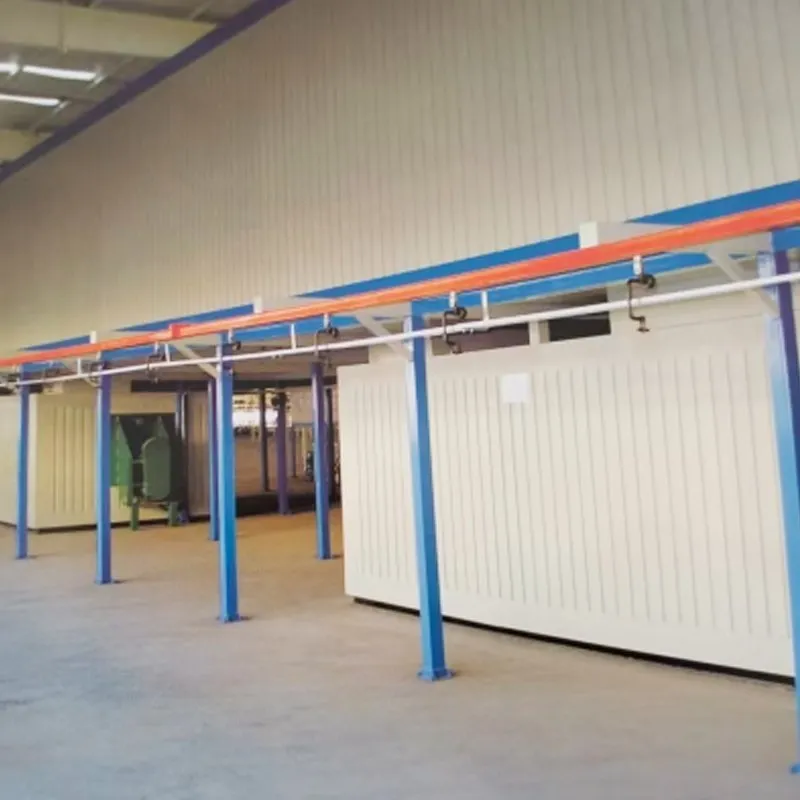
- Fuel: gas, electric or infrared, decided by local energy price and available supply.
- Temperature uniformity across the part window, which decides whether every part reaches full cure.
- Dwell time at cure temperature, set by conveyor speed and oven length.
- Heat loss control at openings and insulation thickness, which drive running cost.
- Heat recovery from oven exhaust back to pretreatment or drying.
Powder coating oven cost is driven by oven length, burner size, insulation and controls; sizing examples are in the complete coating line cost guide.
What does a curing oven have to achieve?
Curing is defined by part metal temperature, not air temperature. A typical polyester powder needs 10 minutes at 180 C measured on the part itself. Heavy parts absorb heat slowly, so total oven time is ramp-up plus hold. A 6 mm steel plate can take 8-12 minutes just to reach 180 C.
Under-cure causes poor adhesion and low chemical resistance; over-cure causes yellowing and gloss loss. The only reliable way to verify cure is a data-logging probe travelling with the part.
Gas, electric or infrared: which curing oven should you choose?
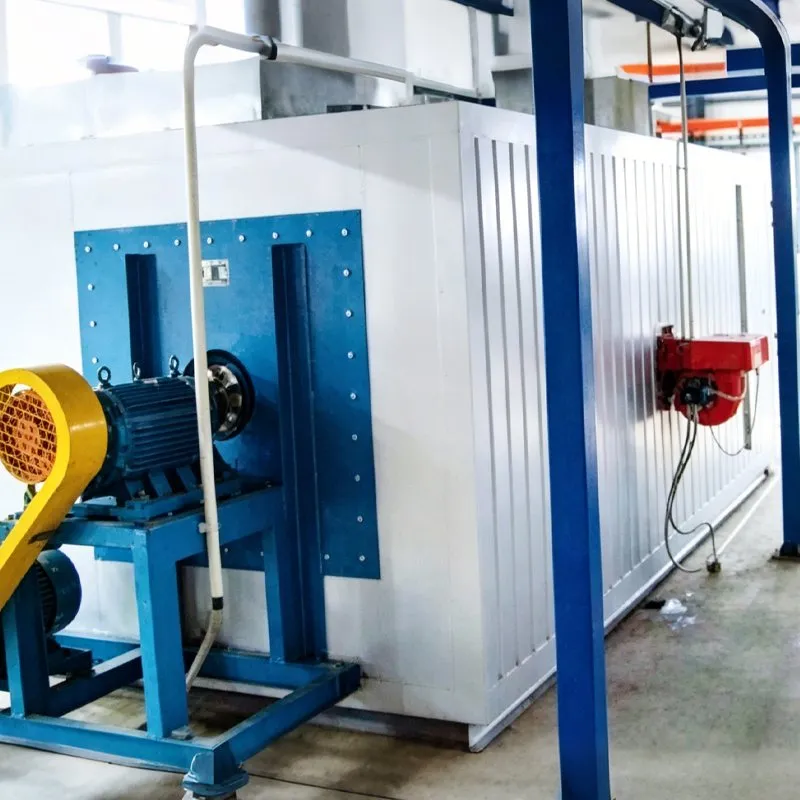
| Criterion | Direct gas-fired | Electric convection | Infrared (IR) |
|---|---|---|---|
| Heat-up time from cold | 20-40 min | 30-60 min | 1-3 min |
| Energy cost per m2 coated | USD 0.9-1.8 | USD 2.5-6.0 | USD 1.5-3.5 |
| Installed cost | Medium-high | Low | Medium |
| Best for | Continuous high volume | Small batch, no gas supply | Flat parts, fast changeover |
| Temperature uniformity | Plus/minus 5-8 C | Plus/minus 5-10 C | Line-of-sight dependent |
| Gas connection required | Yes | No | No (electric IR) |
These energy figures assume natural gas at USD 0.045/kWh equivalent and electricity at USD 0.12/kWh. Where electricity is cheap or gas unavailable, the ranking reverses, so recalculate with your own tariff before deciding.
A common practical answer is a hybrid: an IR booster zone at the oven entrance to bring parts up to temperature quickly, followed by a gas convection hold zone. This shortens the oven by 20-35% for the same throughput.
How do you size a powder curing oven?
| Formula | oven length (m) = line speed (m/min) x total cure time (min). At 2 m/min with 15 minutes total cure, the heated zone is 30 m. On a serpentine layout that fits a 12 x 6 m footprint. |
|---|---|
| Cross-section | part envelope plus 300-400 mm each side for air circulation. |
| Air changes | 20-40 per hour, with exhaust sized to keep outgassing products below the lower explosive limit. |
| Insulation | 100-150 mm rock wool at 100-128 kg/m3; skin temperature should stay under 45 C. |
| Delivery record | 800+ coating lines for 500+ clients in 36 countries (MUSI engineering team, cumulative since 2011) |
| Services | Design, manufacturing, installation, commissioning, operator training and after-sales support from one company |
How much energy does a curing oven use?
Three loads make up oven consumption: heating parts and hooks, heating make-up air, and replacing losses through walls and openings. On a well-insulated line, parts and hooks account for 45-60%, make-up air 25-40%, and shell losses 10-20%.
| Measure | Typical saving | Payback |
|---|---|---|
| Increase insulation 100 to 150 mm | 6-10% of oven fuel | 12-24 months |
| Air curtain at oven openings | 8-15% | 6-14 months |
| Exhaust heat recovery to dry-off oven | 10-20% | 18-36 months |
| Lighter hooks and racking | 5-12% | Immediate to 12 months |
| Zone control instead of single setpoint | 4-8% | 12-18 months |
Hook and rack mass is the saving most often ignored. Every kilogram of steel carried through the oven is heated to 200 C and cooled again on every pass, for the life of the line.
How much does a powder curing oven cost in 2026?
| Oven type and size | Indicative price (USD, ex-works) |
|---|---|
| Batch oven, 2 x 2 x 3 m, electric | 8,000-22,000 |
| Batch oven, 2 x 2 x 3 m, gas | 12,000-30,000 |
| Continuous tunnel oven, 15 m heated zone | 30,000-70,000 |
| Continuous tunnel oven, 30 m heated zone | 60,000-140,000 |
| IR booster zone, 3 m | 10,000-28,000 |
Prices are ex-works China estimates for budgeting and exclude burner fuel train certification, ducting and installation. Burner and control brand is the largest variable inside these ranges.
What causes cure defects?
| Poor adhesion, soft film | under-cure. Log part metal temperature rather than trusting the air-temperature controller. |
|---|---|
| Yellowing, gloss loss | over-cure, or a direct gas burner putting combustion products in contact with white powders. Consider indirect firing for light colours. |
| Uneven gloss across the load | poor air circulation or overloaded racks. Keep 300 mm minimum between parts. |
| Pinholes | moisture or outgassing from castings. Add a preheat stage above cure temperature before powder application. |
Why source a curing oven from MUSI Technology?
MUSI Technology (Changzhou MUSI Environmental Technology Co., Ltd.) is a China-based manufacturer of turnkey coating lines, with 800+ coating lines delivered to 500+ clients across 36 countries, from single booths to complete finishing plants. Ovens are engineered together with the conveyor, booth and pretreatment tunnel, so cure time, line speed and oven length are matched rather than approximated.
- Gas, electric and IR configurations, including hybrid IR plus convection layouts.
- Standard configurations ship in 30-60 days with a 12-month full-machine and 36-month critical-component warranty. Structural parts are covered for up to 60 months.
- On-site installation, commissioning and operator training available worldwide.
- Every line is engineered against a written performance specification. Line speed, cure profile, film build and emission level are stated in the contract and demonstrated on your own part at the factory trial run before shipment.
- One engineering team owns the whole chain — pretreatment, application, curing, conveying and emission control — so the trade-offs between them are settled on the drawing board, not on your factory floor.
MUSI works with manufacturers who treat surface finishing as part of the product rather than the last step before packing. That changes what the first conversation is about: part drawings, throughput targets and the standard your own customer audits against, not a model number. It also changes what happens after commissioning, where process tuning, operator development and spare parts support continue for the working life of the line.
Read the powder coating line buyer’s guide or see the powder coating equipment range.
Frequently asked questions
What temperature and time does powder coating need to cure?
Standard polyester powders cure at 180-200 C part metal temperature for 10-20 minutes. The controlling figure is the temperature of the metal, not the oven air. Heavy sections need extra ramp-up time, so a 6 mm steel plate may take 8-12 minutes just to reach 180 C before the hold time starts.
Is a gas or electric curing oven cheaper to run?
In most countries gas is cheaper, at roughly USD 0.9-1.8 per m2 of coated surface against USD 2.5-6.0 for electric, assuming gas at USD 0.045/kWh equivalent and electricity at USD 0.12/kWh. Electric ovens have lower installed cost and need no gas supply, so they suit small batch shops. Recalculate with your local tariff before deciding.
When does an infrared curing oven make sense?
Infrared reaches cure temperature in 1-3 minutes instead of 20-60, so it suits flat parts, short runs and frequent colour changes. It heats by line of sight, so complex three-dimensional parts cure unevenly. A common compromise is an IR booster zone at the entrance of a convection oven, which shortens the oven by 20-35% for the same throughput.
How long does a continuous curing oven need to be?
Oven length equals line speed multiplied by total cure time. At 2 m/min with 15 minutes of cure, the heated zone is 30 m, which fits roughly a 12 x 6 m footprint using a serpentine layout. Cross-section should allow 300-400 mm clearance around the largest part for air circulation.
How can I cut curing oven energy cost?
The largest savings come from an air curtain at the oven openings (8-15%), lighter hooks and racking (5-12%), exhaust heat recovery into the dry-off oven (10-20%), and increasing wall insulation from 100 to 150 mm (6-10%). Hook mass is the most commonly overlooked item, since every kilogram is heated and cooled on every pass.
What does a powder curing oven cost?
Indicative 2026 ex-works ranges are USD 8,000-30,000 for a 2 x 2 x 3 m batch oven depending on gas or electric heating, USD 30,000-70,000 for a 15 m continuous tunnel, and USD 60,000-140,000 for a 30 m tunnel. An IR booster zone adds USD 10,000-28,000.
About the figures in this guide. Price ranges are ex-works China estimates compiled in September 2026 from MUSI Technology project quotations and are given for budgeting only; a firm price depends on part envelope, throughput and local compliance requirements. Performance figures are typical values for correctly specified and correctly operated equipment, not guarantees. Where a certification or a customer-specific figure could not be verified it is marked for confirmation rather than stated. Last reviewed: 9 September 2026.
Send us your part size, throughput and coating type — our engineers reply within 24 hours, and a layout and budget follow once your part data is complete. Contact MUSI Technology or browse our equipment range.
Related technical guides
Powder coating defects: causes and solutions — the twelve faults you will actually see, and which station on the line causes each one.
- BESS Container Coating Line: Spec & Corrosion
Battery energy storage containers need C4 to C5 corrosion protection: shot blasting to Sa2.5, zinc-rich primer and weather-resistant polyester topcoat. - Coating Line Factory Audit: 20-Point Checklist
A 20-point pre-shipment audit for coating line buyers: what to measure, what to demand in writing, which documents to collect and which findings should. - Wheel & Chassis Powder Coating Line: Spec & Cost
Wheels and chassis parts carry the toughest corrosion and appearance specs in automotive finishing. Coat stack, filiform and salt spray targets, line. - Powder Coating vs Liquid Spray: Which to Choose
Powder coating vs liquid spray compared on cost, film thickness, colour range, VOC emissions, substrate limits and best-fit applications. - Complete Coating Line Cost: 2026 Budget Guide
A complete powder coating line costs USD 75,000 for a semi-automatic setup to USD 2,000,000 for a fully automated plant.
QQuestions buyers ask before ordering
quotation · price · lead time · installation · warranty
What information do you need to prepare a quotation?
Send part drawings or photos, the largest part size and weight, the material, the required output per shift, the paint or powder type and number of colours, and the available floor space, ceiling height and power or gas supply. MUSI engineers reply within 24 hours; a recommended configuration and quotation follow once your part data is complete.
How much does this equipment cost?
Budget depends on part size, throughput and the level of automation. Indicative ex-works ranges are published in our powder coating line guide (indicative ex-works budgets from USD 75,000 to 2,000,000); a configured quotation is prepared from your part data.
What is the lead time?
Standard configurations ship in 30–60 days from contract signing and down payment; custom configurations take longer. The delivery date is fixed in the contract.
Do you install and train operators overseas?
Yes. MUSI engineers carry out on-site installation and commissioning and give 3–5 days of operator and maintenance training. MUSI has delivered 800+ coating lines to customers in 36 countries.
What warranty and after-sales support are included?
12 months full-machine warranty, 36 months on critical components and up to 60 months on structural parts. International customers get 24-hour phone response and 72-hour on-site arrival; spare parts ship from the Changzhou headquarters.
Can the environmental equipment be supplied with the line?
Yes. VOC treatment (RTO, RCO, activated carbon, zeolite rotor), dust collection and paint wastewater treatment are supplied with the coating line under one contract; MUSI has equipped 50+ coating facilities whose projects all passed local environmental compliance reviews.