Powder Coating Defects: Causes and Solutions (2026)
Quick answer: Most powder coating defects trace back to one of four places on the line — pretreatment chemistry, compressed-air quality, gun and booth settings, or the cure window. Orange peel, pinholes and fisheyes are the three most common. Orange peel is usually film build plus cure ramp; pinholes are almost always outgassing from a porous substrate or trapped solvent; fisheyes are oil or silicone contamination upstream of the booth. Before changing powder, check air dew point, oven part-temperature profile and rinse conductivity — in that order.
How to triage a powder coating defect in ten minutes
A defect is evidence, not a mystery. Almost every fault on a powder line leaves a signature that points at one station. Work the line backwards from the reject and the cause usually falls out in a single shift.
Three checks answer the majority of calls we get from production:
- Compressed-air dew point and oil carry-over. A wet or oily air supply produces fisheyes, spitting and inconsistent charge. Measure at the gun, not at the compressor.
- Part temperature in the oven, not air temperature. Hang a thermocouple on the heaviest section. A panel that reaches 180 °C for 10 minutes and a bracket that reaches 160 °C for 4 minutes will not cure the same, even in the same oven.
- Final-rinse conductivity. Rising conductivity in the last rinse means carry-over of chemistry into the dry-off oven, and that shows up later as blisters and adhesion loss.
The twelve defects you will actually see
Quick reference: the twelve powder coating defects at a glance
| Defect | What it looks like | Most likely cause | First fix |
|---|---|---|---|
| Orange peel | A regular dimpled texture across flat areas, like the skin of an orange. | Film build too high for the powder’s flow characteristics; oven ramp too slow, so the powder gels before it levels; particle size distribution too coarse; or gun voltage high enough to over-pack the first layer. | Bring film build back to the powder’s specified window (commonly 60–80 µm for a standard polyester). |
| Pinholes | Tiny holes right through the film, often in clusters, usually worse on castings and welds. | Outgassing. Air or moisture escapes from a porous substrate — zinc die castings, galvanised steel, sintered parts — as the film gels, and punches through. | Pre-bake the parts to drive off moisture before coating, typically 10–15 minutes above the cure temperature. |
| Fisheyes and craters | Small round depressions with a raised rim, the substrate sometimes visible at the centre. | Contamination with a lower surface tension than the powder — oil, silicone, or release agent. | Find the silicone and remove it from the building, not just from the part. |
| Poor adhesion | Coating lifts in a cross-hatch or bend test; flakes at drilled holes and cut edges. | Nine times out of ten this is pretreatment, not powder. | Titrate the baths rather than trusting the schedule. |
| Colour variation between batches | Parts that match inside a batch but not across batches or across a colour change. | Cure variation is the usual culprit, not pigment. | Lock the cure window with data-logged part-temperature profiles rather than oven set point. |
| Sags and runs | A curtain or teardrop of thickened film on vertical faces and lower edges. | Excessive film build, usually where the operator has lingered or where re-coating overlapped; or a powder whose melt viscosity is too low for the applied thickness. | Reduce delivery and increase gun-to-part distance. |
| Thin film in recesses — the Faraday cage effect | Inside corners, channels and box sections come out thin or bare while flat faces are correct. | The electrostatic field follows the shortest path to the nearest edge, so charged powder is pulled away from recesses instead of into them. | Lower voltage to around 40–60 kV and increase powder volume, spraying recesses first while the part is bare. |
| Back-ionisation | A starry, pitted or pin-pricked surface in heavily coated areas, sometimes mistaken for orange peel. | Too much charge into too thick a layer. | Lower the voltage and slow the powder delivery rather than speeding the line. |
| Seeds, specks and inclusions | Hard gritty points in an otherwise smooth film. | Contamination in the recovery circuit, a torn filter cartridge, powder agglomerates from damp storage, or plain airborne dust from an unfiltered workshop. | Sieve reclaim powder as standard practice, not as a remedy. |
| Gloss variation | The same colour reading different gloss across one part or between parts. | Uneven cure across the oven, contamination from a previous powder chemistry, or mixed powder batches with different gloss levels. | Map the oven with several thermocouples and correct the airflow balance before touching the recipe. |
| Chipping and brittleness | The film cracks or chips on impact, at bends, or during handling and transit. | Over-cure embrittles most thermosets. | Profile the cure and cut it back to the specified window. |
| Blistering after cure | Raised bubbles appearing during cure or shortly after, sometimes only after days in humidity. | Trapped moisture or soluble salt residue under the film. | Extend dry-off and check it with a part-temperature log. |
1. Orange peel
Looks like: a regular dimpled texture across flat areas, like the skin of an orange.
Cause: film build too high for the powder’s flow characteristics; oven ramp too slow, so the powder gels before it levels; particle size distribution too coarse; or gun voltage high enough to over-pack the first layer.
Fix: bring film build back to the powder’s specified window (commonly 60–80 µm for a standard polyester). Raise the early oven ramp so the film reaches flow temperature faster. If texture persists at the correct film build, the powder batch itself is coarse — check particle size against the supplier’s data before adjusting the line further.
2. Pinholes
Looks like: tiny holes right through the film, often in clusters, usually worse on castings and welds.
Cause: outgassing. Air or moisture escapes from a porous substrate — zinc die castings, galvanised steel, sintered parts — as the film gels, and punches through. Damp parts entering the booth do the same.
Fix: pre-bake the parts to drive off moisture before coating, typically 10–15 minutes above the cure temperature. For galvanised and cast work, use an outgassing-tolerant powder designed to stay open longer. Confirm the dry-off oven is actually drying: a part that leaves dry-off warm but damp in a blind hole will pinhole every time.
3. Fisheyes and craters
Looks like: small round depressions with a raised rim, the substrate sometimes visible at the centre.
Cause: contamination with a lower surface tension than the powder — oil, silicone, or release agent. Silicone is the worst offender because a trace is enough. Common sources are compressed air, conveyor chain lubricant dripping onto parts, hand cream, and aerosol sprays used anywhere near the booth.
Fix: find the silicone and remove it from the building, not just from the part. Add or service coalescing filters on the air line. Fit drip trays under the chain above the coating and cooling zones. Once silicone is in a booth and recovery system, expect to strip and clean the whole circuit.
4. Poor adhesion
Looks like: coating lifts in a cross-hatch or bend test; flakes at drilled holes and cut edges.
Cause: nine times out of ten this is pretreatment, not powder. Insufficient degreasing, an exhausted conversion bath, a rinse that has become a contamination source, or a dry-off temperature high enough to dehydrate the conversion layer.
Fix: titrate the baths rather than trusting the schedule. Check final-rinse conductivity and free-rinse water quality. On aluminium, confirm the chrome-free titanium or zirconium conversion is building the coating weight the supplier specifies — a bath that has drifted still looks and smells normal.
5. Colour variation between batches
Looks like: parts that match inside a batch but not across batches or across a colour change.
Cause: cure variation is the usual culprit, not pigment. Over-cure shifts many pigments, whites and bright colours most visibly. Second cause: reclaim ratio drifting between batches. Third: residual powder from the previous colour in a booth that was not fully cleaned down.
Fix: lock the cure window with data-logged part-temperature profiles rather than oven set point. Fix the virgin-to-reclaim ratio and keep it fixed. For frequent colour changes, a quick-change booth with a dedicated cartridge module removes the cross-contamination path entirely.
6. Sags and runs
Looks like: a curtain or teardrop of thickened film on vertical faces and lower edges.
Cause: excessive film build, usually where the operator has lingered or where re-coating overlapped; or a powder whose melt viscosity is too low for the applied thickness.
Fix: reduce delivery and increase gun-to-part distance. Where the job allows, move manual touch-up onto a reciprocator so the pass pattern is repeatable rather than operator-dependent.
7. Thin film in recesses — the Faraday cage effect
Looks like: inside corners, channels and box sections come out thin or bare while flat faces are correct.
Cause: the electrostatic field follows the shortest path to the nearest edge, so charged powder is pulled away from recesses instead of into them.
Fix: lower voltage to around 40–60 kV and increase powder volume, spraying recesses first while the part is bare. Tribo-charging guns are markedly better in deep channels because they do not create the same field. Reposition parts on the hanger so recesses face the guns squarely.
8. Back-ionisation
Looks like: a starry, pitted or pin-pricked surface in heavily coated areas, sometimes mistaken for orange peel.
Cause: too much charge into too thick a layer. The trapped charge breaks down and blows small craters back out through the film.
Fix: lower the voltage and slow the powder delivery rather than speeding the line. Confirm the part is properly earthed — a resistance above about 1 MΩ through the hanger is enough to cause it. Clean hooks routinely; coated hooks are the single most common earthing failure.
9. Seeds, specks and inclusions
Looks like: hard gritty points in an otherwise smooth film.
Cause: contamination in the recovery circuit, a torn filter cartridge, powder agglomerates from damp storage, or plain airborne dust from an unfiltered workshop.
Fix: sieve reclaim powder as standard practice, not as a remedy. Inspect cartridges on a schedule and replace on differential pressure, not on appearance. Keep the coating room at slight positive pressure with filtered make-up air so dust travels out rather than in.
10. Gloss variation
Looks like: the same colour reading different gloss across one part or between parts.
Cause: uneven cure across the oven, contamination from a previous powder chemistry, or mixed powder batches with different gloss levels.
Fix: map the oven with several thermocouples and correct the airflow balance before touching the recipe. A 20 °C spread between the top and bottom of a loaded oven is common and is enough to move gloss visibly.
11. Chipping and brittleness
Looks like: the film cracks or chips on impact, at bends, or during handling and transit.
Cause: over-cure embrittles most thermosets. Excessive film build does the same. A powder chosen for outdoor durability may simply not have the flexibility the part needs.
Fix: profile the cure and cut it back to the specified window. If the part is formed after coating, the powder has to be selected for flexibility from the start — no line adjustment will fix the wrong chemistry.
12. Blistering after cure
Looks like: raised bubbles appearing during cure or shortly after, sometimes only after days in humidity.
Cause: trapped moisture or soluble salt residue under the film. Usually an incomplete final rinse, water left in seams and blind holes, or a dry-off oven that is too short for the part mass.
Fix: extend dry-off and check it with a part-temperature log. Add drain holes or re-orient the part on the hanger so water cannot sit in a pocket. Verify rinse-water quality — deionised final rinse is the reliable answer where salt residue is suspected.
Which station causes which defect
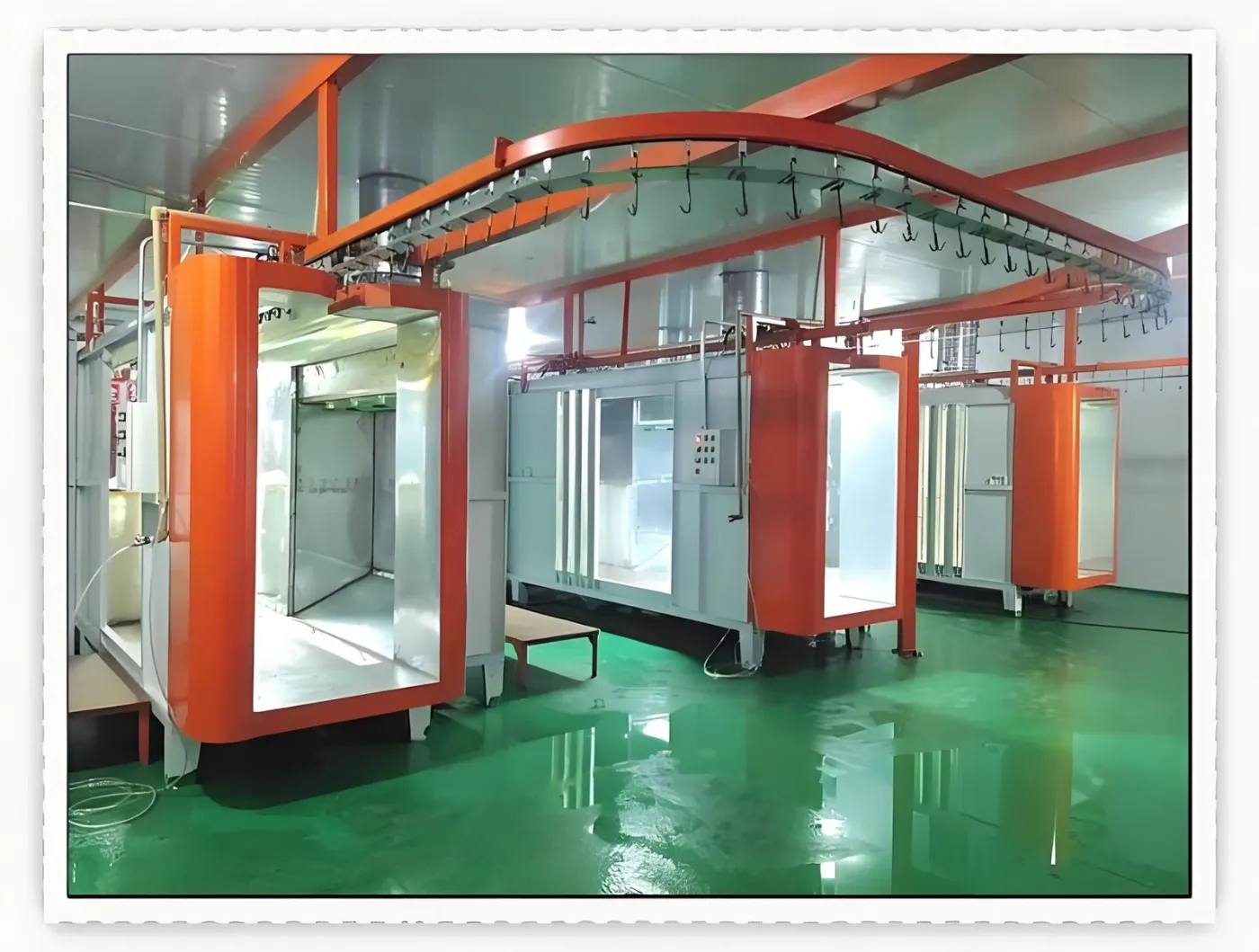
| Station on the surface treatment line | Defects it causes | What to measure |
|---|---|---|
| Degrease and pretreatment | Poor adhesion, blistering, fisheyes | Bath titration, final-rinse conductivity |
| Dry-off oven | Pinholes, blistering | Part temperature and dwell, not air temperature |
| Compressed air | Fisheyes, spitting, unstable charge | Dew point and oil content at the gun |
| Guns and booth | Orange peel, back-ionisation, thin recesses, sags | kV, µA, powder delivery, earthing resistance |
| Powder recovery | Seeds, specks, colour drift | Cartridge differential pressure, reclaim ratio |
| Curing oven | Colour variation, gloss variation, brittleness, under-cure | Multi-point part-temperature profile |
| Conveyor and hangers | Hook marks, earthing faults, oil drips | Hook cleanliness, chain lubrication points |
The two measurements that prevent most defects
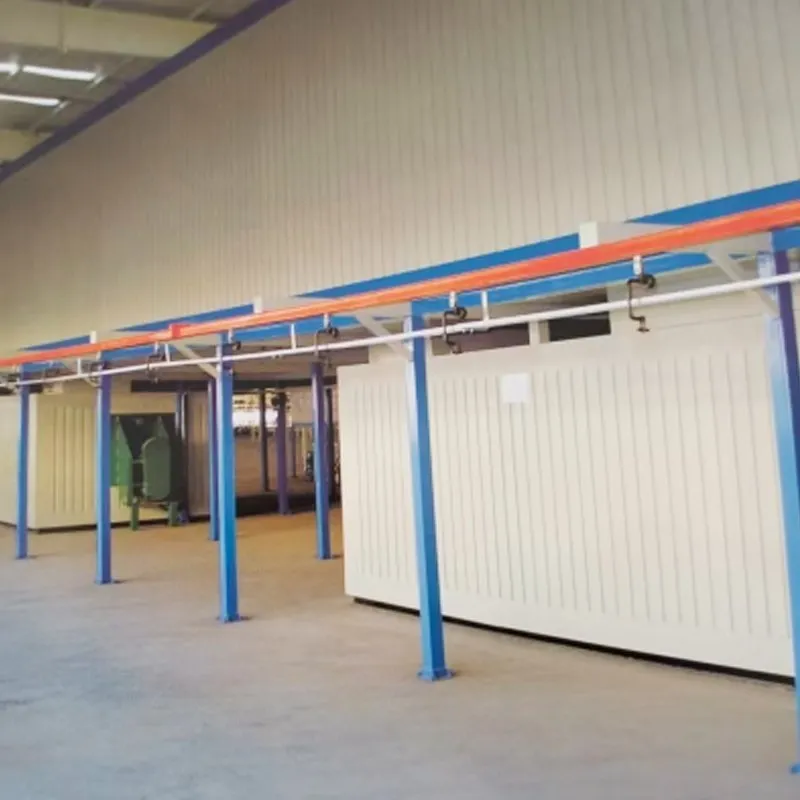
A data-logged part-temperature profile. One logger run per part family, repeated when the load pattern changes, removes colour drift, gloss variation, brittleness and under-cure from the list of possible causes. It is the highest-value instrument on a powder line and the one most often missing.
Compressed-air dew point at the gun. Air quality problems are cheap to fix and expensive to diagnose from the reject bin. A dryer and coalescing filter sized for the actual consumption of the booth eliminates a whole class of defects permanently.
Frequently asked questions
What is the most common powder coating defect?
Orange peel, followed by pinholes and fisheyes. Orange peel is normally film build combined with a slow oven ramp. Pinholes are outgassing from a porous substrate or a part that entered the booth damp. Fisheyes are oil or silicone contamination, most often carried in by compressed air or dripping chain lubricant.
How do I stop pinholes on galvanised and cast parts?
Pre-bake the parts above cure temperature for 10–15 minutes to drive off moisture and trapped gas before coating, and use a powder formulated to tolerate outgassing. Confirm the dry-off oven is drying blind holes and seams, not just the visible surface.
Why do my parts come out thin in corners and channels?
That is the Faraday cage effect: the electrostatic field runs to the nearest edge instead of into the recess. Drop the voltage to roughly 40–60 kV, raise powder volume, and coat the recesses first while the part is still bare. Tribo guns perform noticeably better in deep sections.
Is colour variation caused by the powder or the line?
Usually the line. Cure variation shifts pigment, and over-cure shifts it most in whites and bright colours. Reclaim ratio drift and incomplete booth clean-down between colours are the next two causes. Check the cure profile and the virgin-to-reclaim ratio before returning a batch to the supplier.
What causes poor adhesion on aluminium?
Pretreatment, in the great majority of cases. Iron and zinc phosphate chemistries developed for steel are not suitable for aluminium; chrome-free titanium or zirconium conversion is the standard for architectural work. Verify the conversion coating weight rather than assuming the bath is still in specification.
How do I tell over-cure from under-cure?
Under-cure fails a solvent rub and shows poor adhesion and chemical resistance. Over-cure shows colour shift, gloss change and a brittle film that chips at bends. Both are diagnosed with the same tool: a part-temperature profile through the oven.
Where MUSI Technology fits
MUSI Technology designs and builds complete powder coating and surface treatment lines — pretreatment, dry-off, booth, recovery, curing oven and conveyor as one system. Most persistent defects are line-design problems rather than operator problems: a dry-off oven sized for the wrong part mass, an oven with an unbalanced airflow, or a booth without a practical colour-change routine will keep producing the same rejects whatever the operator does.
If you are diagnosing a defect on an existing line, send the part photograph, the substrate, the film build and the oven profile if you have one. If you are specifying a new line, send workpiece size, material, target output and coating type, and MUSI engineers can prepare a preliminary process flow and equipment list.
Provided by Lin Cong, Technical Director, MUSI Technology
Send us your part size, throughput and coating type — our engineers reply with a layout and budget within one working day. Contact MUSI Technology or browse our equipment range.
Related technical guides
- Robotic Spray Painting vs Reciprocator: ROI
A six-axis paint robot costs 3-6 times a reciprocator but raises transfer efficiency to 70-90% and handles mixed models. - Automotive Parts Coating Line: Spec & Throughput
Automotive coating lines must hold film build within plus or minus 10 microns, pass 500-1,000 h salt spray and meet OEM appearance standards. - Powder Coating Line: Types, Specs & Cost (2026)
A powder coating line pretreats, coats and cures metal parts on a conveyor. Full guide to line types, key specifications and 2026 price ranges. - Powder Coating Pretreatment Line: Stages & Cost
A pretreatment line degreases, rinses and chemically converts the metal surface before coating. Three, five and seven-stage layouts, phosphate versus. - BESS Container Coating Line: Spec & Corrosion
Battery energy storage containers need C4 to C5-M corrosion protection: shot blasting to Sa2.5, zinc-rich primer and weather-resistant polyester topcoat.