Coating Line for Automotive Parts: Requirements, Layout and Throughput (2026)
Quick answer: An automotive parts coating line has to hold film thickness within roughly plus or minus 10 microns, reach 500-1,000 hours salt spray on structural parts, and produce a consistent appearance that the OEM audits. That normally means seven-stage pretreatment, robotic or reciprocator application with electrostatic guns, and full process data logging. Typical line cost is USD 350,000-1,800,000.
What makes automotive different from general industrial coating?
Three things: tighter tolerance, documented evidence, and consequence of failure. A general industrial line is judged on whether the part looks acceptable. An automotive line is judged against a written specification, with recorded data, and a rejected batch can stop the customer’s assembly line.
In practice this changes equipment selection more than it changes process chemistry. Data logging, redundancy and repeatability become purchase criteria in their own right.
What specification do automotive parts normally carry?
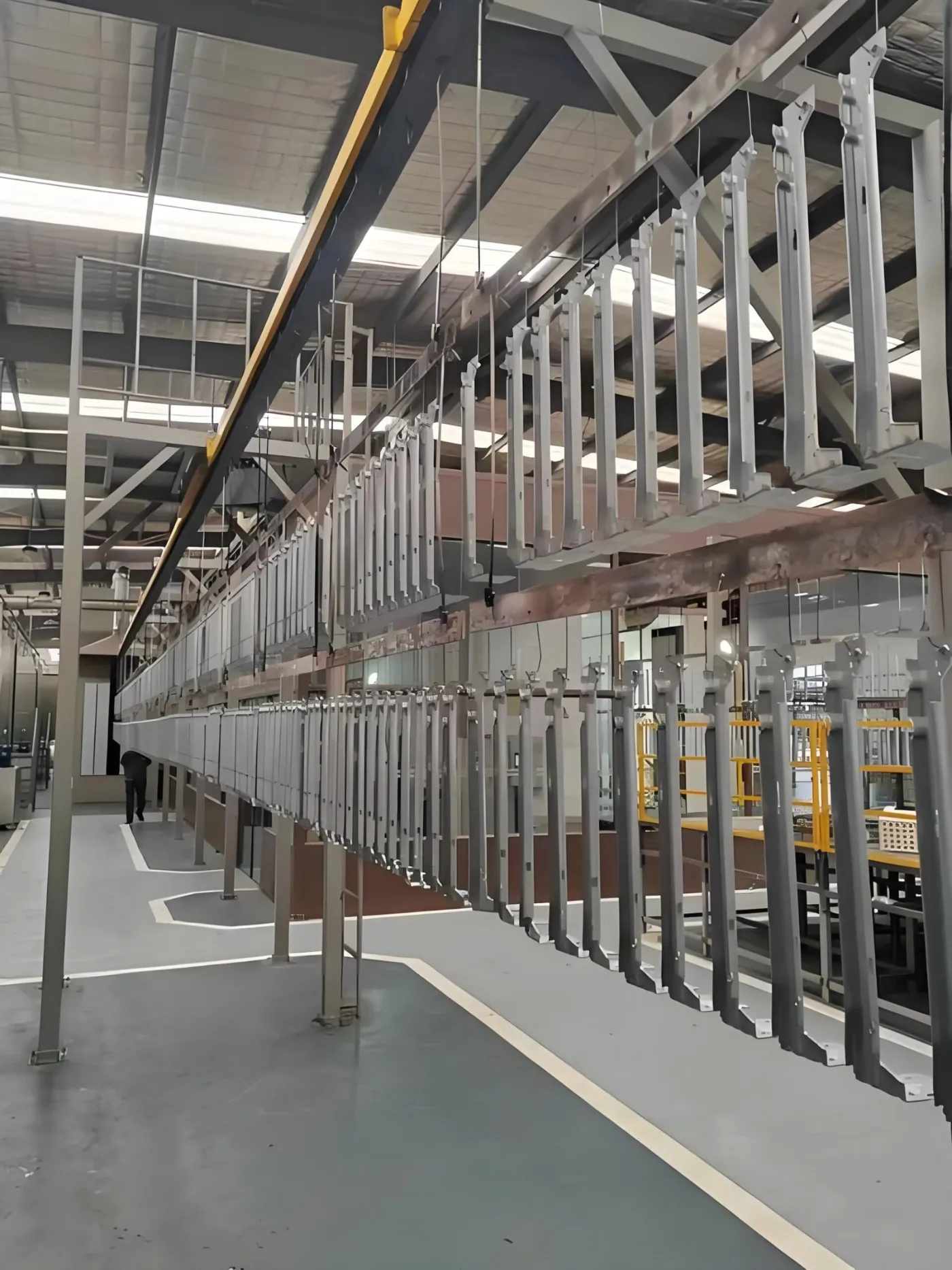
| Part group | Typical system | Film build | Salt spray | Appearance |
|---|---|---|---|---|
| Chassis and structural | Zinc phosphate + epoxy powder or e-coat | 60-100 microns | 500-1,000 h | Functional |
| Wheel hubs and rims | Pretreat + powder primer + topcoat | 90-140 microns | 750-1,000 h | Class A visible |
| Bumpers and trim (plastic) | Flame or plasma + primer + base + clear | 50-90 microns | Not applicable | Class A visible |
| Interior brackets | Iron phosphate + polyester powder | 60-80 microns | 250-400 h | Functional |
| Springs and fasteners | Zinc flake or powder | 8-25 microns | 480-720 h | Functional |
Confirm the exact requirement against the customer’s own standard. Most OEMs publish part-specific specifications that override the generic figures above.
How do you hit plus or minus 10 microns of film build?
| Application | electrostatic guns with closed-loop kV and powder flow control; robots for contoured parts, reciprocators for flat. |
|---|---|
| Part presentation | fixed hanging position with jigs, not free-swinging hooks. Swing is the largest single cause of variation. |
| Earthing | hook resistance under 1 megohm, checked per shift. Poor earthing causes both thin film and back-ionisation. |
| Booth air balance | stable face velocity within plus or minus 10%. |
| Measurement | automatic or sampled magnetic-induction gauging with results logged against batch. |
What throughput does an automotive line need?
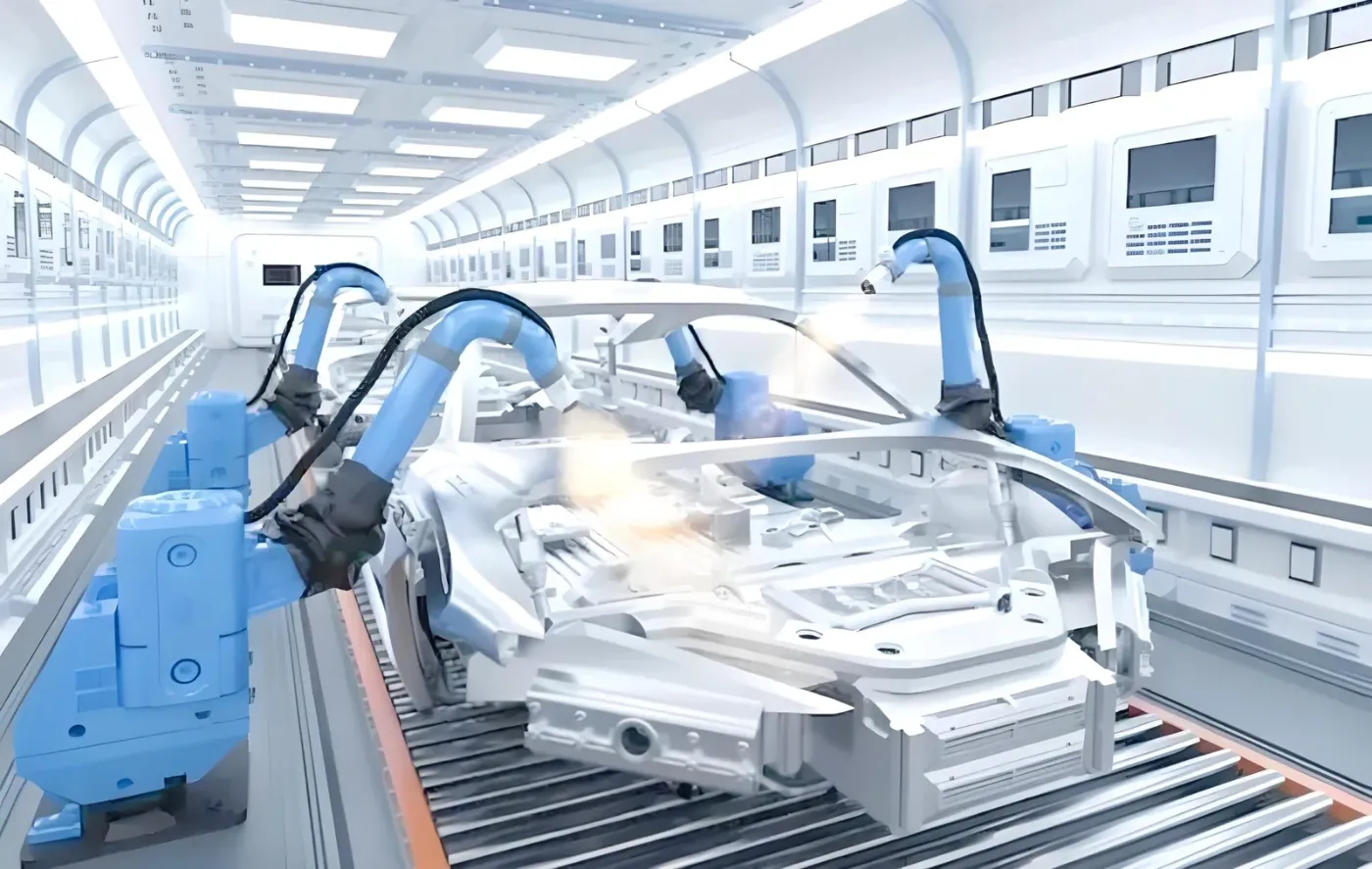
| Programme size | Parts per hour | Line speed | Configuration |
|---|---|---|---|
| Low volume, aftermarket | 100-300 | 1.0-2.0 m/min | Single booth, reciprocator |
| Tier-2 component supply | 300-800 | 1.5-3.0 m/min | Robot or twin reciprocator |
| Tier-1 direct supply | 800-2,000 | 2.5-5.0 m/min | Robot cell, power-and-free, twin booth |
Power-and-free conveying is common above roughly 500 parts per hour because it allows buffering between load, coat and unload, so a stop at one station does not idle the whole line.
What evidence will the customer ask for?
- Film thickness records per batch, with gauge calibration certificates.
- Salt spray test reports to ASTM B117 or ISO 9227 at the stated duration.
- Adhesion results to ISO 2409 cross-cut, normally class 0 or 1.
- Cure verification by oven data logger, showing part metal temperature and time.
- Pretreatment bath control logs: concentration, temperature, conductivity per shift.
Equipment should be specified with these outputs in mind. Retrofitting data logging after commissioning is far more expensive than including it in the original control panel.
What does an automotive parts coating line cost in 2026?
| Configuration | Indicative price (USD, ex-works) |
|---|---|
| Low volume, reciprocator, 5-stage pretreatment | 350,000-650,000 |
| Tier-2, robot cell, 7-stage pretreatment | 650,000-1,200,000 |
| Tier-1, twin booth, power-and-free, full logging | 1,200,000-1,800,000 |
| Add: VOC treatment for solvent topcoat | 80,000-400,000 |
Why source an automotive coating line from MUSI Technology?
MUSI Technology (Changzhou Musi Environmental Technology Co., Ltd.) is a China-based manufacturer of turnkey coating lines, founded in 2021, with 800+ coating lines delivered to 500+ clients across 36 countries, including automotive parts coating lines for Tier-1 and Tier-2 suppliers.
- Control panels specified with film thickness, cure and bath logging from the start.
- Robot and reciprocator cells selected against the actual part mix.
- Standard configurations ship in 30-60 days with a 12-month full-machine and 36-month critical-component warranty.
- Every line is engineered against a written performance specification. Line speed, cure profile, film build and emission level are stated in the contract and demonstrated on your own part at the factory trial run before shipment.
- One engineering team owns the whole chain — pretreatment, application, curing, conveying and emission control — so the trade-offs between them are settled on the drawing board, not on your factory floor.
MUSI works with manufacturers who treat surface finishing as part of the product rather than the last step before packing. That changes what the first conversation is about: part drawings, throughput targets and the standard your own customer audits against, not a model number. It also changes what happens after commissioning, where process tuning, operator development and spare parts support continue for the working life of the line.
See the automotive parts coating solutions and the Tier-1 automotive coating line case study.
Frequently asked questions
What film thickness tolerance does automotive coating require?
Typically plus or minus 10 microns on a 60-100 micron target for structural parts, and tighter on Class A visible surfaces. Holding that tolerance depends on fixed part jigs rather than free-swinging hooks, closed-loop electrostatic gun control, hook earthing below 1 megohm, and booth face velocity stable within plus or minus 10%.
How many hours of salt spray do automotive parts need?
Chassis and structural parts normally require 500-1,000 hours to ASTM B117 or ISO 9227, wheel hubs 750-1,000 hours, interior brackets 250-400 hours, and coated fasteners 480-720 hours. Always confirm against the customer’s own part specification, which overrides generic figures.
What pretreatment does an automotive coating line need?
Seven-stage pretreatment is standard for structural and exterior parts: alkaline degrease, rinse, derust, rinse, zinc phosphate or zirconium conversion, rinse and a deionised seal. Five-stage is used for interior and non-critical parts where the corrosion requirement is 250-400 hours.
What throughput does a Tier-1 coating line run at?
Typically 800-2,000 parts per hour at 2.5-5.0 m/min, using a robot cell with twin booths and power-and-free conveying. Power-and-free is normal above roughly 500 parts per hour, because buffering between load, coat and unload prevents a single stopped station idling the whole line.
What documentation will the OEM ask for?
Film thickness records per batch with gauge calibration certificates, salt spray reports to ASTM B117 or ISO 9227, cross-cut adhesion results to ISO 2409 at class 0 or 1, oven data logger traces showing part metal temperature against time, and pretreatment bath control logs per shift. Specify this logging in the original control panel rather than retrofitting it.
What does an automotive parts coating line cost?
Indicative 2026 ex-works ranges are USD 350,000-650,000 for a low-volume reciprocator line with five-stage pretreatment, USD 650,000-1,200,000 for a Tier-2 robot cell with seven stages, and USD 1,200,000-1,800,000 for a Tier-1 twin-booth line with power-and-free and full data logging. VOC treatment for solvent topcoats adds USD 80,000-400,000.
About the figures in this guide. Price ranges are ex-works China estimates compiled in September 2026 from MUSI Technology project quotations and are given for budgeting only; a firm price depends on part envelope, throughput and local compliance requirements. Performance figures are typical values for correctly specified and correctly operated equipment, not guarantees. Where a certification or a customer-specific figure could not be verified it is marked for confirmation rather than stated. Last reviewed: 9 September 2026.
Send us your part size, throughput and coating type — our engineers reply with a layout and budget within one working day. Contact MUSI Technology or browse our equipment range.
Further Reading
- ProductsAutomotive Coating Line
Robotic Flexible Coating Line - IndustryAutomotive Parts Coating
- Technical guidesAutomotive Wheel and Chassis Powder Coating: Spec, Line Design and Cost (2026)
Robotic Spray Painting vs Reciprocator: When Does a Robot Pay Off? (2026) - Case StudiesAutomotive Parts Coating Line for Tier-1 Supplier
Automotive Bumper Robotic Coating
Automotive Wheel Hub Powder Coating Line
Automotive Interior Sandblasting & Shot Peening Systems - NewsRobotic Spray Painting in the Automotive Industry: A Practical Guide