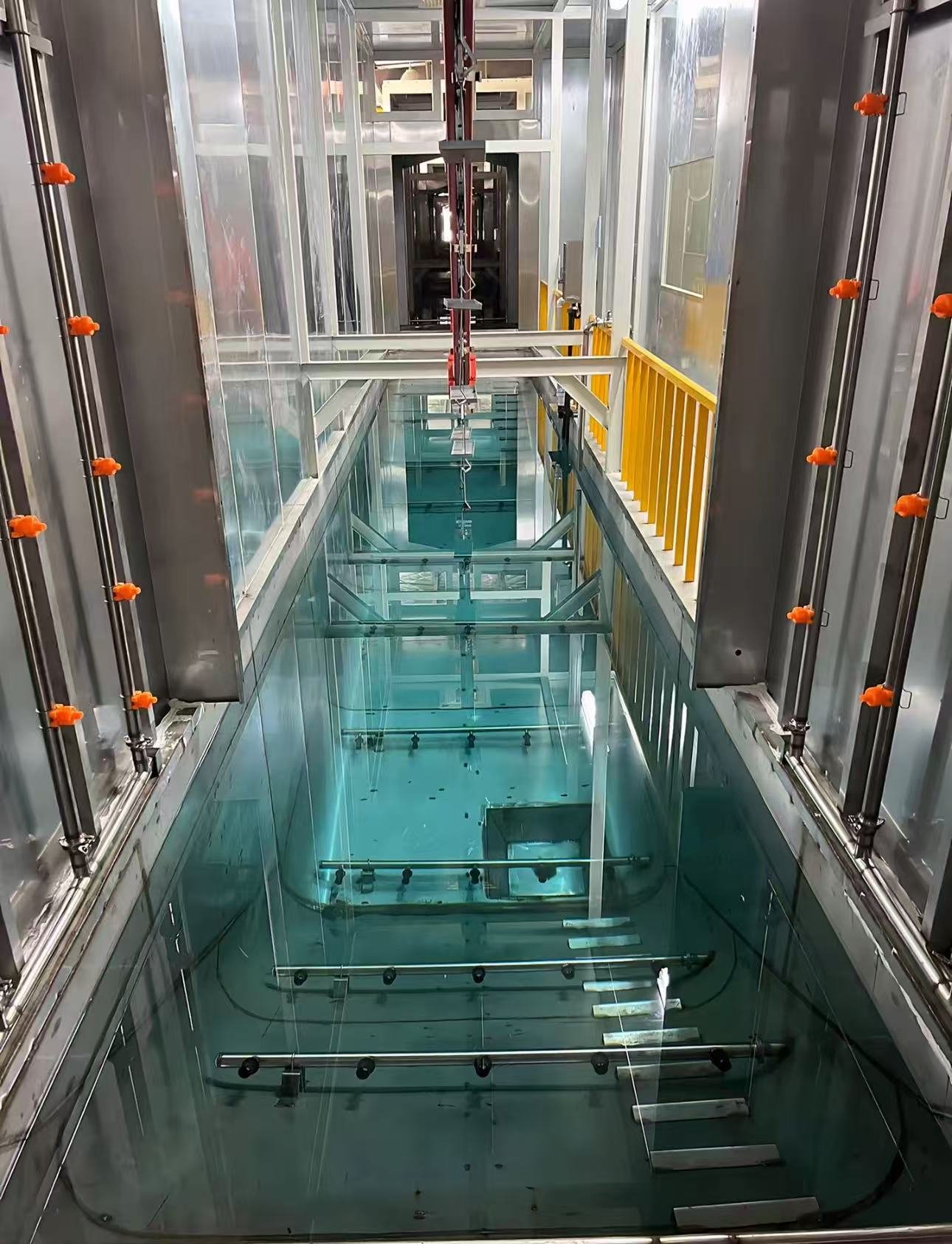
Electrophoretic (E-Coat) Coating Line
Cathodic electrodeposition (CED) line for chassis parts, brackets, castings and appliance frames — multi-stage pretreatment, E-coat bath with ultrafiltration rinses, curing oven and conveyor engineered as one chain.
Built for parts that need a uniform primer film inside cavities, box sections and welded assemblies where spray cannot reach.
Technical Specifications
Values below are typical ranges for this equipment type. The figures for your line are fixed in the written specification after we review your parts, output and site.
| Process | Cathodic epoxy electrodeposition (CED); anodic on request |
|---|---|
| Workpiece range | Chassis and suspension parts, brackets, castings, seat frames, appliance chassis; typical envelope up to 3,000 x 1,500 x 1,200 mm |
| Pretreatment | Degrease, rinse, surface conditioning, zinc phosphate or zirconium conversion, rinse, DI rinse (7-11 stages, dip or spray) |
| E-coat bath | Typical 5-60 m3 working volume, 304/316 stainless or lined steel, 28-32 C bath temperature, 150-350 V DC |
| Rinsing | Post-dip UF1/UF2 recirculated rinses plus final DI rinse; ultrafiltration unit sized to bath volume |
| Dry film | Typical 15-25 microns, uniform on edges and inside cavities |
| Cure | Convection oven, typical 160-180 C metal temperature for 20-30 minutes |
| Conveying | Overhead chain, power-and-free or lift-and-dip carriers, 0.5-3 m/min |
| Corrosion performance | Specified per project; typical target 500-1,000 h neutral salt spray on phosphated steel (ISO 9227) |
| Utilities | Chilled water for bath cooling, DI water plant, anolyte system, wastewater treatment |
Line Configuration
- Pretreatment tank line with agitation, heating, oil skimming and chemical dosing
- E-coat tank with anodes, anolyte circuit, chiller, filtration and continuous circulation
- Ultrafiltration rinse circuit that returns paint solids to the bath
- Drip-off zone and convection curing oven with heat recovery
- Lift-and-dip or continuous conveyor matched to part size and takt time
- PLC control with bath temperature, conductivity, pH and voltage logging
E-Coat Line in Practice
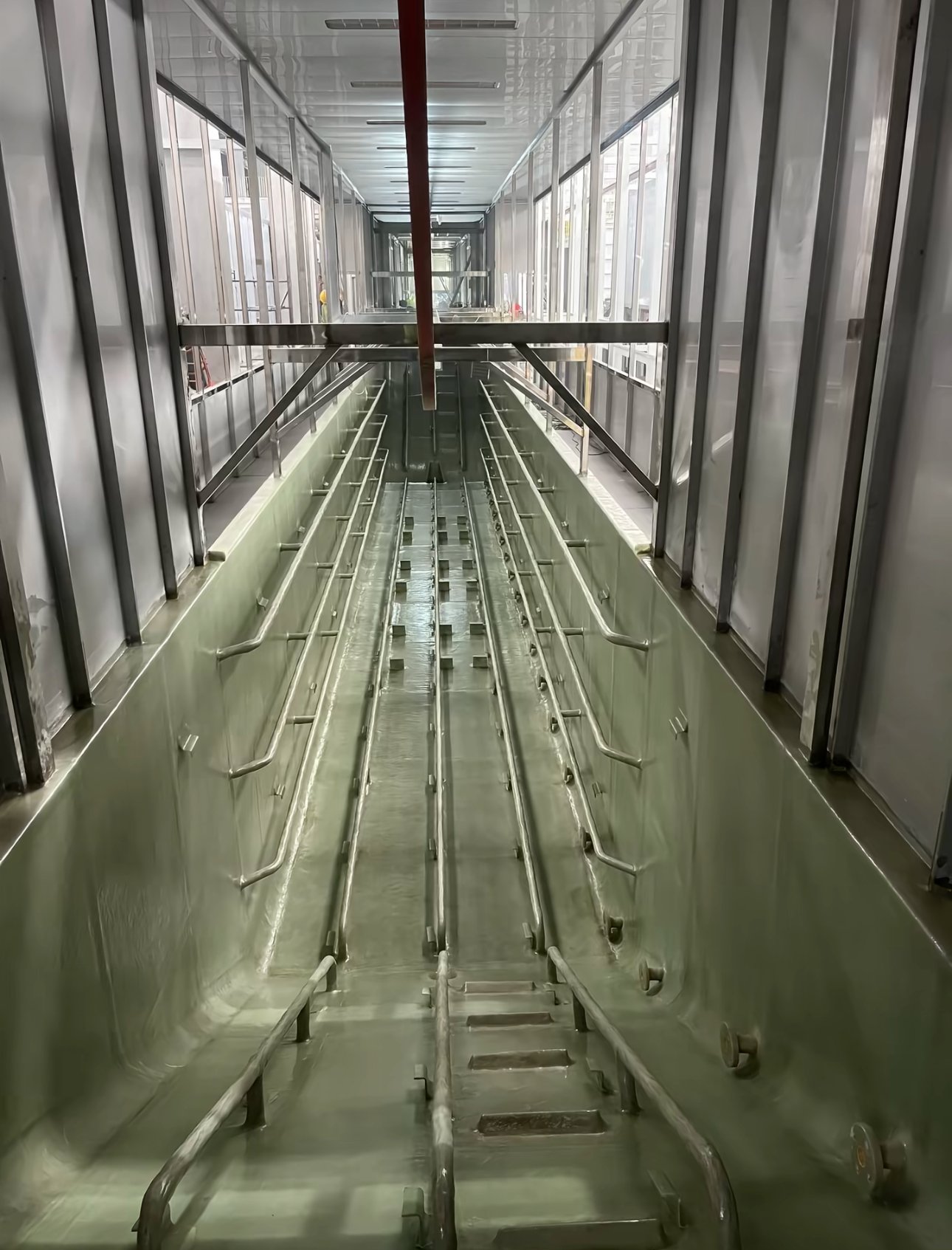
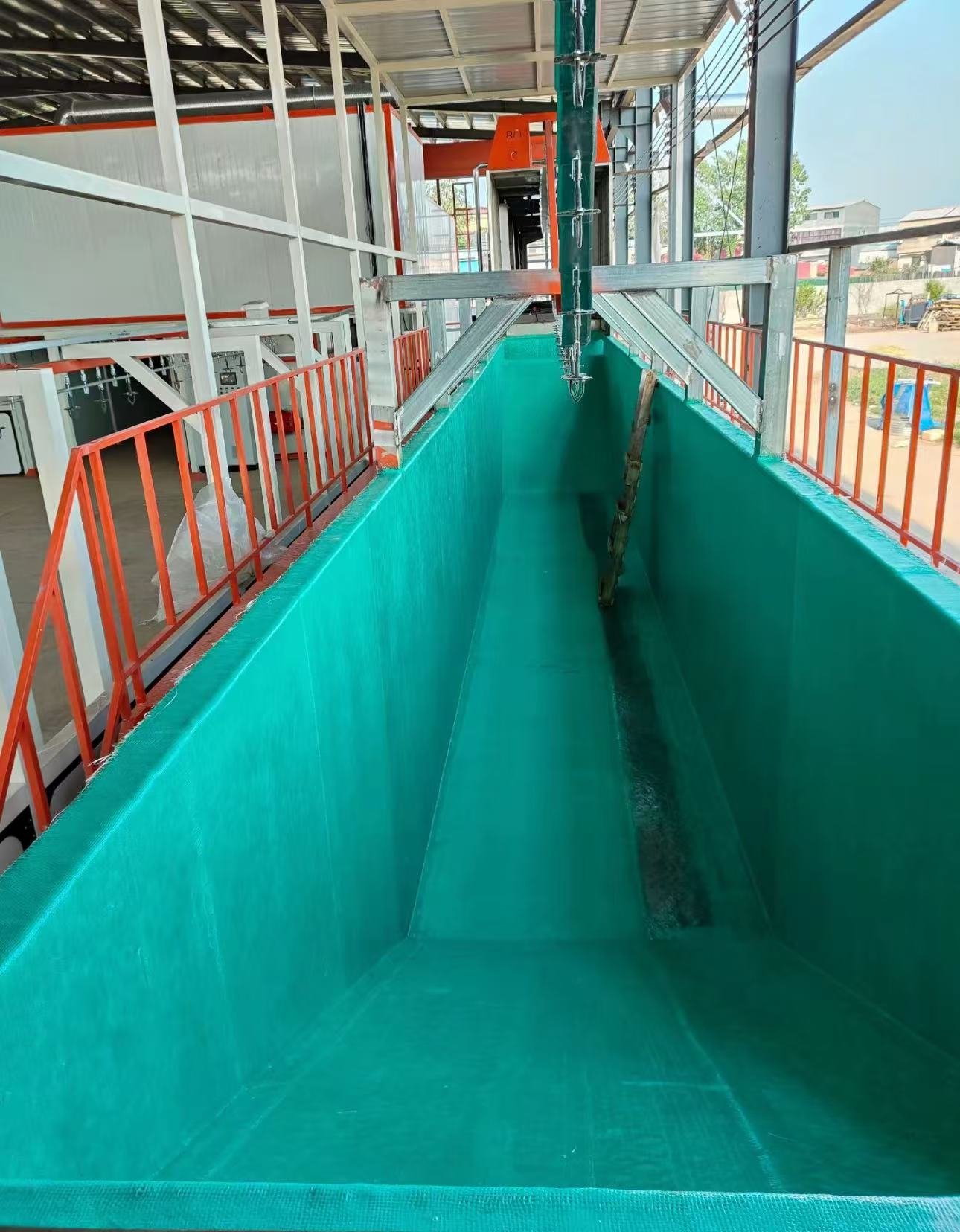
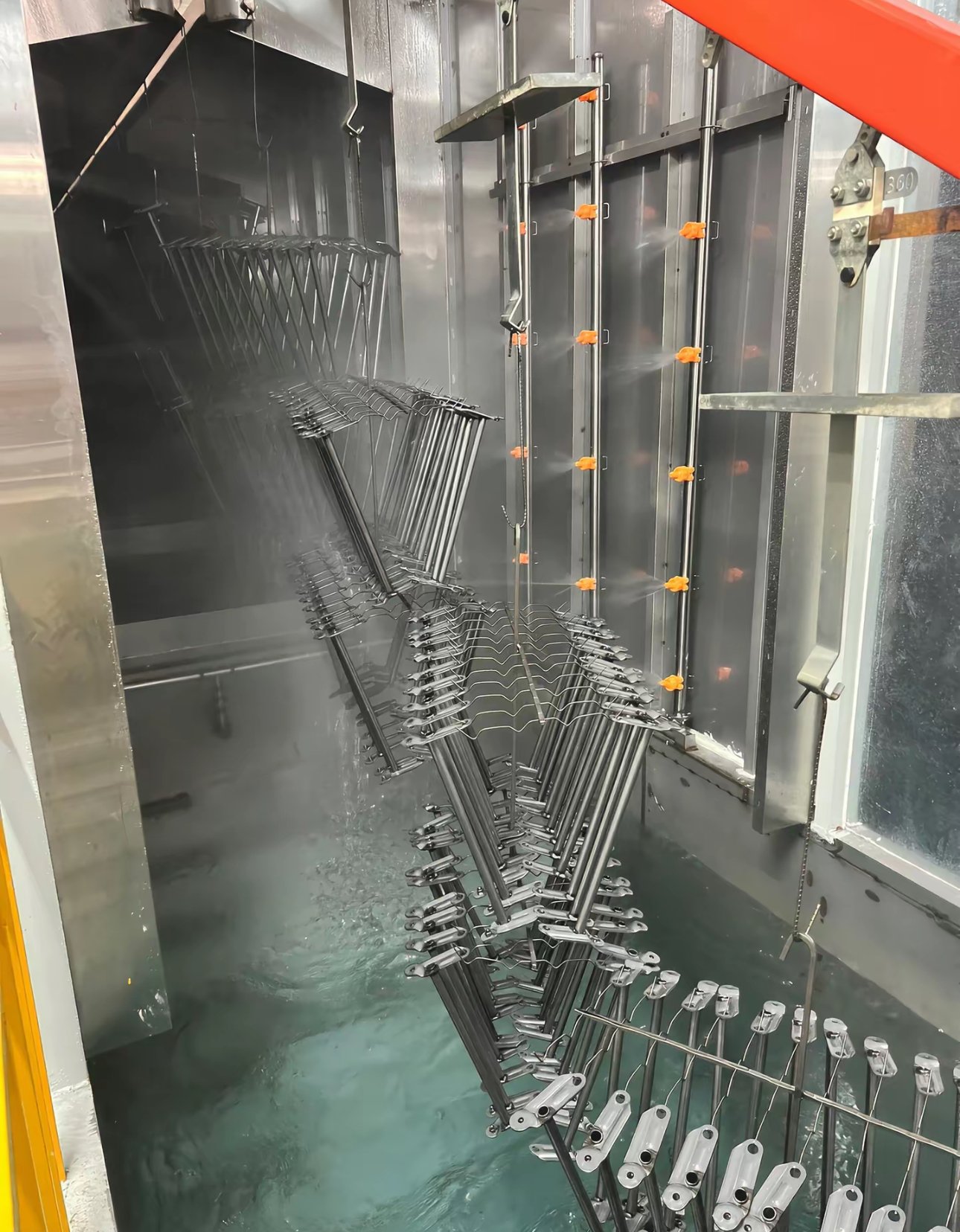
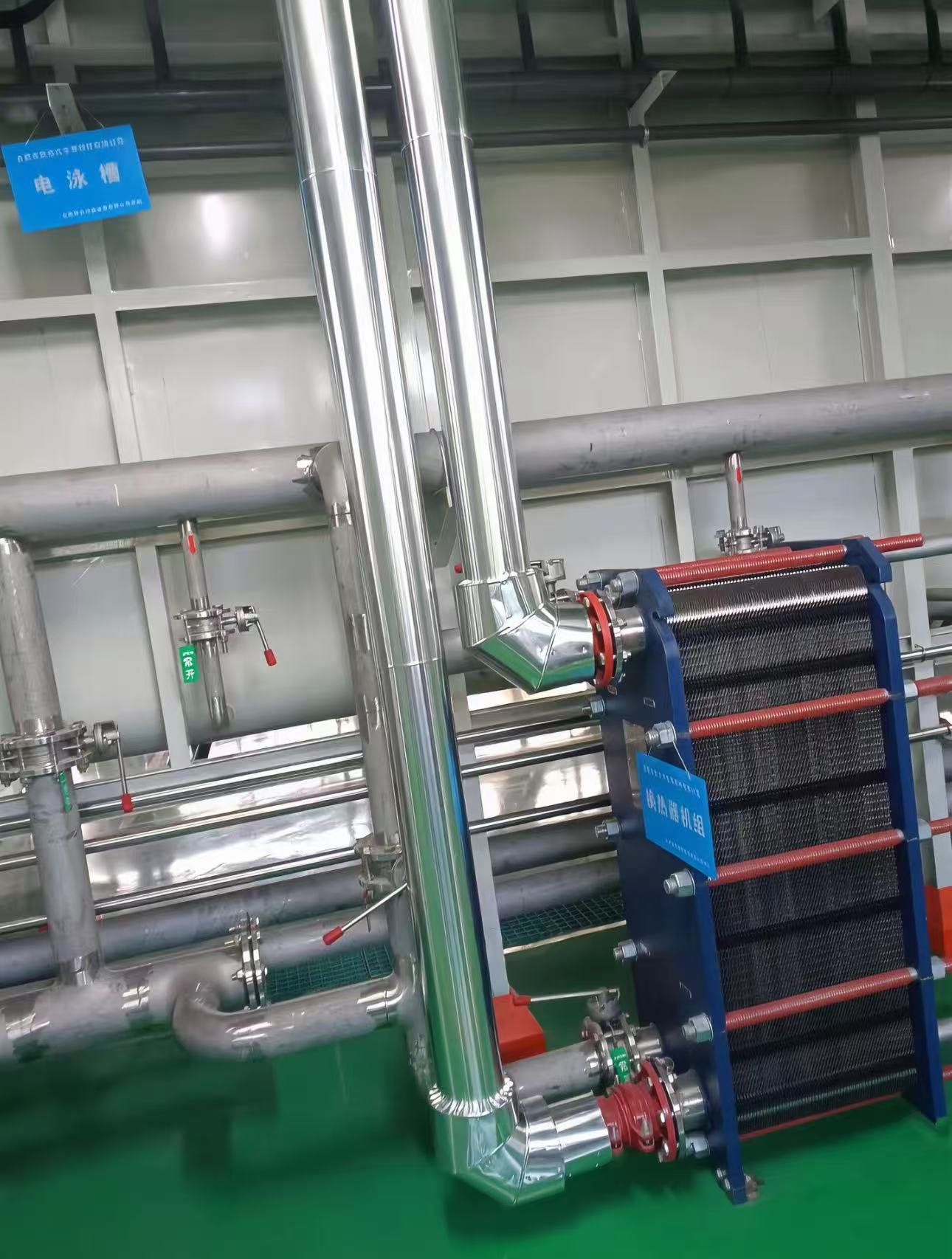
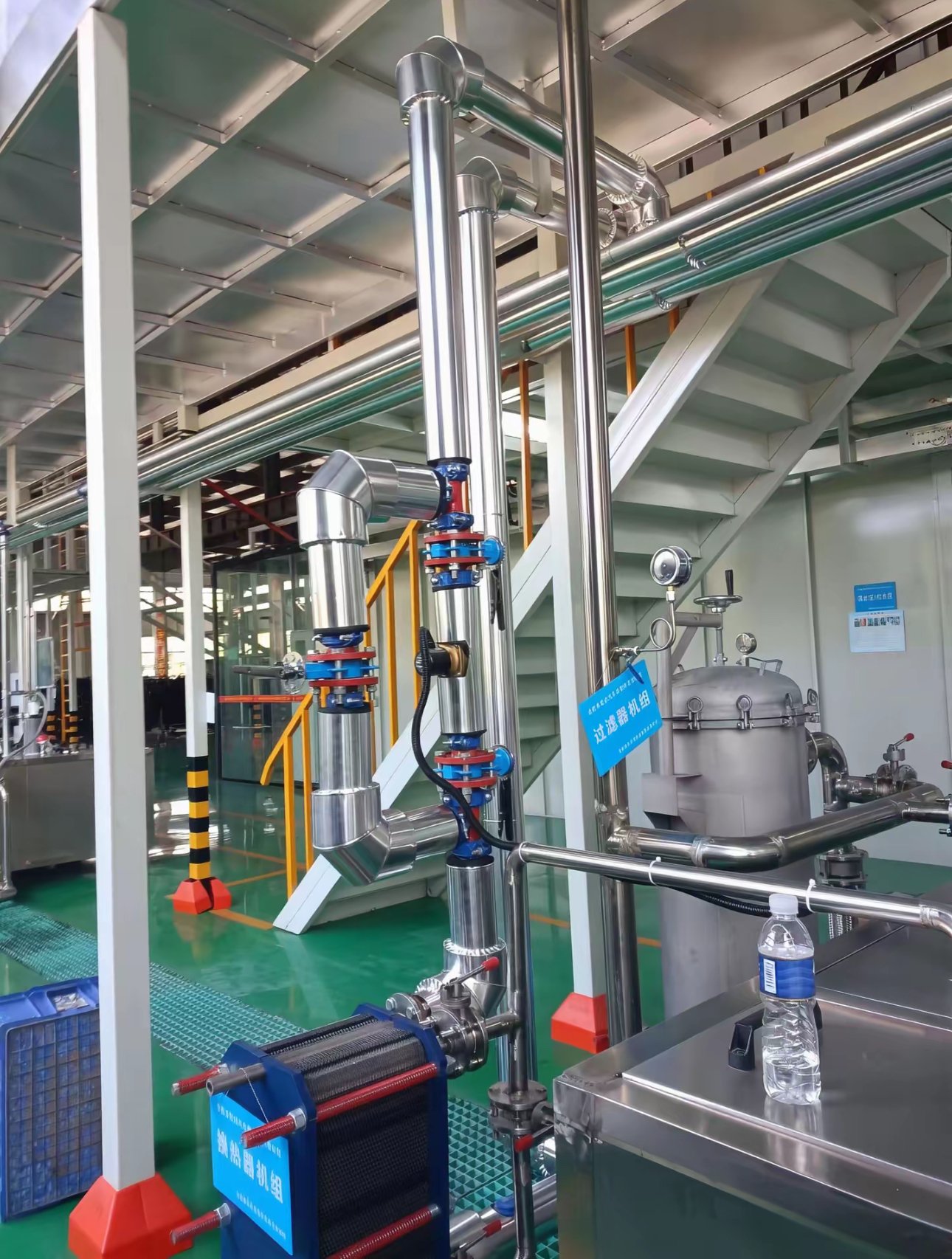
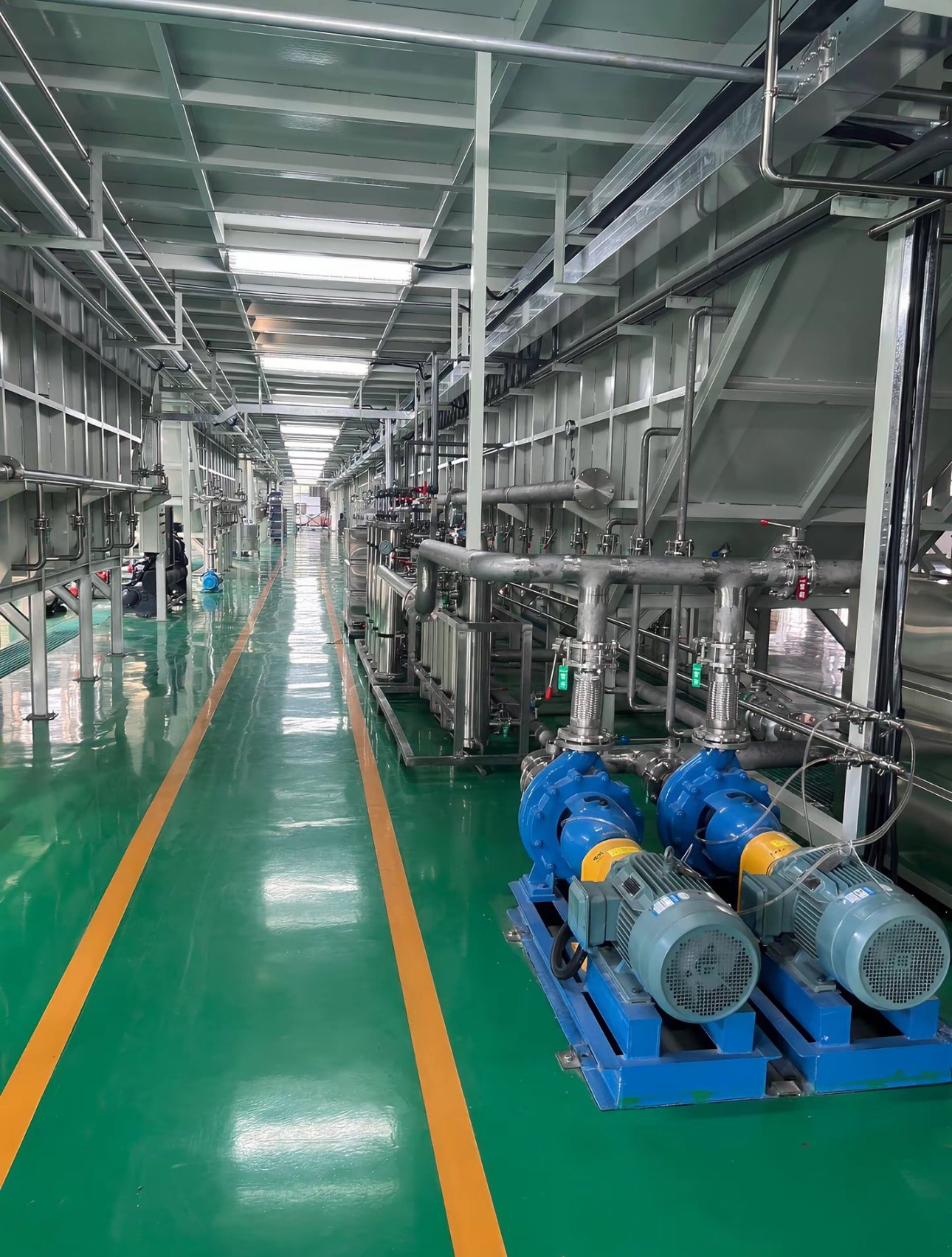
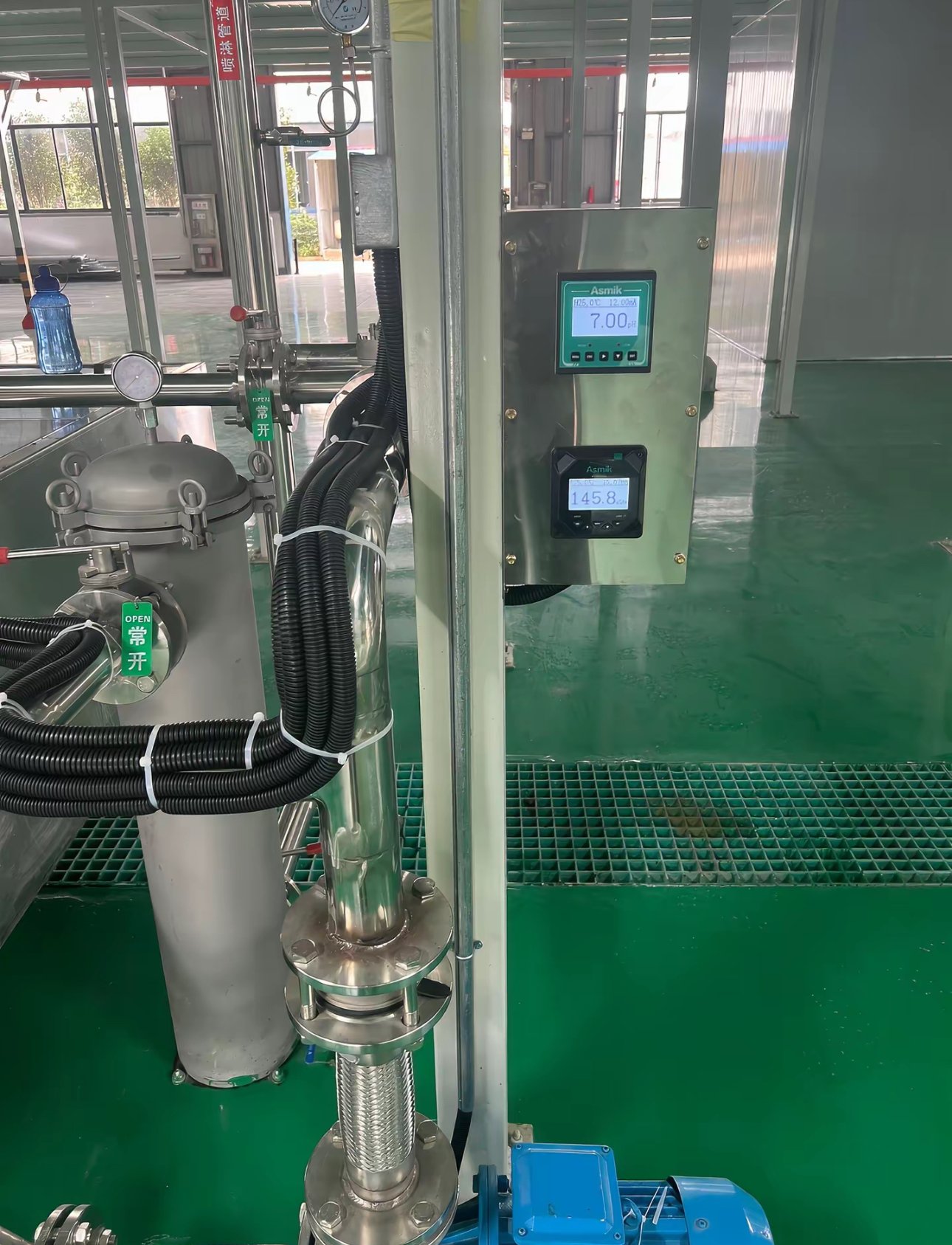
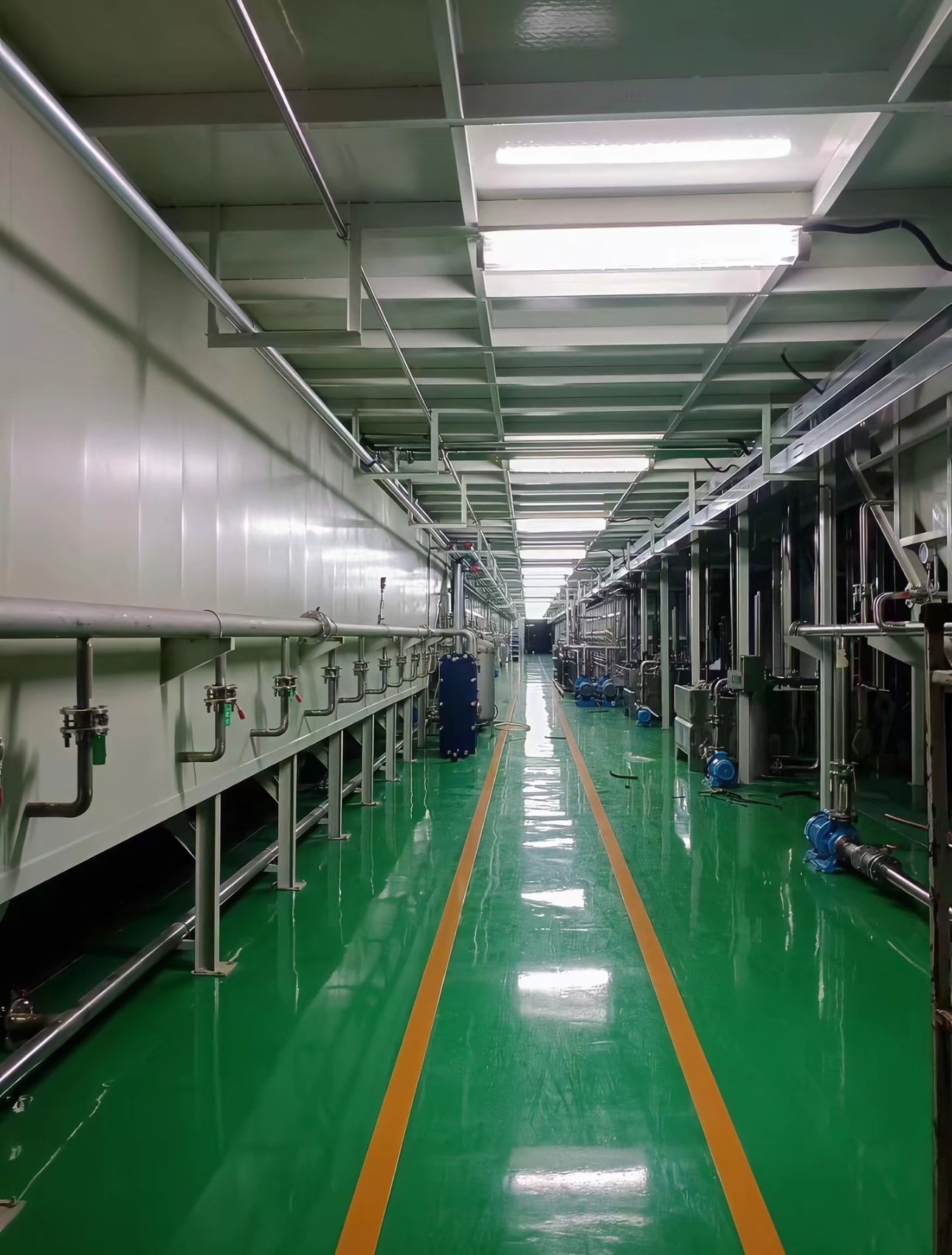
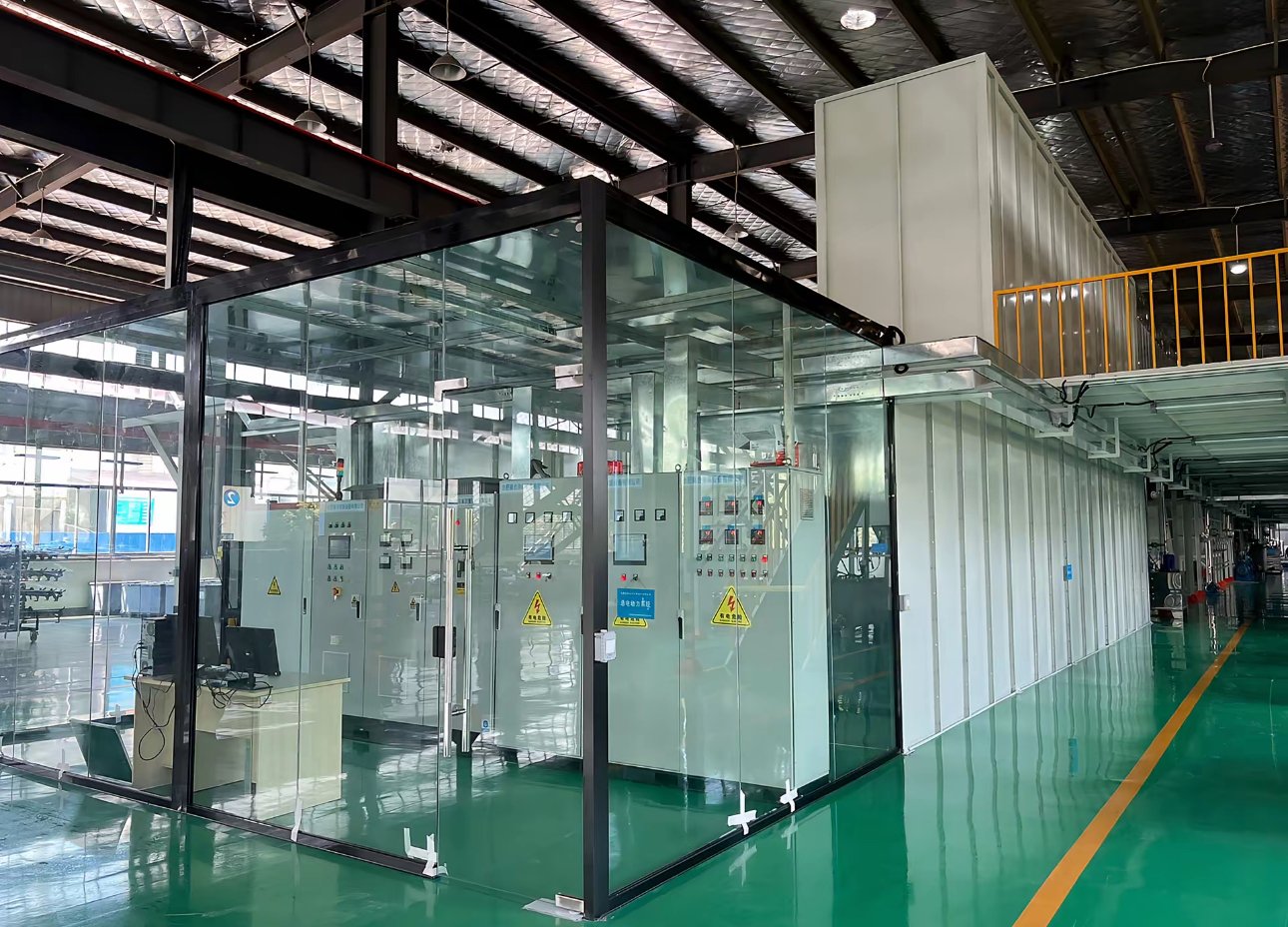
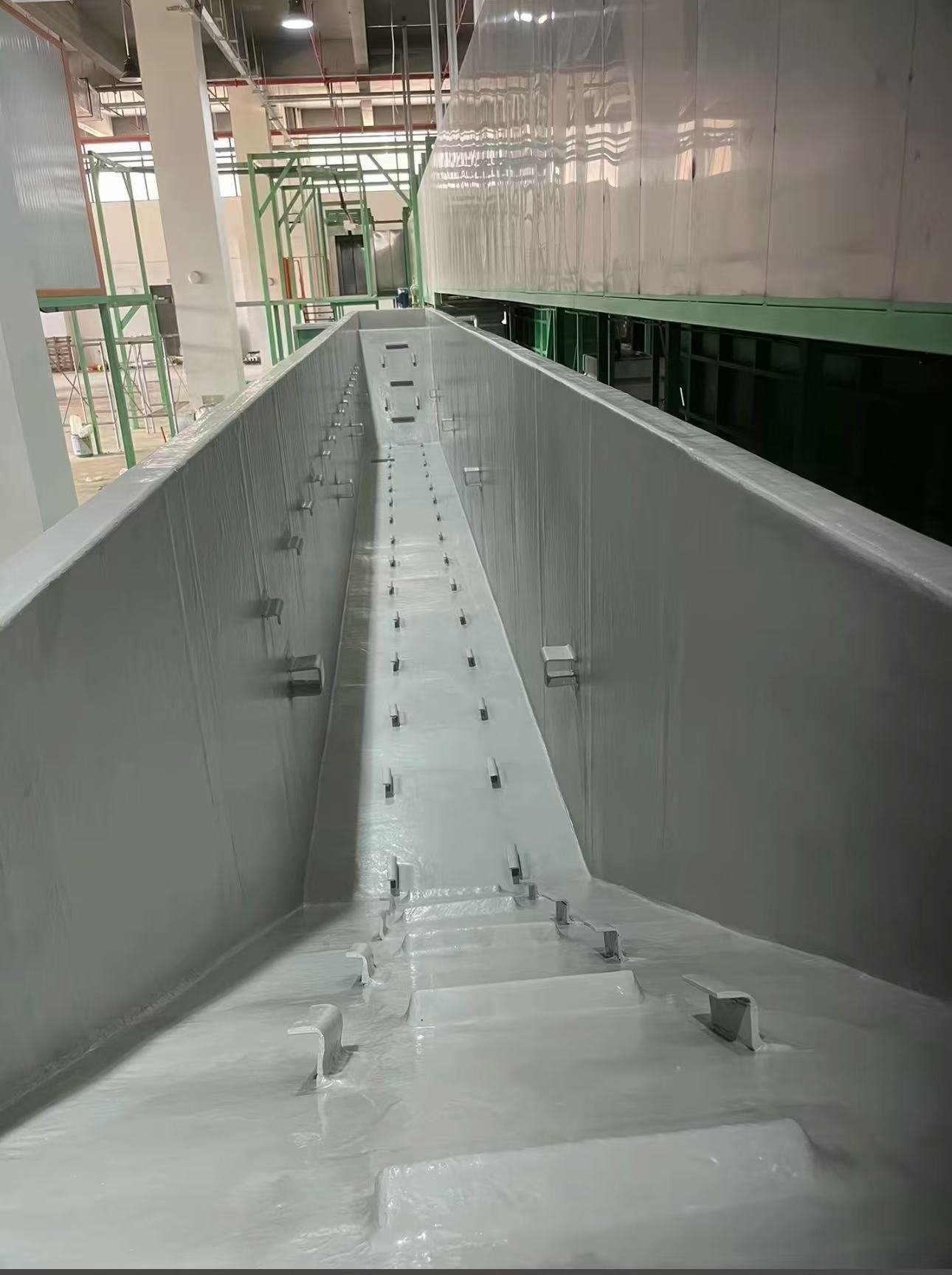
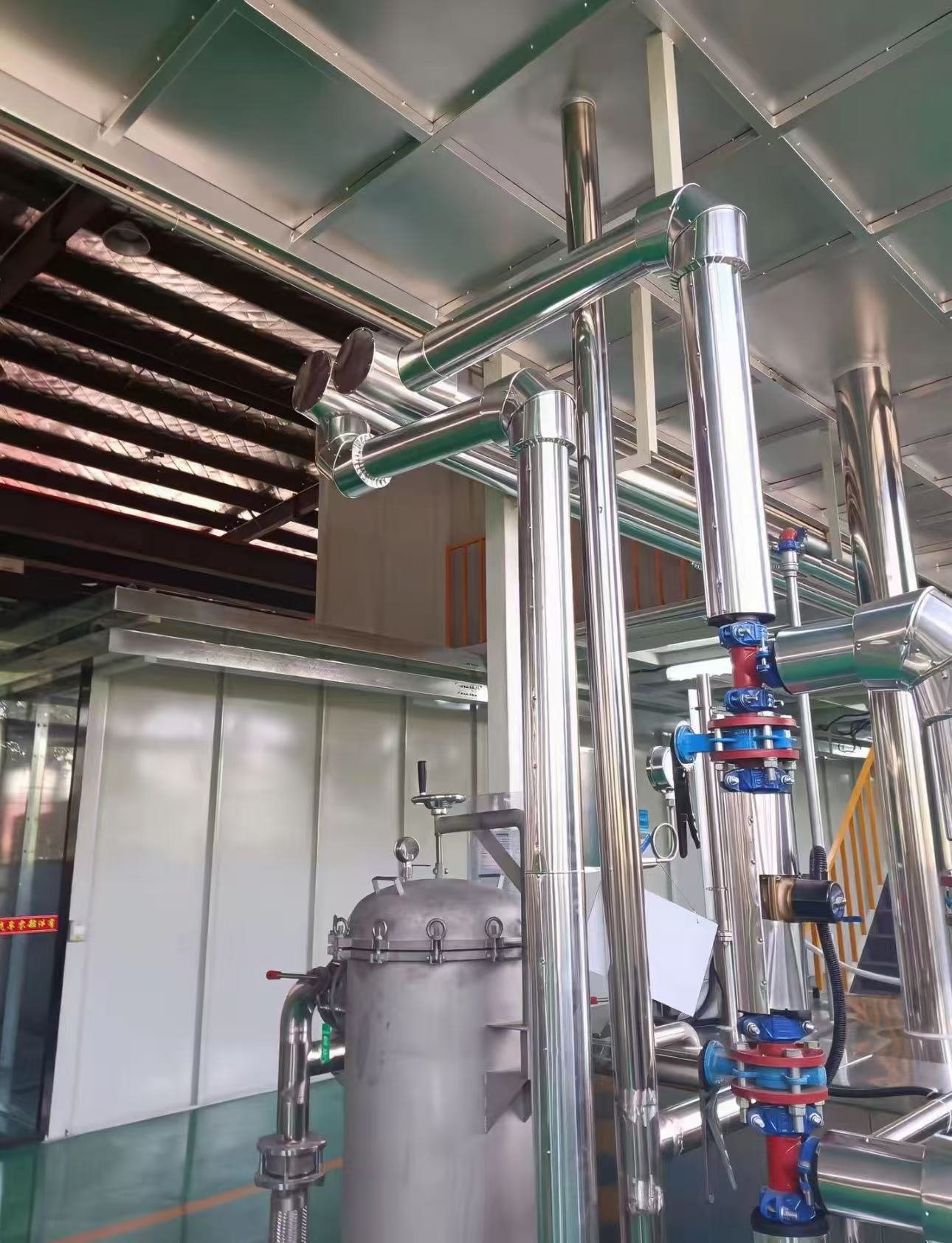
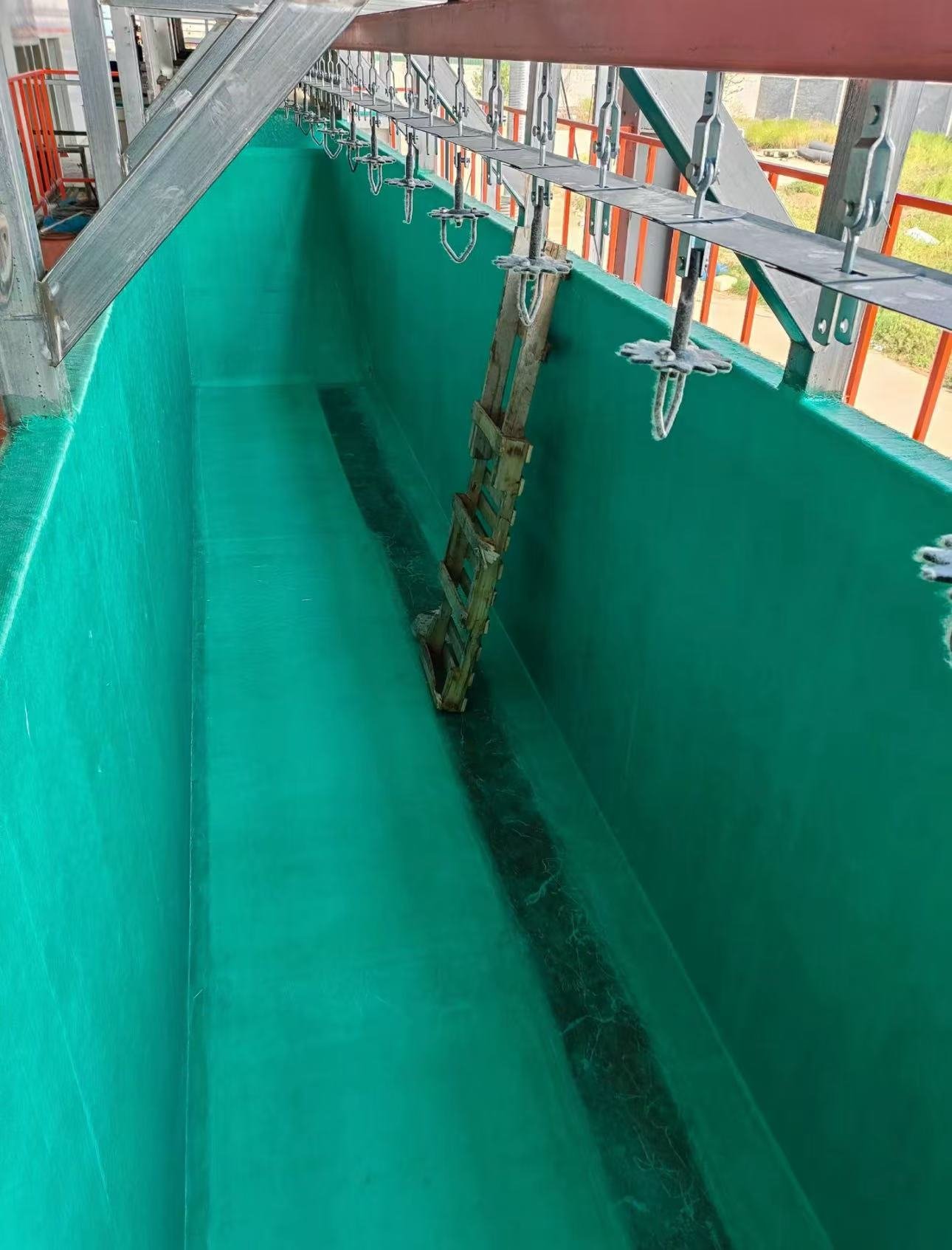
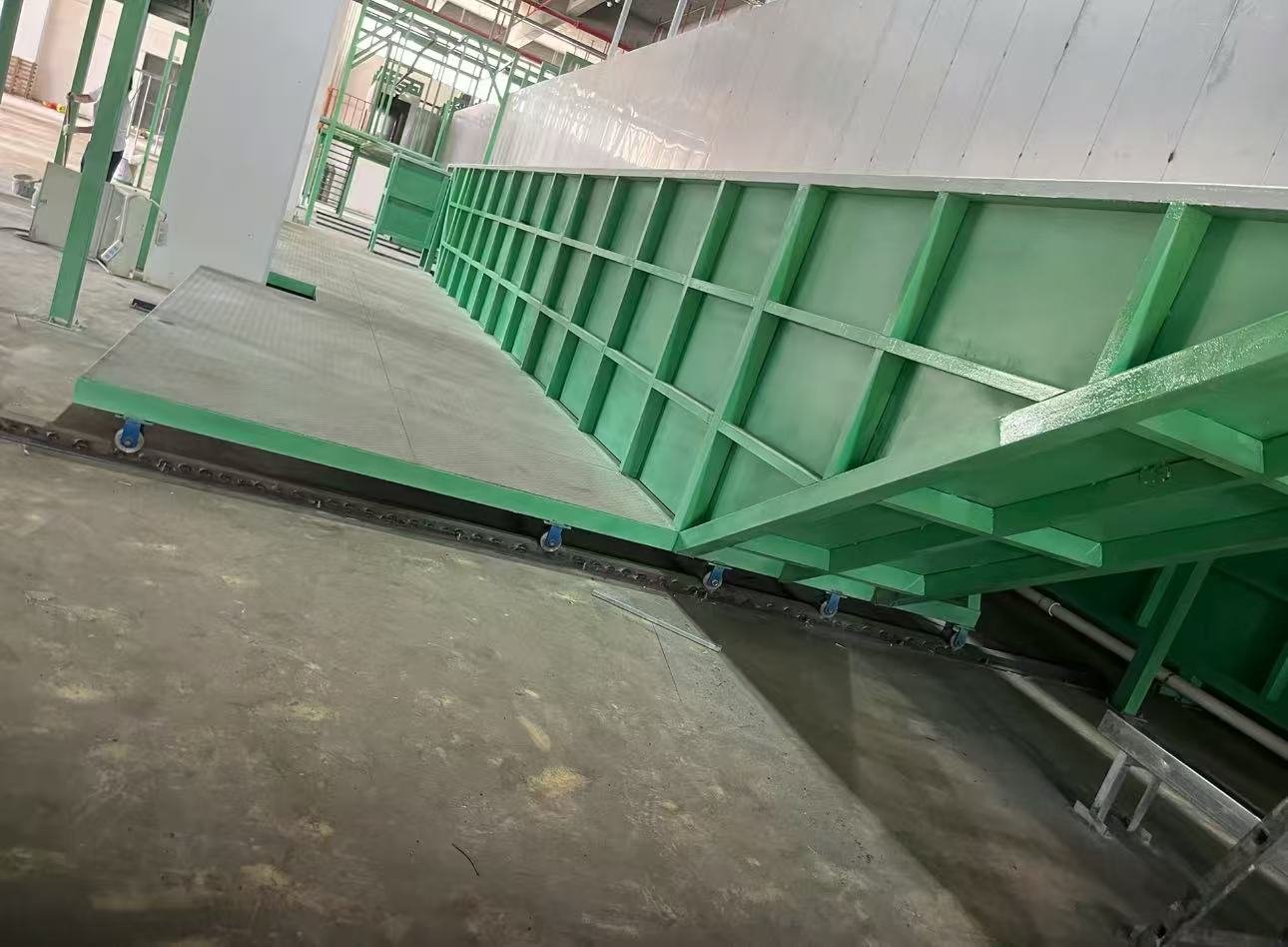
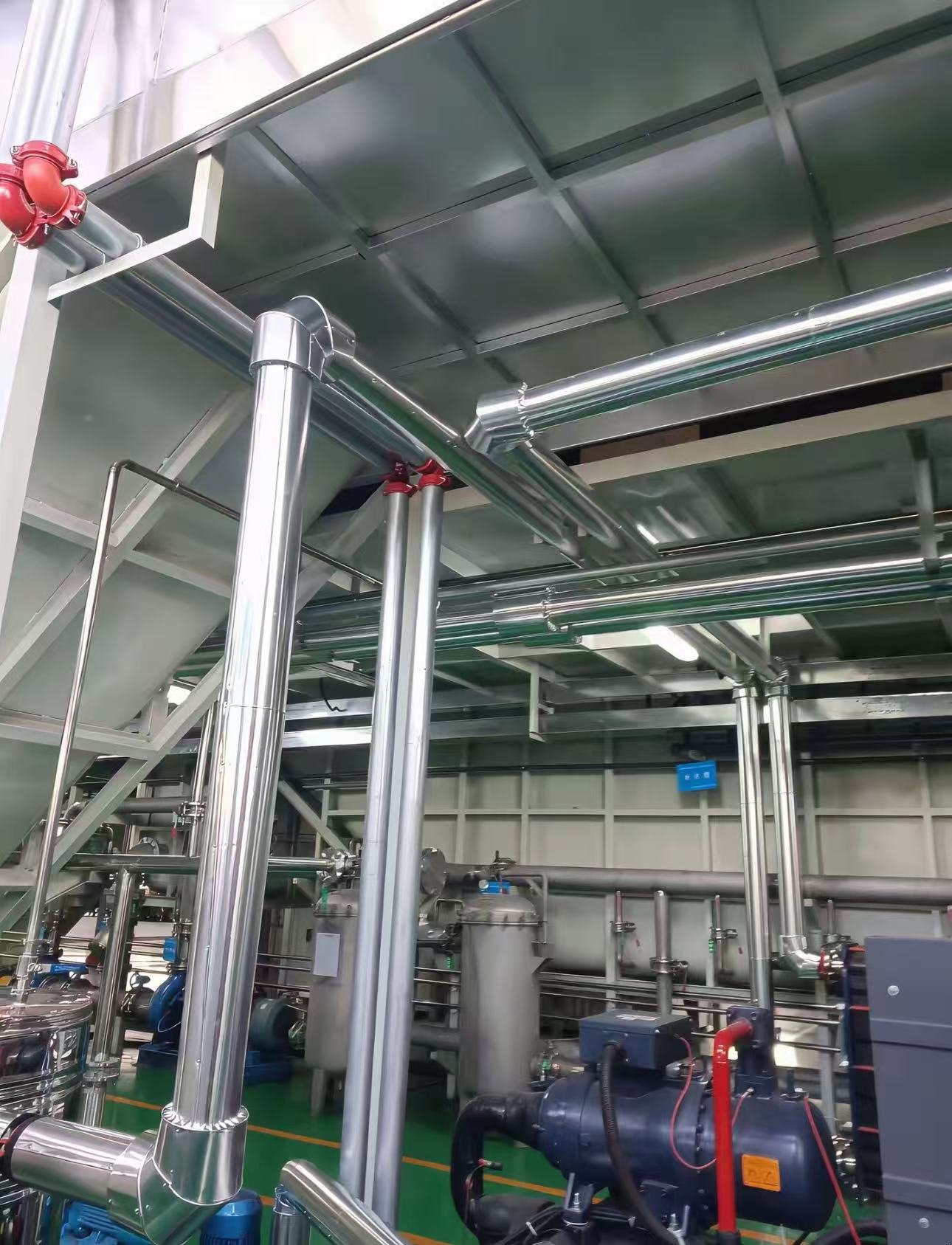
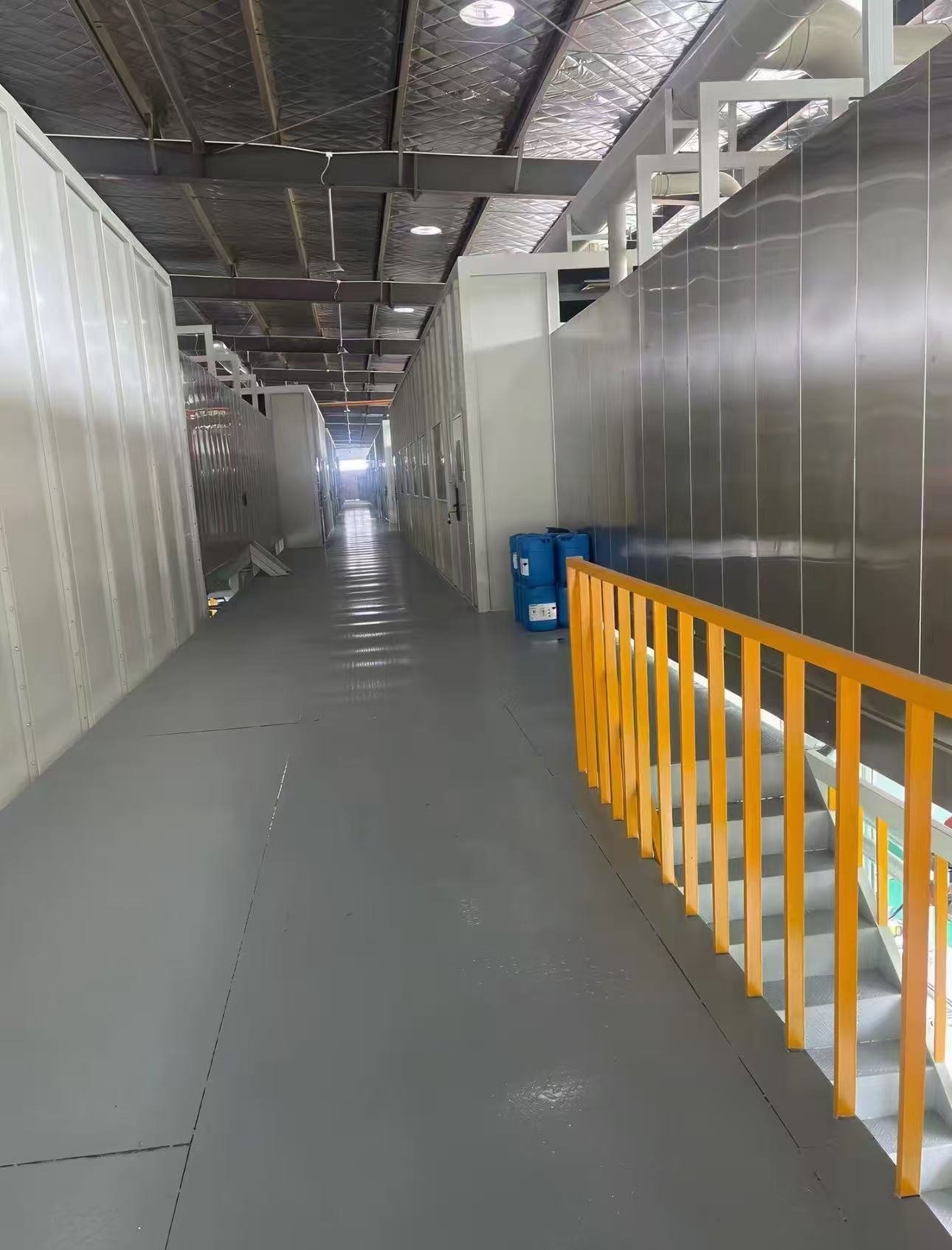
Photos from an electrophoretic coating line supplied for automotive parts: FRP-lined tanks with anode rails, spray pretreatment tunnel, circulation pumps, bag filters and plate heat exchangers on the bath loop, pH and conductivity monitoring, and a glass-walled control room.
Application References
Automotive parts and chassis suppliers, seat frame and bracket manufacturers, appliance and electrical enclosure makers, and any plant that primes complex welded assemblies before powder or liquid topcoat.
Engineering Commitment
Every line is engineered against a written performance specification. Line speed, cure profile, film build and emission level are stated in the contract and demonstrated on your own part at the factory trial run before shipment. One engineering team owns the whole chain — pretreatment, application, curing, conveying and emission control — so the trade-offs between them are settled on the drawing board, not on your factory floor.
Service & Delivery
Standard configurations ship in 30-60 days with a 12-month full-machine and 36-month critical-component warranty. On-site installation, commissioning and operator training are available worldwide, and process tuning and spare parts support continue for the working life of the line.
Frequently Asked Questions
How is E-coat different from spray priming?
The part is immersed in a water-borne paint bath and a DC voltage deposits the film electrically, so coverage is uniform on edges, inside tubes and in cavities that a spray gun cannot reach. Film thickness is set by voltage and time rather than by operator technique.
What comes after the E-coat?
Most lines apply a powder or liquid topcoat on the same or a linked conveyor. The cured E-coat film is a primer; colour and gloss come from the topcoat.
What tank size do I need?
The working volume follows the largest part envelope plus clearance to the anodes, and the line takt sets how many carriers are in the bath at once. We size the bath, the ultrafiltration and the chiller together from your part drawings and hourly output.