Shipping Container Coating Line: Marine Spec, Throughput and Plant Layout (2026)
Quick answer: A shipping container coating line has to hit ISO 12944 C5-M — typically zinc-rich epoxy primer, epoxy MIO intermediate and polyurethane topcoat totalling 240 to 320 microns — while turning one to four boxes a day. That means room or roller blasting to Sa2.5, 15 m class booths at 45,000 to 70,000 m3/h, and forced curing rather than air drying. Plant cost runs USD 500,000 to 2,000,000.
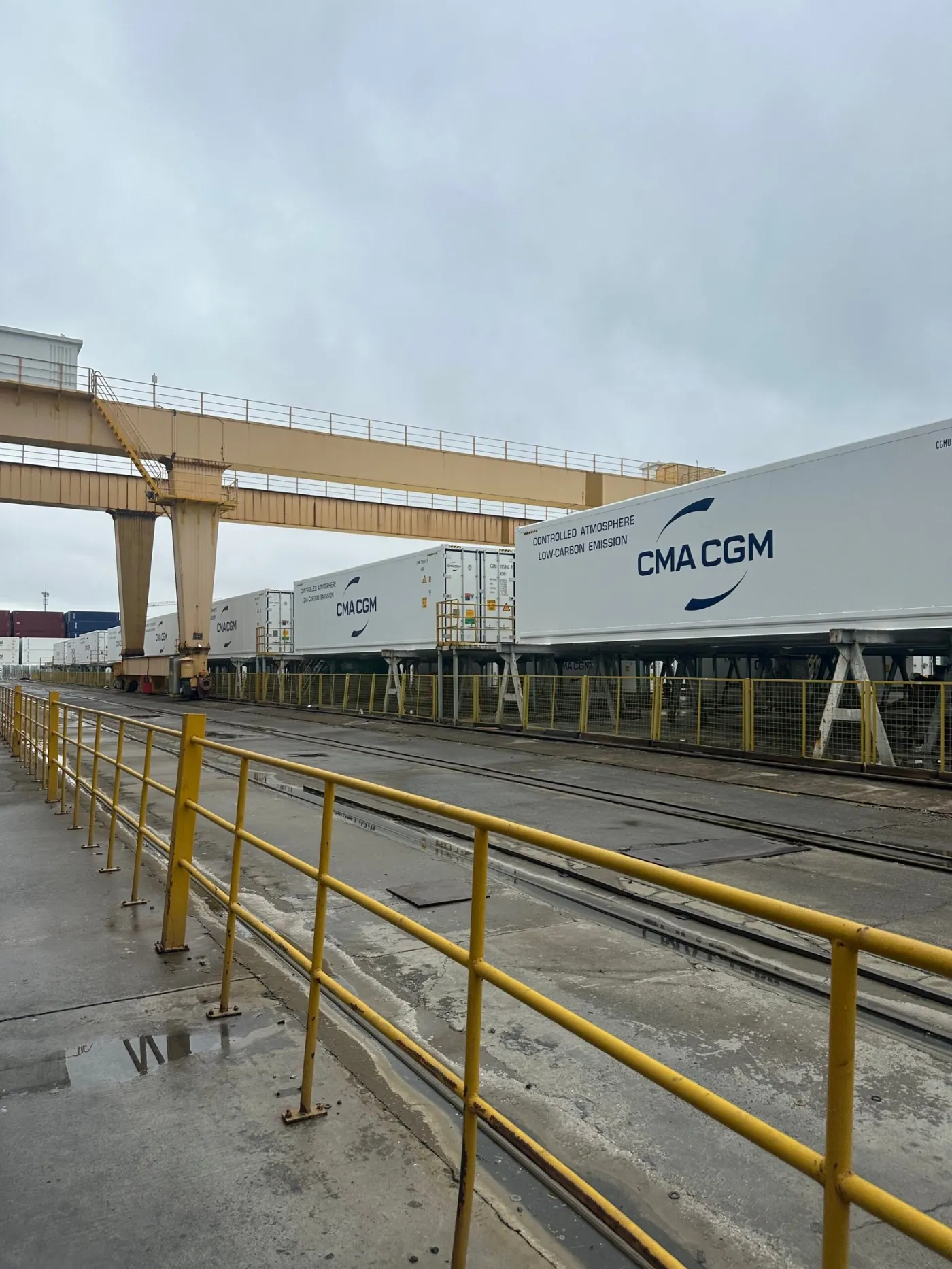
Why container coating is a different problem from general steelwork
Two constraints collide. The corrosion requirement is the most severe in common industrial practice, because a box spends its life in salt spray and is expected to survive 15 years without a full repaint. At the same time the work is production, not project: a plant that takes a week per container has no business model.
Everything in the line design follows from resolving those two at once — which is why container plants look like cell-based workshops rather than conveyor lines, and why forced curing is not optional.
What coat sequence does a container need?
| Coat | Product | Dry film | Purpose |
|---|---|---|---|
| Preparation | Blast to Sa2.5 | 40-75 micron profile | Mechanical anchor, scale removal |
| Primer | Zinc-rich epoxy | 60-80 microns | Cathodic protection |
| Intermediate | Epoxy micaceous iron oxide | 100-150 microns | Barrier, moisture path length |
| Topcoat | Polyurethane | 60-80 microns | UV, colour, abrasion |
| Total | – | 240-320 microns | ISO 12944 C5-M |
Stripe coating every edge, weld and corner post by hand before each main coat is standard practice, not an optional extra. Film thickness at a sharp edge falls to a fraction of the flat-surface value, and that is exactly where corrosion starts.
How do you size the blasting and coating cells?
| Cell | Internal size (40 ft box) | Airflow | Notes |
|---|---|---|---|
| Blast room | 15 x 4.5 x 4.5 m | 45,000-70,000 m3/h | Full floor media recovery |
| Primer booth | 15 x 5 x 5 m | 45,000-70,000 m3/h | Humidity control for zinc-rich |
| Topcoat booth | 15 x 5 x 5 m | 45,000-70,000 m3/h | Higher cleanliness class |
| Forced cure zone | Same as booth | Recirculating | 60-80 C |
Airflow follows the standard 0.4 to 0.6 m/s cross-draft over the cell cross-section. On a 40 ft booth this is the single most common place to under-specify: an under-extracted booth lets overspray settle back onto wet film, and no amount of painter skill fixes it.
What cycle time is realistic?
| Stage | 20 ft box | 40 ft box | Reefer cabinet |
|---|---|---|---|
| Blast to Sa2.5 | 2-4 h | 4-7 h | 1-3 h |
| Primer plus stripe coat | 1.5-2.5 h | 2-4 h | 1-2 h |
| Intermediate | 1-2 h | 1.5-3 h | Not always used |
| Topcoat | 1-2 h | 1.5-3 h | 1-2 h |
| Forced cure between coats | 1-2 h each | 1-2 h each | 1-1.5 h each |
| Total elapsed | 8-14 h | 12-20 h | 6-11 h |
Forced curing at 60 to 80 C compresses each between-coat wait by 50 to 70 percent against air drying. On a three-coat system that is the difference between one box per day and two, which is usually what decides whether the plant is viable.
How are refrigerated cabinets different?
- Temperature limit: insulated panels cannot see the temperatures bare steel tolerates. Cure stays at 60-80 C.
- Handling: panels are coated flat on frames, not hung, so a different carrier system is needed.
- Cleanliness: the finish is a visible product surface, so booth filtration and intake air matter more than on a dry box.
- Substrate mix: steel skins, aluminium extrusions and pre-coated panels can share the line, which forces a chrome-free multi-metal pretreatment.
What does a container coating plant cost in 2026?
| Item | Indicative price (USD, ex-works) |
|---|---|
| Blast room for 40 ft box with full recovery | 150,000-400,000 |
| Spray and forced-cure booth, 15 m class | 110,000-320,000 each |
| Blast room dust collection | 40,000-130,000 |
| VOC treatment for solvent exhaust | 80,000-400,000 |
| Rails, transfer cars, doors | 30,000-120,000 |
| Typical two-booth plant | 500,000-2,000,000 |
VOC treatment is the item most often left out of a first budget. Three-coat solvent systems on a 15 m booth generate a large solvent load; see our comparison of RTO, RCO, activated carbon and zeolite rotor treatment before fixing the plant layout.
What fails on container coating lines?
- Corrosion at corner posts and welds within 2-3 years: stripe coating skipped or applied after the main coat instead of before.
- Blistering under the topcoat: zinc-rich primer over-coated before solvent release. Respect the minimum recoat interval, not just the maximum.
- Salt contamination after blasting: on coastal sites, test surface salts after preparation and wash and re-blast if above the specified limit.
- Overspray inclusions: booth extraction below design, or arrestor filters run past their pressure-drop limit.
- Film thickness shortfall on the roof panel: operators reaching at full extension. Provide platforms rather than relying on lance length.
Working with MUSI Technology on a container coating plant
MUSI Technology (Changzhou Musi Environmental Technology Co., Ltd.) designs and builds turnkey finishing lines from its plant in Changzhou, China, founded in 2011, with more than 500 delivered projects across 36 countries, from single booths to complete finishing plants.
- Every line is engineered against a written performance specification. Cell sizing, extraction rate, cure profile and film build are stated in the contract and demonstrated at the factory trial run before shipment.
- One engineering team owns the whole chain — blasting, media recovery, application, forced curing, dust collection and VOC treatment — so the trade-offs between them are settled on the drawing board, not on your factory floor.
- Standard configurations ship in 30-60 days with 12-24 months warranty, and on-site installation, commissioning and operator training are available worldwide.
Send your box dimensions, target boxes per day and coating specification for a plant layout: contact MUSI Technology. See also shipping container and refrigerated cabinet coating solutions.
Frequently asked questions
What coating system do shipping containers use?
A three-coat marine system to ISO 12944 C5-M: zinc-rich epoxy primer at 60-80 microns, an epoxy micaceous iron oxide intermediate at 100-150 microns, and a polyurethane topcoat at 60-80 microns, totalling 240-320 microns. Every edge, weld and corner post is stripe-coated by hand before each main coat, because film thickness at a sharp edge otherwise falls to a fraction of the flat-surface value.
How long does it take to coat one shipping container?
Total elapsed time is typically 8-14 hours for a 20 ft box and 12-20 hours for a 40 ft box, covering blasting, three coats, stripe coating and between-coat curing. Forced curing at 60-80 C compresses each between-coat wait by 50-70 percent against air drying, which on a three-coat system is the difference between one box per day and two.
How big does a 40 ft container spray booth need to be?
Roughly 15 x 5 x 5 m internal, with 45,000-70,000 m3/h of extraction to hold a 0.4-0.6 m/s cross-draft over the cell cross-section. Under-specifying extraction on a booth this size is the most common design error: overspray settles back onto wet film and no amount of painter skill corrects it.
How is a reefer cabinet line different from a dry container line?
Insulated panels cannot see the temperatures bare steel tolerates, so curing stays at 60-80 C. Panels are coated flat on frames rather than hung, needing a different carrier system. Cleanliness control is tighter because the finish is a visible product surface, and a mix of steel skins, aluminium extrusions and pre-coated panels forces a chrome-free multi-metal pretreatment.
Why do containers corrode at the corner posts first?
Because stripe coating was skipped, or applied after the main coat instead of before it. Electrostatic and airless application both leave sharp edges and weld crowns with far less film than flat panels. Hand stripe-coating every edge before each main coat is the standard control, and it has to be verified rather than assumed.
What does a container coating plant cost?
Indicative 2026 ex-works ranges are USD 150,000-400,000 for a 40 ft blast room with full media recovery, USD 110,000-320,000 per 15 m class spray and forced-cure booth, USD 40,000-130,000 for blast room dust collection and USD 80,000-400,000 for VOC treatment. A typical two-booth plant falls between USD 500,000 and USD 2,000,000.
About the figures in this guide. Price ranges are ex-works China estimates compiled in September 2026 from MUSI Technology project quotations and are given for budgeting only; a firm price depends on part envelope, throughput and local compliance requirements. Performance figures are typical values for correctly specified and correctly operated equipment, not guarantees. Last reviewed: 10 September 2026.
Send us your part size, throughput and coating type — our engineers reply with a layout and budget within one working day. Contact MUSI Technology or browse our equipment range.
Related technical guides
- Powder Coating Line: Types, Specs & Cost (2026)
A powder coating line pretreats, coats and cures metal parts on a conveyor. Full guide to line types, key specifications and 2026 price ranges. - Powder Coating Pretreatment Line: Stages & Cost
A pretreatment line degreases, rinses and chemically converts the metal surface before coating. Three, five and seven-stage layouts, phosphate versus. - BESS Container Coating Line: Spec & Corrosion
Battery energy storage containers need C4 to C5-M corrosion protection: shot blasting to Sa2.5, zinc-rich primer and weather-resistant polyester topcoat. - Spray Coating Line: Types, Specs & Cost (2026)
What a spray coating line costs, how the main types compare on throughput and finish, and the specs to fix before you ask for quotations. - Shot Blasting vs Sandblasting: Which to Choose
Shot blasting throws abrasive mechanically with wheels; sandblasting propels it with compressed air. Compared on throughput, energy cost per m2, surface.