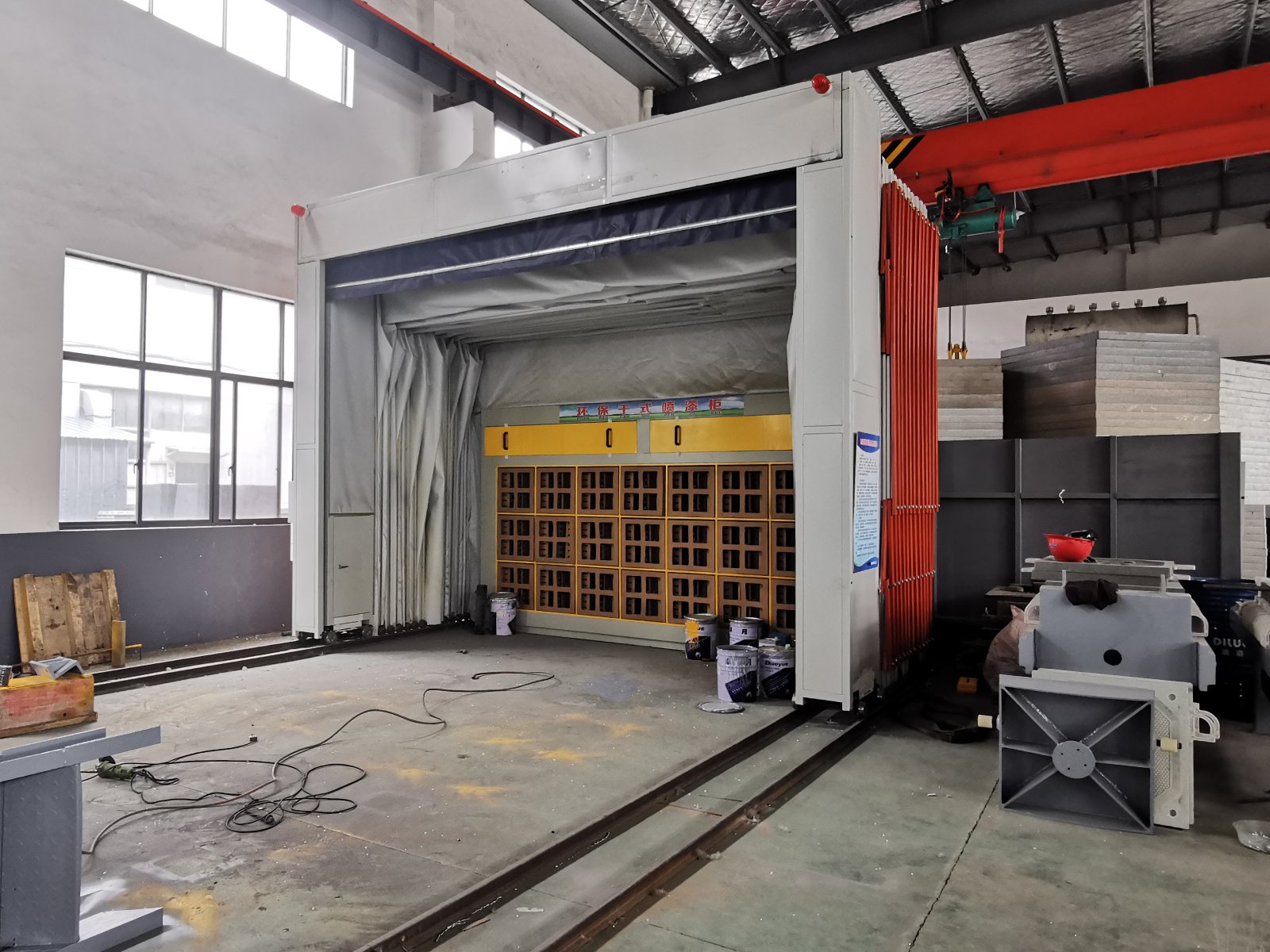
Dry Paint Mist Filter Cabinet
Exhaust-wall filter cabinet for liquid spray booths — labyrinth paper filters that hold 14-18 kg of paint per square metre, glass-fibre bags behind them and an optional carbon stage, giving 98% or more mist capture with no water or oil circuit.
Built for booths that paint in batches or change colour often, where the only overspray-contact surface should be a filter that is lifted out and replaced.
Technical Specifications
Values below are typical ranges for this equipment; the figures for your unit are fixed in the written specification after we review your booth, paint consumption and emission limit.
| Mist capture | 98% or more (paper plus glass-fibre bag, design value) |
|---|---|
| Cabinet size | Typical 1,000 x 10,000 x 2,400 mm for a 10 m wide booth; 5,000 x 1,000 x 2,500 mm modules for 5 m booths |
| Stage 1 | Labyrinth (accordion) paper filters, 14-18 kg/m2 paint holding, depth loading |
| Stage 2 | Glass-fibre bags 595 x 595 x 600 mm or 50 mm AP-50 mat: initial 7-40 Pa, final 250 Pa, 95% capture, 3,500 g/m2 dust holding, class F-3 flame retardant |
| Stage 3 (optional) | Activated carbon cassettes built into the cabinet |
| Change-out | When the differential pressure gauge reads about 250 Pa |
| Construction | 1.5 mm galvanised steel, hinged filter frames, inspection doors |
| Airflow | Sized at 0.3 m/s or more across the booth section, typically 20,000-45,000 m3/h |
| Noise | 80 dB(A) or less inside the booth |
| Downstream | Carbon boxes, UV photo-oxidation or RCO as the emission limit requires |
Configuration
- Galvanised cabinet with filter frames across the full booth width
- Labyrinth paper filter stage with quick-release frames
- Glass-fibre bag or mat stage behind the paper
- Optional carbon cassette stage and differential pressure gauge
- Outlet plenum to the exhaust fan and treatment unit
- Spare filter set supplied with the first delivery
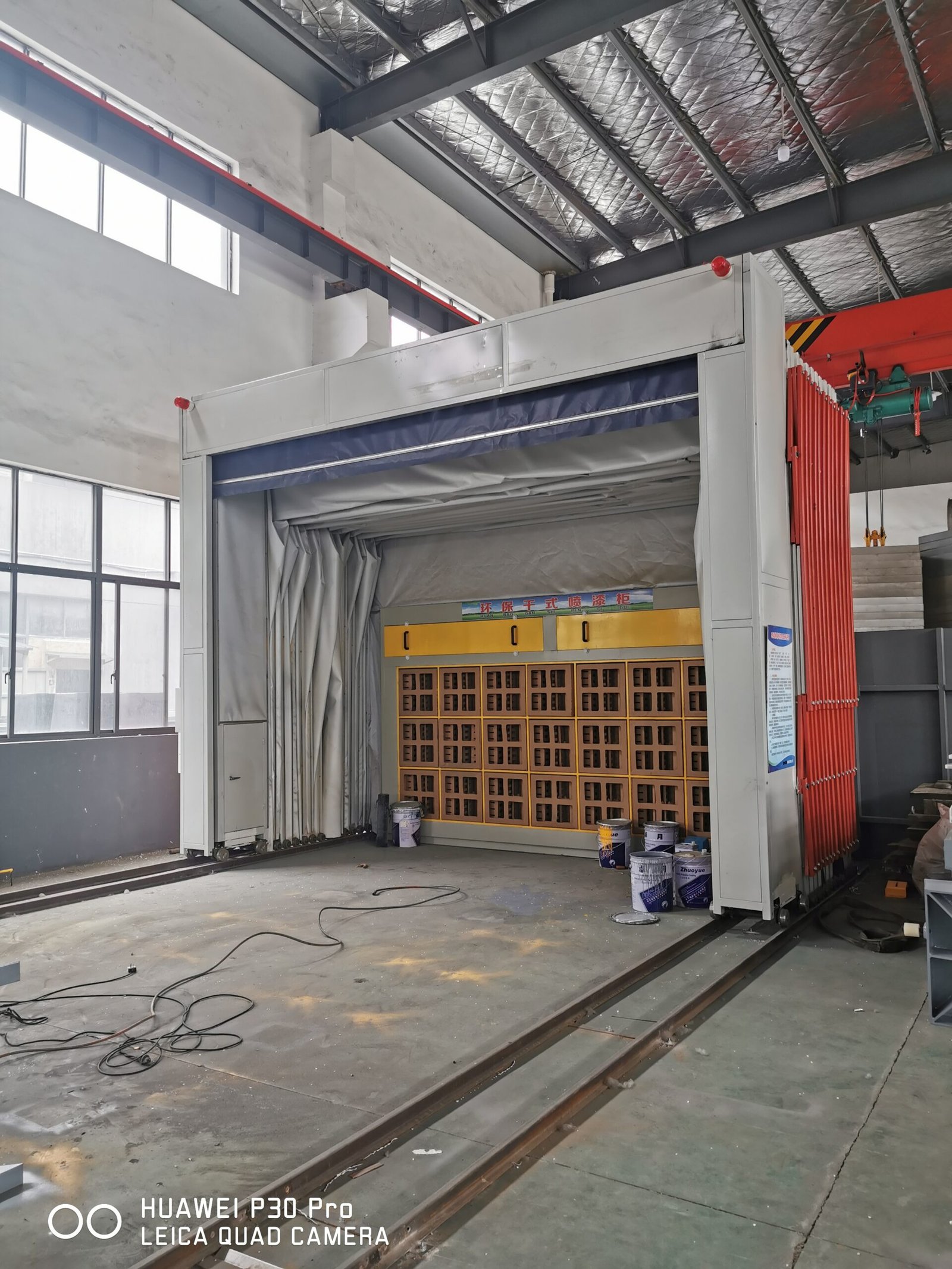
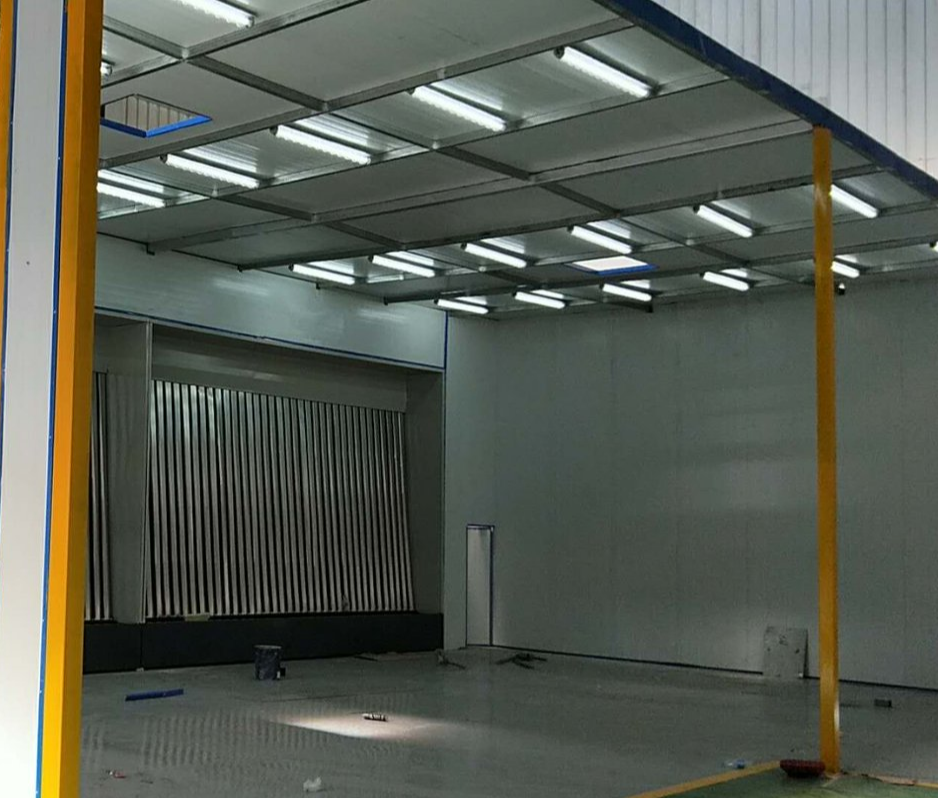
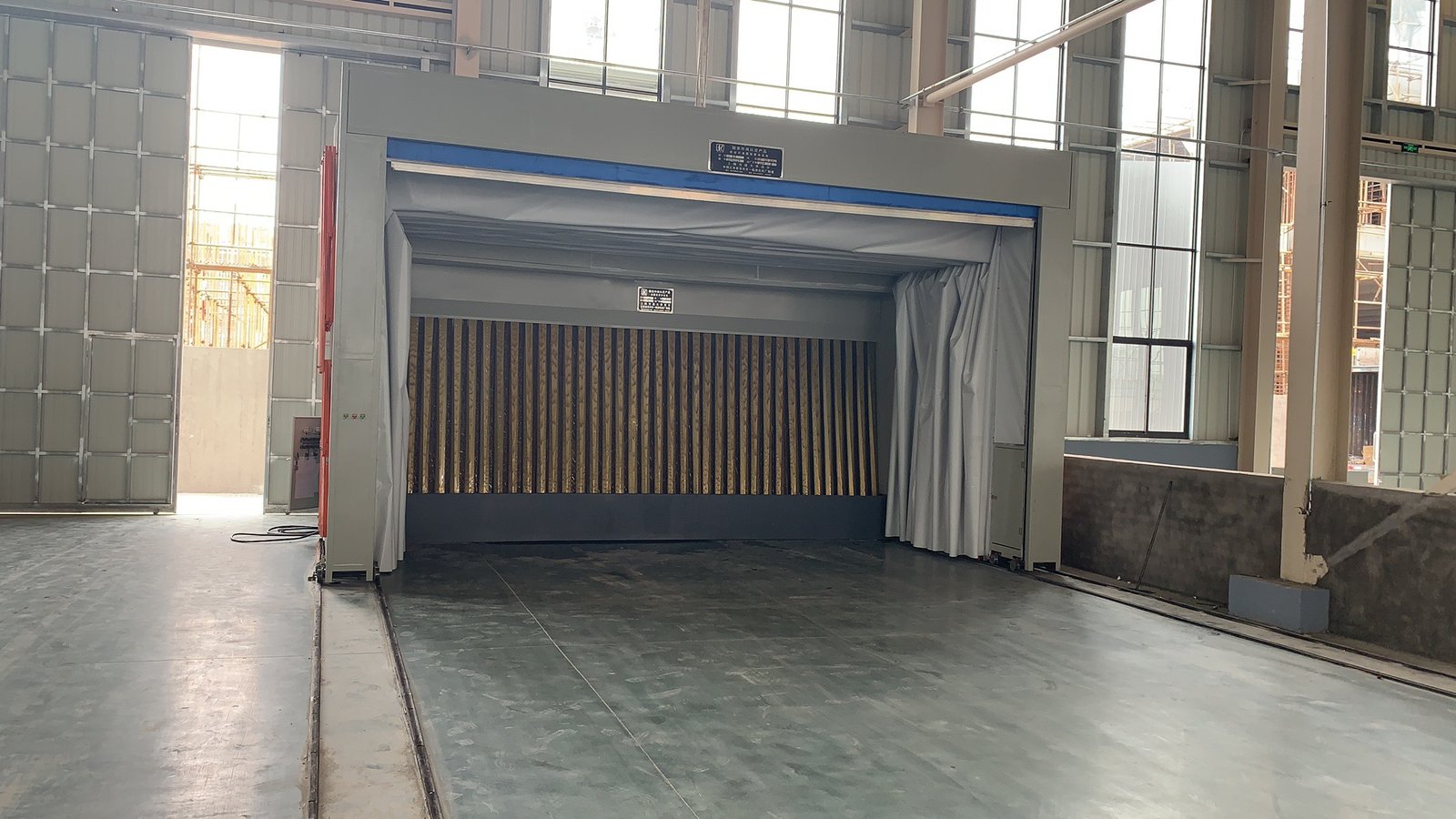
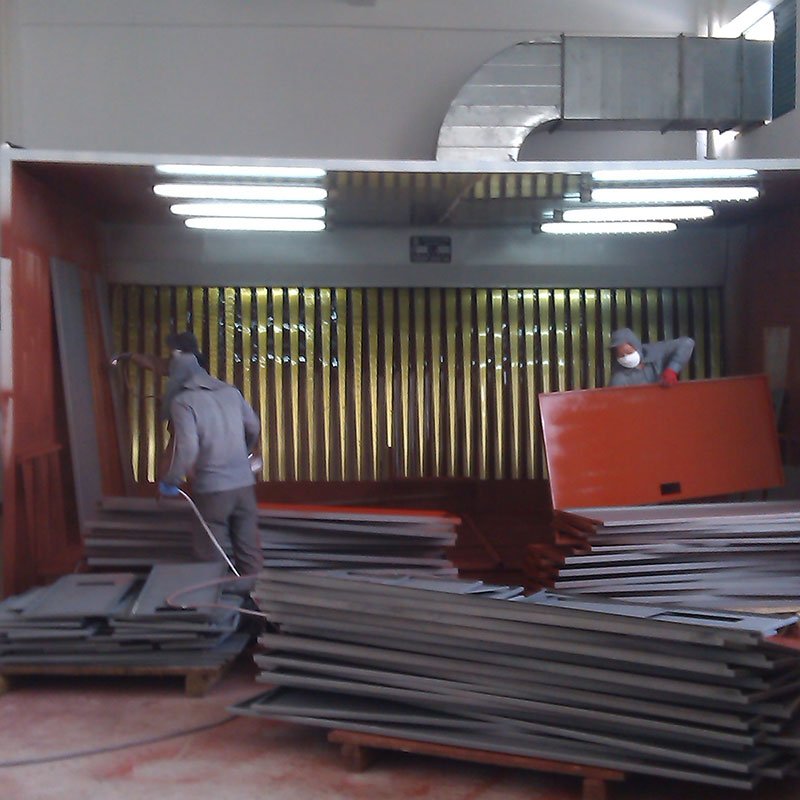
Dry Paint Mist Filter Cabinet in Practice
Application References
Structural steel, crane, trailer and machinery fabricators, and any spray booth painting in batches or with frequent colour changes, including telescopic and fixed booths.
Engineering Commitment
Every unit is engineered against a written performance specification. Mist capture, airflow, pressure drop and noise are stated in the contract and demonstrated at commissioning. One engineering team owns the booth, the capture stage and the exhaust treatment behind it, so the three are sized as one system.
Service & Delivery
Standard configurations ship in 30-60 days with a 12-month full-machine and 36-month critical-component warranty. On-site installation, commissioning and operator training are available worldwide, and filter media, oil and carbon supply continue for the working life of the unit.
Frequently Asked Questions
How often are the filters changed?
By the gauge, at about 250 Pa, not on a calendar; the interval follows paint volume.
Why labyrinth paper rather than flat media?
The folded paper forces the air to change direction several times, so droplets stick to the paper and fill the pleats from the bottom; it holds three to five times the paint of flat media and does not release captured paint back into the airflow.
Can it be fitted to an existing booth?
Yes; the cabinet is built to the booth width and height and connected to the existing fan, which is checked against the final filter resistance.
Does it need a carbon stage?
Only where the local VOC limit requires it; the paper and bag stages handle the paint droplets, carbon handles solvent vapour.
What do you need for a quotation?
Booth width and height, daily paint consumption, paint type and whether a treatment unit follows.