Dry Filter, Oil Film or Water Curtain: Paint Mist Capture for Retractable Booths
Quick answer: Dry filtration (labyrinth paper plus glass-fibre bag) is the default for telescopic booths because it needs no water or oil circuit at a movable enclosure and captures 98% or more of the mist; oil-film purifiers suit heavier daily paint use and pair well with carbon or RCO treatment; water curtains are rarely used on retractable booths because the water tank, pump and sludge handling belong to a fixed installation.
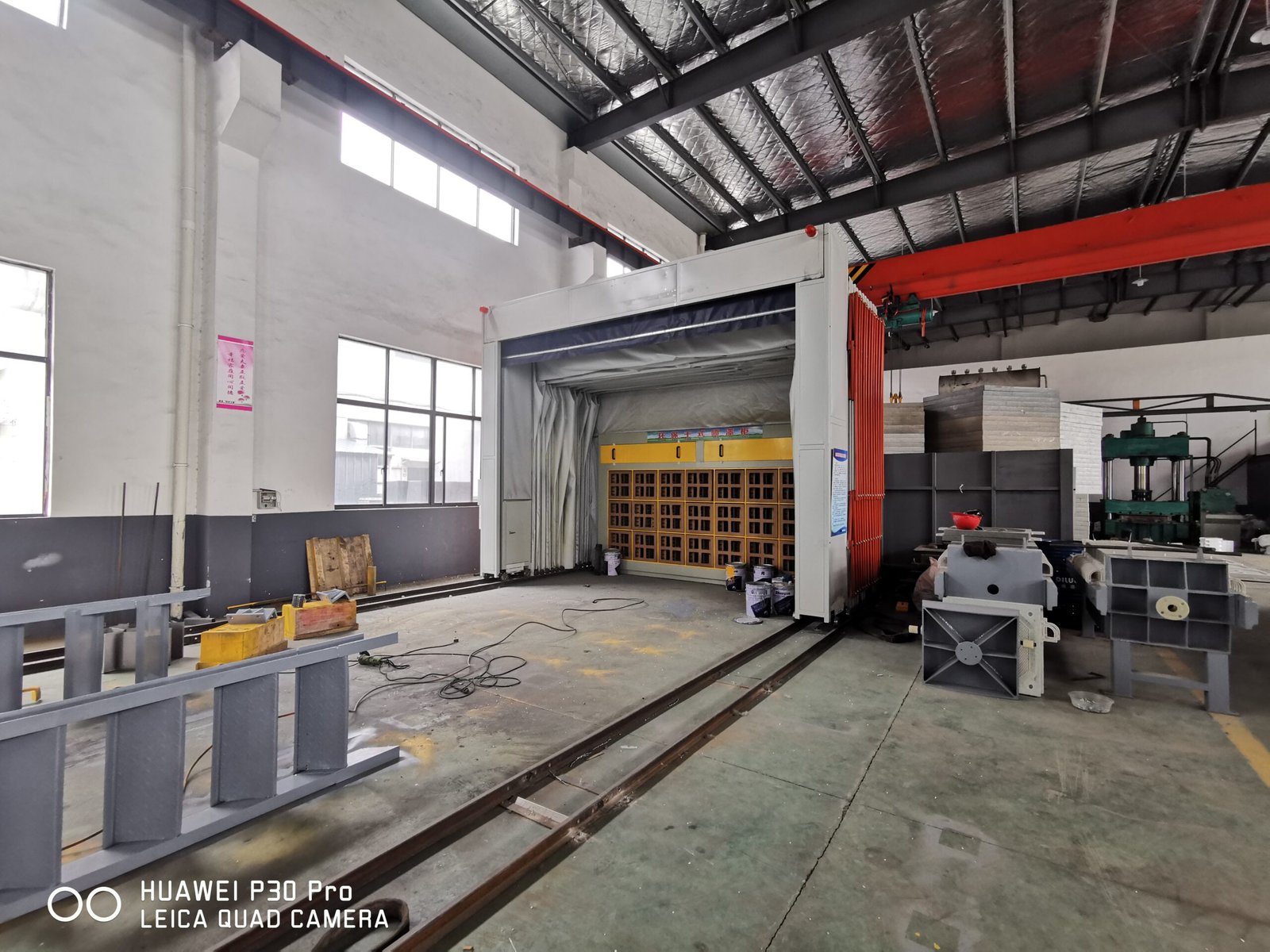
How does a labyrinth paper filter work?
The pleated cardboard filter has staggered slots that force the air to change direction several times. Paint droplets, heavier than air, cannot follow the turns and stick to the paper. The paint fills the pleats from the bottom, so the filter keeps passing air until it is nearly full; it holds 14-18 kg of paint per square metre, three to five times the load of flat media, and does not release captured paint back into the airflow. It is changed when the pressure drop across the wall reaches about 250 Pa.
What does the glass-fibre bag add?
Behind the paper a glass-fibre bag or mat (595 x 595 mm, 600 mm deep, or 50 mm AP-50 mat) catches the fine fraction. Typical values: initial resistance 7-40 Pa, final 250 Pa, capture 95%, dust holding 3,500 g/m2, flame retardancy class F-3. Together the two stages give 98% or more mist removal before the air reaches the treatment unit, which protects carbon beds and catalyst from fouling.
When is an oil-film purifier better?
An oil-film unit passes the air over oil-wetted surfaces that trap the mist; the paint-laden oil is drained and replaced instead of a filter being thrown away. It suits plants that paint every day and want fewer filter changes, and it is used in front of adsorption-desorption units with catalytic oxidation (RCO), where clean inlet air matters for catalyst life. Units of 1,800 x 1,800 x 3,450 mm are used two or three per booth for 12-13 m booths.
| Method | Mist capture | Consumable | Waste | Best fit |
|---|---|---|---|---|
| Dry (paper + glass fibre) | 98% or more | filters, 250 Pa change-out | spent filters (solid) | intermittent painting, movable booths |
| Oil film | 98% or more | oil change | paint-laden oil | daily painting, before RCO |
| Water curtain | 95-98% | water, flocculant | paint sludge, water | fixed booths with water treatment |
Why not a water curtain on a retractable booth?
The curtain wall needs a tank, pump, flocculant dosing and sludge removal; that is a fixed installation with water and drainage. A telescopic booth already has one fixed end, so it is possible, but the extra civil work and the water treatment routine cancel the simplicity that made the retractable booth attractive. Dry or oil-film capture keeps the fixed end to a filter cabinet, a fan and the treatment unit.
FAQ
How often are dry filters changed? It depends on paint volume; the gauge across the filter wall tells you, at about 250 Pa.
Are spent filters hazardous waste? Usually yes, as paint-contaminated solids; handle under the local rules.
Can I mix the two methods? A common layout is paper filter, then glass-fibre, then carbon; oil film replaces the paper stage where paint volume is high.
Does the filter wall affect booth airflow? Yes; the fan is selected for the final filter resistance and a VFD compensates as filters load.
Where MUSI Technology fits
MUSI supplies dry filter cabinets and oil-film purifiers as part of the telescopic booth, sized to the fan and matched to the exhaust treatment that follows. Product details, typical sizes and the quotation checklist are on the telescopic mobile spray booth page.
Provided by Lin Cong, Technical Director, MUSI Technology
Send us your part size, throughput and coating type — our engineers reply within 24 hours, and a layout and budget follow once your part data is complete. Contact MUSI Technology or browse our equipment range.
Related technical guides
- Shot Blasting vs Sandblasting: Which to Choose
Shot blasting throws abrasive mechanically with wheels; sandblasting propels it with compressed air. Compared on throughput, energy cost per m2, surface. - Coating Line Layout: Floor Space You Need
A semi-automatic powder line needs 200-400 m2; a standard automatic line 600-1,200 m2. Layout rules, U-shape versus straight-through, ceiling height,. - Water-Based vs Solvent-Based Coating: Line Changes
Switching from solvent to water-based coating changes booth humidity control, flash-off length, material handling and VOC treatment. - Powder Coating Line: Types, Specs & Cost (2026)
A powder coating line pretreats, coats and cures metal parts on a conveyor. Full guide to line types, key specifications and 2026 price ranges. - Powder Coating Line Max Part Size: Booth, Oven, Conveyor
How big a part can a powder coating line handle? Hanger load, booth and oven openings, part length and heat-up of thick steel, with MUSI part sizes.
QQuestions buyers ask before ordering
quotation · price · lead time · installation · warranty
What information do you need to prepare a quotation?
Send part drawings or photos, the largest part size and weight, the material, the required output per shift, the paint or powder type and number of colours, and the available floor space, ceiling height and power or gas supply. MUSI engineers reply within 24 hours; a recommended configuration and quotation follow once your part data is complete.
How much does this equipment cost?
Budget depends on part size, throughput and the level of automation. Indicative ex-works ranges are published in our complete coating line cost guide; a configured quotation is prepared from your part data. Published indicative ex-works ranges: a complete powder coating line is roughly USD 75,000–230,000 semi-automatic, USD 200,000–600,000 for a standard automatic line and USD 600,000–2,000,000 for a high-throughput automated plant.
What is the lead time?
Standard configurations ship in 30–60 days from contract signing and down payment; custom configurations take longer. The delivery date is fixed in the contract.
Do you install and train operators overseas?
Yes. MUSI engineers carry out on-site installation and commissioning and give 3–5 days of operator and maintenance training. MUSI has delivered 800+ coating lines to customers in 36 countries.
What warranty and after-sales support are included?
12 months full-machine warranty, 36 months on critical components and up to 60 months on structural parts. International customers get 24-hour phone response and 72-hour on-site arrival; spare parts ship from the Changzhou headquarters.
Can the environmental equipment be supplied with the line?
Yes. VOC treatment (RTO, RCO, activated carbon, zeolite rotor), dust collection and paint wastewater treatment are supplied with the coating line under one contract; MUSI has equipped 50+ coating facilities whose projects all passed local environmental compliance reviews.