Surface Treatment Line for Automotive Parts: Pretreatment, E-coat and Topcoat
Quick answer: A surface treatment line for automotive parts cleans the steel in alkaline degreasing (typically 30-70 °C for 1-5 minutes), builds a conversion coating (tri-cation zinc phosphate at about 48-55 °C for 1-3 minutes and 1.8-2.8 g/m², or ambient-temperature zirconium in 30-45 seconds), rinses in deionised water, then applies a cathodic e-coat of about 15-25 µm at 200-400 V, cured at around 175 °C object temperature for 15-20 minutes. A powder topcoat is often added on chassis and suspension parts; in one published set of trials on ductile iron suspension parts, zinc phosphate + e-coat + powder reached 2,000+ hours of salt spray.
MUSI Technology, a coating line manufacturer in Changzhou, China, builds automotive parts surface treatment lines with spray or dip pretreatment, e-coat tanks, curing ovens, powder or liquid topcoat booths and conveyors under one contract, and has supplied automotive lines to vehicle and parts plants in China, Vietnam and Mexico.
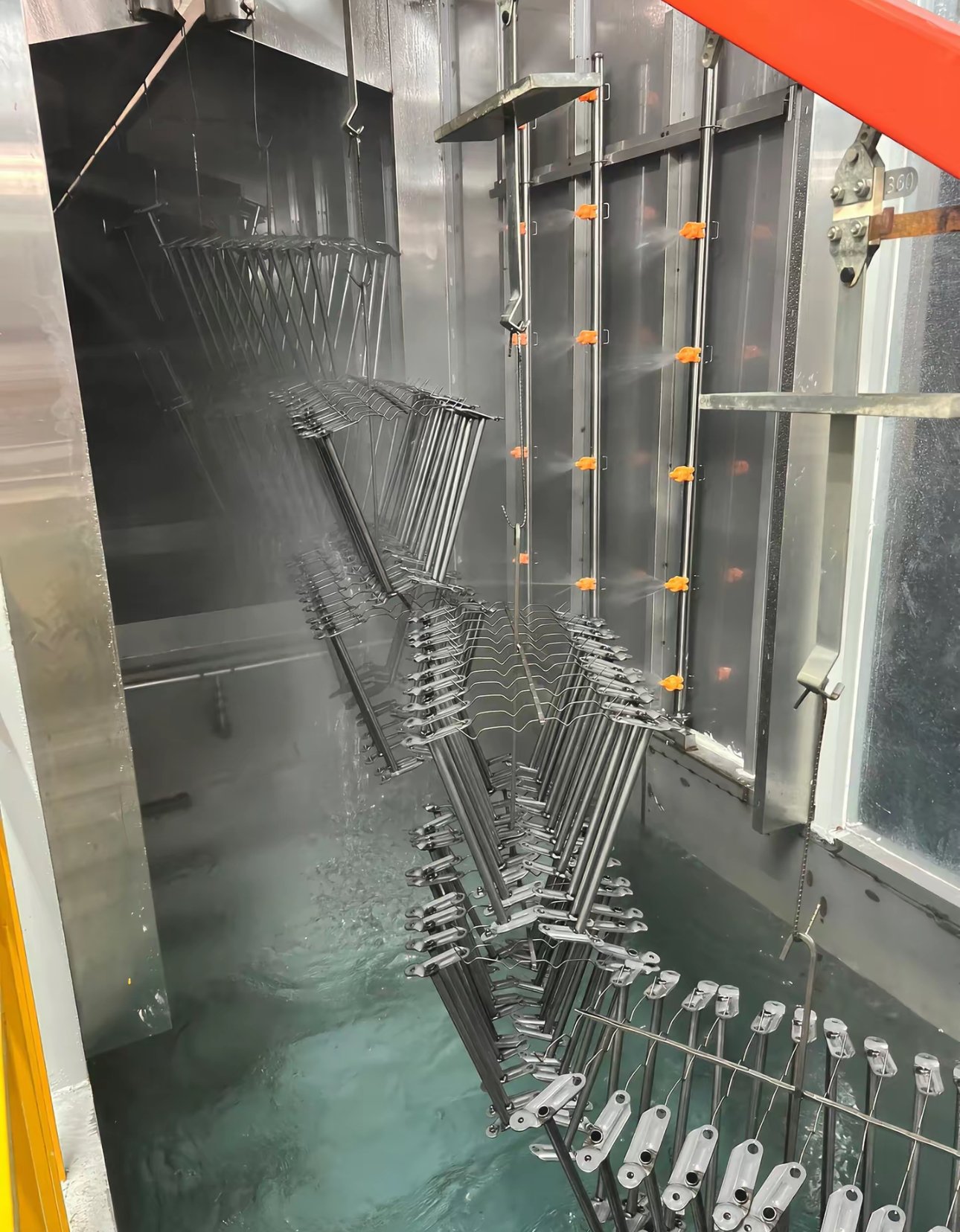
What stages does an automotive parts surface treatment line have?
The sequence below is typical for steel automotive parts that receive an e-coat primer. Values are typical working ranges published in chemical and paint suppliers’ technical data sheets; the exact settings come from the chemistry chosen and the part specification.
| Stage | Typical temperature | Typical time | Method and control |
|---|---|---|---|
| Hot water pre-rinse or pre-degrease | Set by chemistry | Set by soil load | Spray; removes loose oil and shop soil |
| Alkaline degreasing | 30-70 °C (low-temperature products 30-40 °C) | 1-5 min | Spray or dip; cleaner about 10-50 g/L |
| Rinses (at least two) | Ambient | Short | Counter-flow overflow; stops alkali carry-over |
| Activation (titanium salt) | Below about 49 °C | 20-60 s | Spray or dip; used before zinc phosphate |
| Zinc phosphate (tri-cation) | About 48-55 °C | 60-180 s | Spray or spray + dip; coating weight 1.8-2.8 g/m² |
| Or zirconium conversion coating | Ambient, about 16-38 °C | 30-45 s | Spray or dip; pH about 4.0-5.5 |
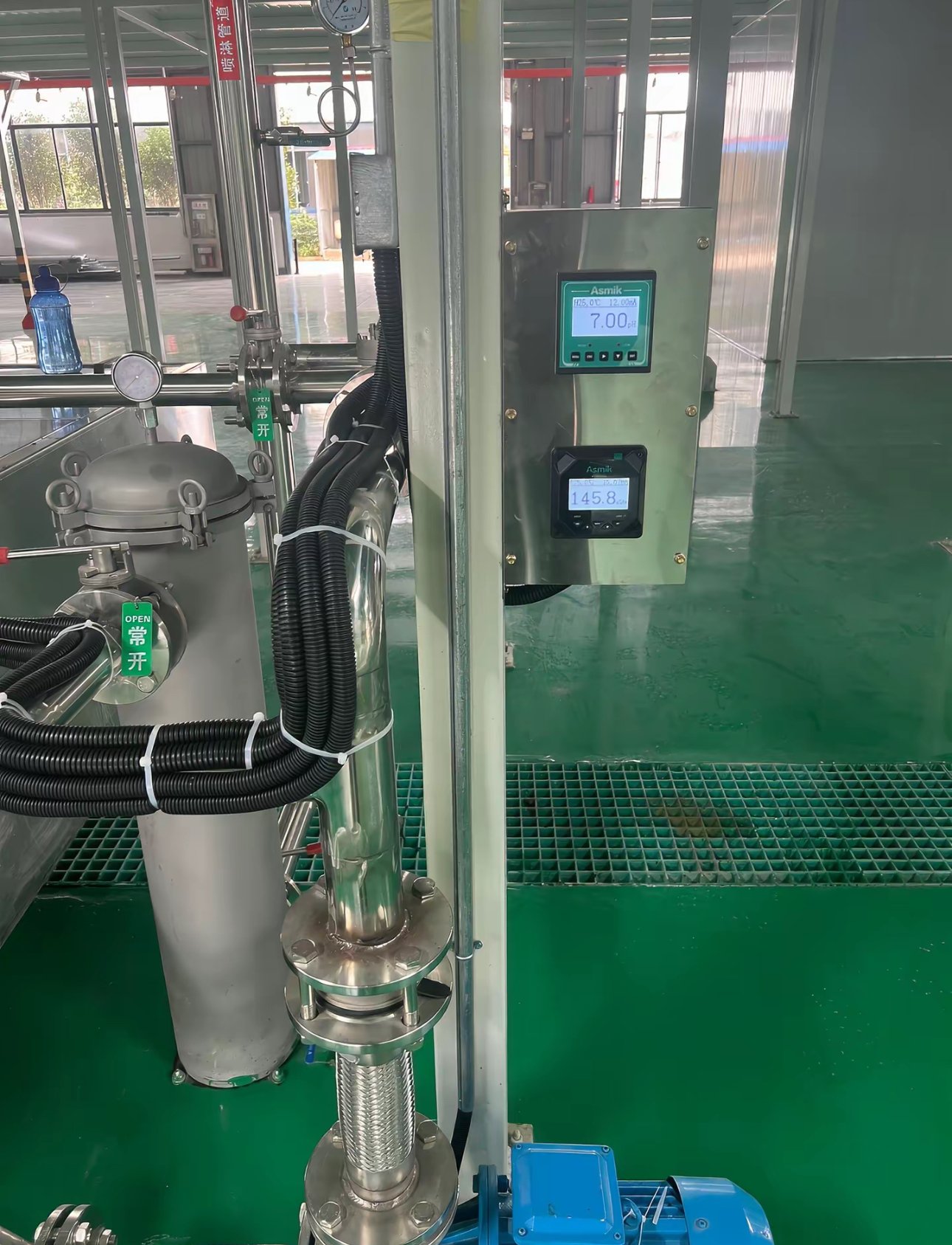
| Rinses and DI rinse | Ambient | Short | Final rinse conductivity below about 10 µS/cm before e-coat |
| Cathodic e-coat | About 28-36 °C | At least 120 s | Dip; 200-400 V |
| Ultrafiltrate rinses | Ambient | Short | Counter-flow back to the tank; final DI rinse |
| E-coat curing oven | About 175 °C object temperature | 15-20 min | Longer for thick-walled frames |
| Powder or liquid topcoat and cure | Powder about 160-180 °C object temperature | 10-20 min | Electrostatic spray; set by the powder data sheet |
A zinc phosphate line usually has about seven pretreatment stages; a zirconium line can run with as few as four. The equipment for these stages is described on the pretreatment washer and e-coat line pages.
Zinc phosphate or zirconium: which pretreatment for automotive parts?
Both are used under automotive e-coat. Zinc phosphate is the long-established base for the highest corrosion targets; zirconium saves heat, stages and sludge but asks for cleaner parts and tighter rinsing.
| Item | Tri-cation zinc phosphate | Zirconium conversion coating |
|---|---|---|
| Bath temperature | About 48-55 °C | Ambient |
| Contact time | 1-3 min | 30-45 s |
| Coating weight | About 1.8-2.8 g/m² | About 10-180 mg/m², depending on substrate |
| Activation stage | Needed | Not needed |
| Typical number of stages | About 7 | As few as 4 |
| Sludge | Phosphate sludge containing zinc, nickel and manganese, usually treated as hazardous waste | Much lower; one published trade article reports at least 80% less |
| Bath life | About 1-3 months between dumps | About 6-12 months or more |
| Mixed steel, galvanised and aluminium loads | Possible with the right formulation | Handled in one bath |
| Main risks | Heating cost, sludge removal, acid cleaning of tanks | Flash rust, iron build-up, high coating weight if concentration or time drifts |
Zirconium works when the parts leave the cleaner water-break free and at least two rinses stop alkali carry-over. After a change to zirconium the e-coat often deposits faster on the same voltage, so throw into tubes and recesses should be checked again.
What are the typical cathodic e-coat settings?
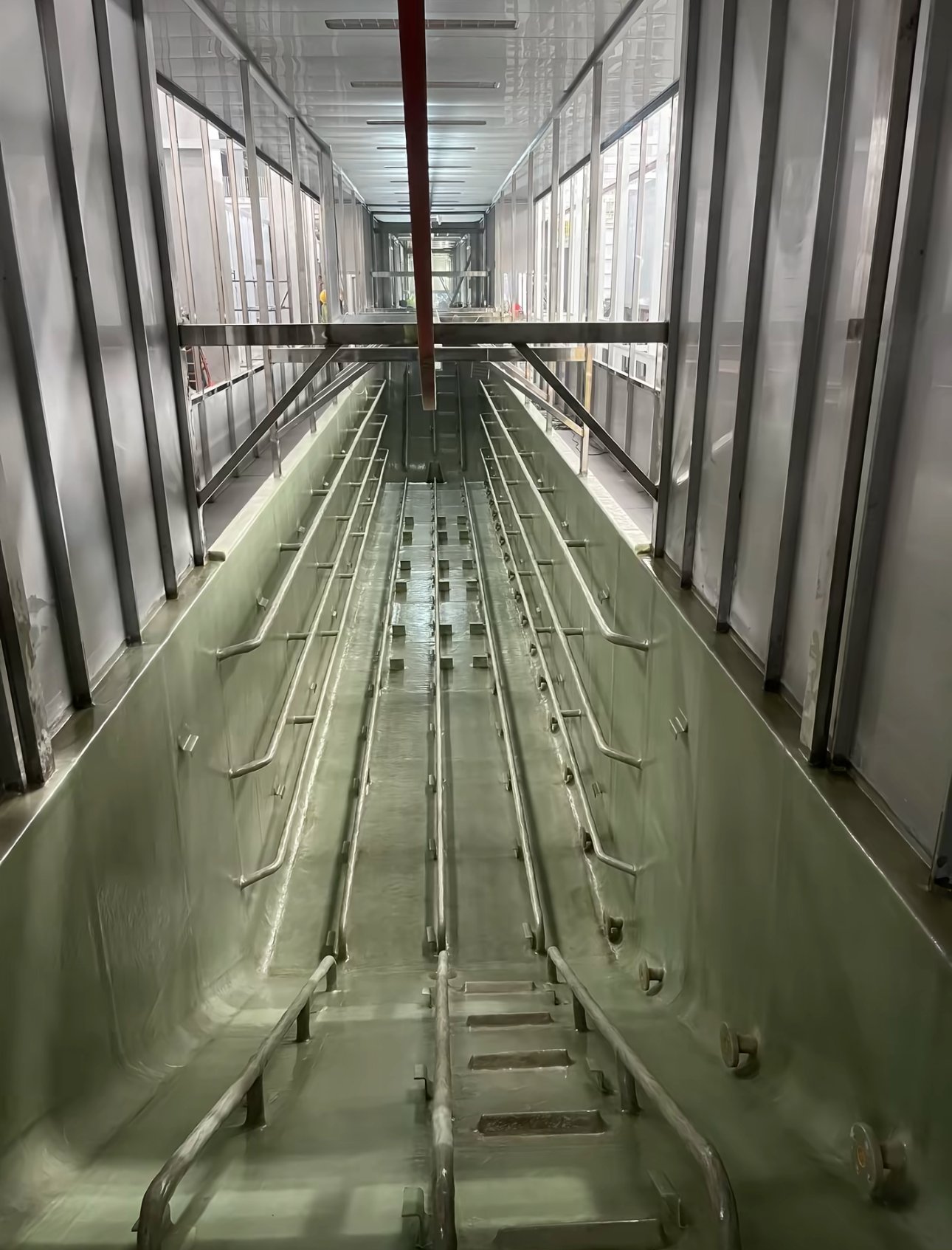
| Parameter | Typical range for cathodic epoxy e-coat |
|---|---|
| Bath temperature | About 28-36 °C, held by a chiller and heat exchanger |
| Voltage | About 200-400 V (some products from 120 V) |
| Deposition time | About 2-3 min, including voltage ramp |
| Bath solids | About 10-21%, commonly near 18-20% |
| Bath pH | About 5.4-6.0 |
| Bath conductivity | About 800-2,200 µS/cm depending on the product (nominal about 1,300-1,700 µS/cm) |
| Film thickness | About 15-25 µm on automotive parts; heavy-duty epoxy grades thicker |
| Cure | About 175 °C object temperature for 15-20 min; frames and thick castings longer |
| Paint utilisation | Above 95% with ultrafiltration and closed-loop rinsing |
Cathodic e-coat carries far less iron from the substrate into the film than anodic e-coat and gives better corrosion resistance, so it is the standard primer for automotive bodies and parts. Anodic e-coat is chosen when an assembly contains bearings, seals or other heat-sensitive parts, because some grades cure below about 93 °C.
Which coating system suits which automotive part?
| Part | Common system |
|---|---|
| Frames and chassis parts | Zinc phosphate + cathodic e-coat, often with a powder topcoat |
| Cast iron suspension parts | Zinc phosphate + e-coat + powder; castings without a conversion coating tend to fail salt spray |
| Seat frames, recliners and slide rails | Phosphate or zirconium + e-coat, or powder with a thin even film on tight-tolerance parts |
| Steel wheels | Zinc phosphate + cathodic epoxy e-coat + powder |
| Aluminium wheels | Chrome-free conversion coating + powder, about 60-80 µm |
| Coil springs and stabiliser bars | Zinc phosphate + zinc-rich powder base + powder topcoat |
| Small electromechanical parts | Blasting or phosphate + epoxy-polyester powder |
| Assemblies with seals or bearings | Low-cure anodic e-coat |
| Aluminium battery trays and housings | Cleaning, etch and deoxidise, zirconium conversion, then e-coat or powder |
What corrosion and adhesion tests do automotive buyers ask for?
Automotive part drawings usually call up a neutral salt spray test, a cross-cut adhesion test and, increasingly, a cyclic corrosion test from the vehicle maker’s own standard. The table lists the tests buyers most often name.
| Test | Standard | What it shows |
|---|---|---|
| Neutral salt spray | ISO 9227 NSS or ASTM B117 (35 °C, 5% NaCl) | Creep from a scribe after a set number of hours |
| Cross-cut adhesion | ISO 2409 or ASTM D3359 | ISO 2409: grade 0 (no flaking) to grade 5; ASTM D3359: 5B (no removal) to 0B. Automotive powder data sheets quote ISO 2409 grade 0 |
| Cyclic corrosion | Vehicle maker cyclic standards such as GMW14872, CETP 00.00-L-467 and VDA 621-415 | Corrosion under alternating salt, humidity and dry phases; cycle count set per part |
How far a system lasts in salt spray depends on every layer. One set of published trials on ductile iron suspension parts gave these results:
| Coating system | Salt spray result |
|---|---|
| Powder only, no pretreatment | 100+ h |
| Iron phosphate + powder | 500+ h |
| Zinc phosphate + powder | 750+ h |
| Iron phosphate + e-coat + powder | 1,500+ h |
| Zinc phosphate + e-coat + powder | 2,000+ h |
The pass level for a given part is set by the part specification, not by the line; the line has to hold the pretreatment, film thickness and cure that the specification assumes.
Which conveyor suits an automotive parts surface treatment line?
| Conveyor | Where it fits | Notes |
|---|---|---|
| Overhead chain (monorail) | Continuous spray pretreatment, e-coat dip with a dip section, powder booth and oven on one loop | Line speed = stage length divided by the required time in that stage |
| Power-and-free | Lines that need buffers, different dwell times or a dip that the chain cannot make | Carriers stop and start independently |
| Square transfer (walking beam) | Dip lines for medium and high volumes | Allows the oven to sit above the pretreatment to save floor space |
| Programmable hoists | Lower volumes, several substrates or colours | Usually lower investment below about 12 loads per hour |
Conveyor options are compared in more detail in overhead chain vs floor belt vs power-and-free.
Which automotive surface treatment projects has MUSI delivered?
| Project | Parts | Line scope |
|---|---|---|
| Mexico, vehicle body painting line | SUV, pickup and light commercial vehicle bodies for a Chinese automaker’s assembly plant | Pretreatment, filtered-air paint booths, drying ovens with cooling, body conveyor, exhaust and VOC treatment; installed on site by MUSI engineers |
| Vietnam, truck parts coating line | Truck and commercial vehicle parts for a Chinese automaker’s assembly plant | Pumped pretreatment tanks with control cabinet, overhead conveyor, spray booth, curing oven, exhaust treatment; installed on site by MUSI engineers |
| Jiangsu, seat recliner and slide rail line | High-volume seat recliners, slide rails and fine-blanked parts | Pretreatment for stamped steel, high-density hangers, small-parts booth with recovery, curing oven |
| Zhejiang, automotive parts line | Automotive metal parts | Multi-stage pretreatment with maintenance walkway, chain conveyor, spray booth, curing oven, exhaust treatment |
Key components on these lines, such as pretreatment pumps, burners, PLCs and drives, are available from international brands including Grundfos, Riello, Siemens and SEW-Eurodrive, configurable per customer specification.
What goes wrong most often on automotive parts lines?
| Problem | Cause | What prevents it |
|---|---|---|
| Poor adhesion on hot-rolled steel | Mill scale that alkaline cleaning cannot remove | Pickling, electrolytic cleaning or blasting before pretreatment |
| Thin film and early rust on laser-cut edges | Oxide layer and sharp edges | Blasting or pickling the cut edge, rounding edges, or a second coat |
| Craters and blisters after the oven | Trapped liquid or air pockets boiling out | Drain holes, part orientation on the hanger, trial runs before production |
| Defects on galvanised parts | Fast dehydration in a short, hot oven | Gentler drying after the last rinse |
| Unstable e-coat bath | Untreated final rinse water returned to the tank | Ultrafiltration and RO closed-loop rinsing |
What should you send for a quotation?
| Information | Why it matters |
|---|---|
| Part drawings, largest size and weight | Sets tank size, hanger design and conveyor load |
| Output per hour or per shift | Sets line speed and number of tanks |
| Substrates: cold-rolled, hot-rolled, galvanised, cast iron, aluminium | Sets cleaning, pickling and the conversion coating |
| Coating specification and salt spray target | Decides phosphate or zirconium, e-coat and topcoat |
| Building size, utilities and wastewater limits | Fixes the layout and the wastewater treatment |
MUSI engineers reply within 24 hours; a configuration and quotation follow once your part data is complete. Budget ranges for complete lines are in the complete coating line cost breakdown.
FAQ
What is a surface treatment line for automotive parts? It is the series of cleaning, conversion coating, e-coat and topcoat stages that prepares and protects steel or aluminium automotive parts, joined by a conveyor and curing ovens.
Is zirconium as good as zinc phosphate under e-coat? Zirconium saves heat, stages and sludge and handles mixed metals, but on cold-rolled steel it comes close to tri-cation zinc phosphate rather than matching it; the part’s corrosion specification decides.
What film thickness does automotive e-coat give? Typically about 15-25 µm on automotive parts, cured at about 175 °C for 15-20 minutes.
Why add powder over e-coat? E-coat reaches recesses and box sections that powder cannot; powder adds thickness, chip resistance and UV resistance on the outer surfaces. Together they give the longest salt spray results.
Can one line coat steel, galvanised and aluminium parts? Yes, with a zirconium or mixed-metal pretreatment and settings checked for each substrate.
How long does it take to supply a line? Standard configurations ship in 30-60 days; e-coat and custom lines take longer and the date is fixed in the contract.
Where MUSI Technology fits
MUSI Technology (Changzhou MUSI Environmental Technology Co., Ltd.) designs and builds pretreatment lines, e-coat lines, powder and liquid coating lines, curing ovens and the dust, VOC and wastewater treatment that goes with them, in Changzhou, China. Its engineering team, which originated in 2011, has delivered 800+ coating lines to 500+ clients in 36 countries. Send your part drawings, output and coating specification through the contact page for a configured quotation.
Provided by Lin Cong, Technical Director, MUSI Technology
Send us your part size, throughput and coating type — our engineers reply within 24 hours, and a layout and budget follow once your part data is complete. Contact MUSI Technology or browse our equipment range.
Related technical guides
- Powder Coating Pretreatment Line: Stages & Cost
A pretreatment line degreases, rinses and chemically converts the metal surface before coating. Three, five and seven-stage layouts, phosphate versus. - BESS Container Coating Line: Spec & Corrosion
Battery energy storage containers need C4 to C5 corrosion protection: shot blasting to Sa2.5, zinc-rich primer and weather-resistant polyester topcoat. - Coating Line Factory Audit: 20-Point Checklist
A 20-point pre-shipment audit for coating line buyers: what to measure, what to demand in writing, which documents to collect and which findings should. - Wheel & Chassis Powder Coating Line: Spec & Cost
Wheels and chassis parts carry the toughest corrosion and appearance specs in automotive finishing. Coat stack, filiform and salt spray targets, line. - Powder Coating vs Liquid Spray: Which to Choose
Powder coating vs liquid spray compared on cost, film thickness, colour range, VOC emissions, substrate limits and best-fit applications.
QQuestions buyers ask before ordering
quotation · price · lead time · installation · warranty
What information do you need to prepare a quotation?
Send part drawings or photos, the largest part size and weight, the material, the required output per shift, the paint or powder type and number of colours, and the available floor space, ceiling height and power or gas supply. MUSI engineers reply within 24 hours; a recommended configuration and quotation follow once your part data is complete.
How much does this equipment cost?
Budget depends on part size, throughput and the level of automation. Indicative ex-works ranges are published in our complete coating line cost guide; a configured quotation is prepared from your part data. Published indicative ex-works ranges: a complete powder coating line is roughly USD 75,000–230,000 semi-automatic, USD 200,000–600,000 for a standard automatic line and USD 600,000–2,000,000 for a high-throughput automated plant.
What is the lead time?
Standard configurations ship in 30–60 days from contract signing and down payment; custom configurations take longer. The delivery date is fixed in the contract.
Do you install and train operators overseas?
Yes. MUSI engineers carry out on-site installation and commissioning and give 3–5 days of operator and maintenance training. MUSI has delivered 800+ coating lines to customers in 36 countries.
What warranty and after-sales support are included?
12 months full-machine warranty, 36 months on critical components and up to 60 months on structural parts. International customers get 24-hour phone response and 72-hour on-site arrival; spare parts ship from the Changzhou headquarters.
Can the environmental equipment be supplied with the line?
Yes. VOC treatment (RTO, RCO, activated carbon, zeolite rotor), dust collection and paint wastewater treatment are supplied with the coating line under one contract; MUSI has equipped 50+ coating facilities whose projects all passed local environmental compliance reviews.